• Wyszukiwanie zaawansowane
  • Kategorie
  • Kategorie BISAC
  • Książki na zamówienie
  • Promocje
  • Granty
  • Książka na prezent
  • Opinie
  • Pomoc
  • Załóż konto
  • Zaloguj się

Changing Forests: Collective Action, Common Property, and Coffee in Honduras » książka


zaloguj się | załóż konto
Logo Krainaksiazek.pl

koszyk

konto

szukaj
topmenu
Księgarnia internetowa
Szukaj
Książki na zamówienie
Promocje
Granty
Książka na prezent
Moje konto
Pomoc
 
 
Wyszukiwanie zaawansowane
Pusty koszyk
Bezpłatna dostawa dla zamówień powyżej 20 złBezpłatna dostawa dla zamówień powyżej 20 zł

Kategorie główne

• Nauka
 [2949965]
• Literatura piękna
 [1857847]

  więcej...
• Turystyka
 [70818]
• Informatyka
 [151303]
• Komiksy
 [35733]
• Encyklopedie
 [23180]
• Dziecięca
 [617748]
• Hobby
 [139972]
• AudioBooki
 [1650]
• Literatura faktu
 [228361]
• Muzyka CD
 [398]
• Słowniki
 [2862]
• Inne
 [444732]
• Kalendarze
 [1620]
• Podręczniki
 [167233]
• Poradniki
 [482388]
• Religia
 [509867]
• Czasopisma
 [533]
• Sport
 [61361]
• Sztuka
 [243125]
• CD, DVD, Video
 [3451]
• Technologie
 [219309]
• Zdrowie
 [101347]
• Książkowe Klimaty
 [123]
• Zabawki
 [2362]
• Puzzle, gry
 [3791]
• Literatura w języku ukraińskim
 [253]
• Art. papiernicze i szkolne
 [7933]
Kategorie szczegółowe BISAC

Changing Forests: Collective Action, Common Property, and Coffee in Honduras

ISBN-13: 9781402069765 / Angielski / Twarda / 2008 / 258 str.
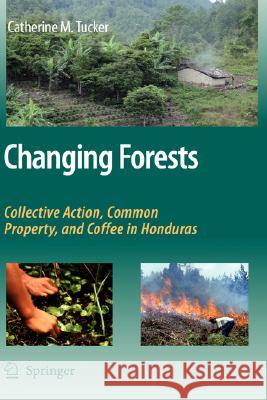
Catherine M. Tucker
Changing Forests: Collective Action, Common Property, and Coffee in Honduras Tucker, Catherine M. 9781402069765 Not Avail - książkaWidoczna okładka, to zdjęcie poglądowe, a rzeczywista szata graficzna może różnić się od prezentowanej.

Changing Forests: Collective Action, Common Property, and Coffee in Honduras

ISBN-13: 9781402069765 / Angielski / Twarda / 2008 / 258 str.

Catherine M. Tucker
cena 403,47
(netto: 384,26 VAT:  5%)

Najniższa cena z 30 dni: 385,52
Termin realizacji zamówienia:
ok. 22 dni roboczych
Bez gwarancji dostawy przed świętami

Darmowa dostawa!

Drawing on ethnographic and archival research, Changing Forests explores how the indigenous Lenca community of La Campa, Honduras, has conserved and transformed their communal forests through the experiences of colonialism, opposition to state-controlled logging, and the recent adoption of export-oriented coffee production. It merges political ecology, collective-action theories, and institutional analysis to study how the people and forests have changed through socioeconomic and political transitions encompassed in three broad phases: (1) the premodern period, which considers historic perturbations in western Honduras from the period of colonialism into the middle of the twentieth century; (2) the period of state-led logging and intervention in La Campa, which caused major degradation in forest cover; and (3) the recent period in which export coffee production transformed property rights, and people s perceptions of the forest gained new conservationist and economic dimensions. Each phase entails perspectives and experiences that influenced human use of forests, and shaped subsequent transformations. Growing social heterogeneity, population growth, and market integration present challenges for sustainable forest management, but satellite images show that forest cover has expanded since the community prohibited logging in 1987. The indigenous people have created a watershed reserve and agroforestry cooperatives, and maintain forests as part of a resilient livelihood strategy."


Kategorie:
Nauka
Kategorie BISAC:
Science > Environmental Science (see also Chemistry - Environmental)
Science > Earth Sciences - Geography
Nature > Environmental Conservation & Protection - General
Wydawca:
Not Avail
Język:
Angielski
ISBN-13:
9781402069765
Rok wydania:
2008
Wydanie:
2008
Ilość stron:
258
Waga:
1.25 kg
Wymiary:
23.5 x 15.5
Oprawa:
Twarda
Wolumenów:
01
Dodatkowe informacje:
Wydanie ilustrowane

From the reviews: "A principal argument in the book is that the community's relative success in maintaining forests is due to institutional factors that have been found elsewhere to lead to successful common property management ... . Changing Forests is intended for environmental scientists and policymakers, conservationists, social foresters, ecological and environmental anthropologists and economists, sociologists, geographers, development analysts, and Latin America specialists. ... It is particularly important for those concerned with collective action and common property and is a worthy addition to libraries ... ." (Patricia L. Howard, Mountain Research and Development, Vol. 29 (4), November, 2009)

1. Introduction.- Forest Change and the Challenge of Sustainable Management.- Political Ecology, Collective Action, and Common-Pool Resources.- Situating the Study Site.- Conceptualizing Community.- Overview of the Book.- 2. People and Forests in Historical Perspective.- People and Forests in Prehistoric Mesoamerica.- The Spanish Conquest.- Land Rights, Population, and Implications for the Forests.- Community Governance and Communal Land: The Roots of a Communitarian Tradition.- La Campa Becomes a Municipio.- Rituals, Beliefs, and Natural Resources among the Lenca.- Synthesis.- 3. Governing the Commons and Making a Living.- La Campa’s Common-Property Regime in Theoretical Context.- Municipal Government and the Communitarian Tradition.- The Forest-Field-Fallow Cycle.- Livelihoods and Risk-Reduction Strategies.- Forest Management Practices and Institutions.- The Question of Conservation.- 4. Logging Comes to La Campa: State Intervention, Forest Transformation, and Collective Action.- Development Goals Prompt Timber Sales.- Honduras Nationalizes the Forestry Sector.- Social Forestry System Offers Alternatives for La Campa.- Theory vs. Reality in Forest Management Philosophy and Outcomes.- The State or the Community: Who should manage the forest?- The Exacerbation of Tensions: Fines, Fires, and Broken Bridges.- Assessing State Intervention and the Mixed Success of Collective Action.- Forest Destruction and the Birth of a Conservation Ethic.- 5. Common-Property Transformations and Market Integration.- Forest Protection Efforts and De Facto Privatization of Common-Property Forests.- The Promise of Coffee.- Political and Economic Incentives for Coffee Expansion.- Land Titling under the National Agrarian Institute.- Coffee and Inequality.- Forest-Change Dynamics.- 6. Coffee Culture, Crisis, and Adaptation.- Global and Local Dimensions of the CoffeeCrisis, 1999 – 2003.- Hardship and Resilience in the Coffee Crisis.- Adaptations to the Coffee Crisis.- Case Studies of Household Adaptive Strategies.- Dimensions of Resilience and Adaptive Capacity during the Coffee Crisis.- Implications for Forest Transformations.- Development and Social Change with Respect to the Coffee Crisis.- 7. Changing Lives, Changing Forests: Many Ways to Build a Future?- Trends in Local Change.- Collective Action for Development and Natural Resource Protection.- La Campa as a Dynamic Social-Ecological System.- Dynamic Change, Forest Conservation, and Paths to a Sustainable Future.- Summary.

Drawing on ethnographic and archival research, "Changing Forests" explores how the indigenous Lenca community of La Campa, Honduras, has conserved and transformed their communal forests through the experiences of colonialism, opposition to state-controlled logging, and the recent adoption of export-oriented coffee production. It merges political ecology, collective-action theories, and institutional analysis to study how the people and forests have changed through socioeconomic and political transitions. It studies the complex, often contradictory relationships between the people and their natural resources to understand why forest cover endures.

The discussion of social and forest transformations in La Campa focuses on the past three decades, but the context for understanding the Lenca people and their forest use stretches over 500 years. Although the historical record has many gaps, the initial conditions for human-forest relationships were established in the colonial period, when La Campa was founded and processes of conquest ruptured the social fabric. "Changing Forests" therefore encompasses three broad phases: (1) the premodern period, which considers historic perturbations in western Honduras from the period of colonialism into the middle of the twentieth century; (2) the period of state-led logging and intervention in La Campa, which caused major degradation in forest cover; and (3) the recent period in which export coffee production transformed property rights, and people’s perceptions of the forest gained new conservationist and economic dimensions. Each phase entails perspectives and experiences that influenced human use of forests, and shaped subsequent transformations.

Growing social heterogeneity, population growth, and market integration present challenges for sustainable forest management, but satellite images show that forest cover has expanded since the community prohibited logging in 1987. The indigenous people have created a watershed reserve and agroforestry cooperatives, and maintain forests as part of a resilient livelihood strategy.

La Campa has been recognized by the Honduran government for its forest conservation efforts.


Udostępnij

Facebook - konto krainaksiazek.pl


Opinie o Krainaksiazek.pl na Opineo.pl

Partner Mybenefit

Krainaksiazek.pl w programie rzetelna firma Krainaksiaze.pl - płatności przez paypal

Czytaj nas na:

Facebook - krainaksiazek.pl
  • książki na zamówienie
  • granty
  • książka na prezent
  • kontakt
  • pomoc
  • opinie
  • regulamin
  • polityka prywatności

Zobacz:

  • Księgarnia czeska

  • Wydawnictwo Książkowe Klimaty

1997-2025 DolnySlask.com Agencja Internetowa

© 1997-2022 krainaksiazek.pl
     
KONTAKT | REGULAMIN | POLITYKA PRYWATNOŚCI | USTAWIENIA PRYWATNOŚCI
Zobacz: Księgarnia Czeska | Wydawnictwo Książkowe Klimaty | Mapa strony | Lista autorów
KrainaKsiazek.PL - Księgarnia Internetowa

Polityka prywatnosci - link
Krainaksiazek.pl - płatnośc Przelewy24
Przechowalnia Przechowalnia





