• Wyszukiwanie zaawansowane
  • Kategorie
  • Kategorie BISAC
  • Książki na zamówienie
  • Promocje
  • Granty
  • Książka na prezent
  • Opinie
  • Pomoc
  • Załóż konto
  • Zaloguj się

Cellular Ecophysiology of Microbe: Hydrocarbon and Lipid Interactions » książka

zaloguj się | załóż konto
Logo Krainaksiazek.pl

koszyk

konto

szukaj
topmenu
Księgarnia internetowa
Szukaj
Książki na zamówienie
Promocje
Granty
Książka na prezent
Moje konto
Pomoc
 
 
Wyszukiwanie zaawansowane
Pusty koszyk
Bezpłatna dostawa dla zamówień powyżej 20 złBezpłatna dostawa dla zamówień powyżej 20 zł

Kategorie główne

• Nauka
 [2950560]
• Literatura piękna
 [1849509]

  więcej...
• Turystyka
 [71097]
• Informatyka
 [151150]
• Komiksy
 [35848]
• Encyklopedie
 [23178]
• Dziecięca
 [617388]
• Hobby
 [139064]
• AudioBooki
 [1657]
• Literatura faktu
 [228597]
• Muzyka CD
 [383]
• Słowniki
 [2855]
• Inne
 [445295]
• Kalendarze
 [1464]
• Podręczniki
 [167547]
• Poradniki
 [480102]
• Religia
 [510749]
• Czasopisma
 [516]
• Sport
 [61293]
• Sztuka
 [243352]
• CD, DVD, Video
 [3414]
• Technologie
 [219456]
• Zdrowie
 [101002]
• Książkowe Klimaty
 [124]
• Zabawki
 [2311]
• Puzzle, gry
 [3459]
• Literatura w języku ukraińskim
 [254]
• Art. papiernicze i szkolne
 [8079]
Kategorie szczegółowe BISAC

Cellular Ecophysiology of Microbe: Hydrocarbon and Lipid Interactions

ISBN-13: 9783319505404 / Angielski / Twarda / 2018 / 599 str.
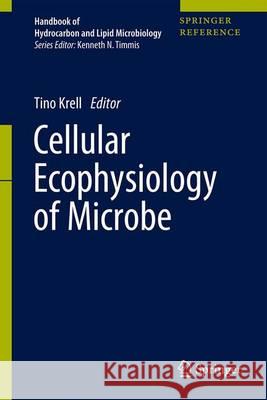
Tino Krell
Cellular Ecophysiology of Microbe: Hydrocarbon and Lipid Interactions Krell, Tino 9783319505404 Springer - książkaWidoczna okładka, to zdjęcie poglądowe, a rzeczywista szata graficzna może różnić się od prezentowanej.

Cellular Ecophysiology of Microbe: Hydrocarbon and Lipid Interactions

ISBN-13: 9783319505404 / Angielski / Twarda / 2018 / 599 str.

Tino Krell
cena 803,21
(netto: 764,96 VAT:  5%)

Najniższa cena z 30 dni: 771,08
Termin realizacji zamówienia:
ok. 22 dni roboczych
Dostawa w 2026 r.

Darmowa dostawa!

This book assembles concisely written chapters by world-leaders in the field summarizing recent advances in understanding microbial responses to hydrocarbons. Subjects treated include mechanisms of sensing, hydrocarbon tolerance and degradation as well as an overview on hydrophobic modification of biomolecules. Other chapters are dedicated to issues related to the reduced bioavailability of hydrocarbons, which differentiates this class of compounds form many others, but which of central importance to understand the ecophysiological consequences.
This book should be standard literature in any laboratory working in this area.


Kategorie:
Nauka, Biologia i przyroda
Kategorie BISAC:
Science > Biotechnology
Technology & Engineering > Environmental - General
Science > Biochemia
Wydawca:
Springer
Seria wydawnicza:
Handbook of Hydrocarbon and Lipid Microbiology
Język:
Angielski
ISBN-13:
9783319505404
Rok wydania:
2018
Wydanie:
2018
Numer serii:
000806332
Ilość stron:
599
Waga:
1.15 kg
Wymiary:
23.75 x 16.18 x 3.81
Oprawa:
Twarda
Wolumenów:
01

Preface to Volume

Bioinformatic, Molecular and Genetic Tools for Exploring Genome-wide Responses to Hydrocarbons
Genomic response of Pseudomonas putida to toluene
1. PROBLEMS OF HYDROPHOBICITY, BIOAVAILABILITY  
Problems of Hydrophobicity/Bioavailability: An Introduction
Water-Hydrophobic Compound Interactions with the Microbial Cell
Matrix-Hydrophobic Compound Interactions
Microorganism-Hydrophobic Compound Interactions
Biofilm Development at Interfaces between Hydrophobic Organic Compounds and Water...expand
Production and Roles of Biosurfactants and Bioemulsifiers in Accessing Hydrophobic Substrates
Uptake and Assimilation of Hydrophobic Substrates by the Oleaginous Yeast Yarrowia lipolytica
2. SENSING, SIGNALING AND UPTAKE
Sensing, Signalizing and Uptake: An Introduction
Chemotaxis to hydrocarbons
The potential of hydrocarbon Chemotaxis to increase bioavailability and biodegradation efficiency 
Transcriptional regulation of hydrocarbon efflux pump expression 
Hydrocarbon responsive one-component systems to regulate degradation pathway expression 
The family of hydrocarbon responsive two-component systems to regulate degradation pathway expression 
Fatty acids as mediators of intercellular signalling 
Amphiphilic lipids, signaling molecules and quorum sensing
Lipids as signalling molecules in eukaryotes
Substrate Transport
Strategies to increase bioavailability and uptake of hydrocarbons 
Fungi as Transport Vectors for Contaminants and Contaminant-Degrading Bacteria..r...expand
3. PROBLEMS OF SOLVENTOGENICITY, SOLVENT TOLERANCE  
Problems of Solventogenicity and solvent Tolerance: An Introduction
Toxicity of Hydrocarbons to Microorganisms
Genetics of Accessing and Exploiting Hydrocarbons
Extrusion Pumps for Hydrocarbons: An Efficient Evolutionary Strategy to Confer Resistance to Hydrocarbons
Membrane Composition and Modifications in Response to Aromatic Hydrocarbons in Gram Negative Bacteria
Cis-Trans Isomerase of Unsaturated Fatty Acids: An Immediate Bacterial Adaptive Mechanism to Cope with Emerging Membrane Perturbation Caused by Toxic Hydrocarbons
Surface Properties and Cellular Energetics of Bacteria in Response to the Presence of Hydrocarbons
Ultrastructural insights into microbial life at the hydrocarbon:aqueous environment interface
Membrane adaptations to low water two-phase bioprocess systems
Microbiology of Oil Fly Larvae
4. PROBLEMS OF FEAST OR FAMINE 
Problems of Feast or Famine: An Introduction
Kinetics and Physiology at Vanishingly Small Substrate Concentrations
Feast: Choking on Acetyl-CoA, the Glyoxylate Shunt, and Acetyl-CoA-Driven Metabolism
Nitrogen Fixation and Hydrocarbon-Oxidizing Bacteria (ask Julia to extend to P and Fe acquisition)
Adaptation to varying substrate concentrations and mixtures
5.  HYDROPHOBIC MODIFICATIONS OF BIOMOLECULES 
Hydrophobic Modifications of Biomolecules: An Introduction
Protein lipidation in prokaryotes: biochemistry and function
Bacterial signal transduction processes based on acetylation
Protein lipidation in eukaryotes: biochemistry and function
Lipidation of other biomolecules and functions
Biochemistry of methylation of DNA 
DNA Methylation in prokaryotes: regulation and function
DNA Methylation in eukaryotes: regulation and function
Protein methylation in bacteria 
Causes and biochemistry of DNA damage by alkylation
Mutagenic consequences of alkylation
Protein alkylation

Tino Krell has studied Biochemistry in Leipzig (Germany) and did his PhD at the University of Glasgow (UK). He was then appointed laboratory head in the R & D Department of Sanofi Pasteur, S.A. in France. In 2004 he moved to Spain to work for the governmental research body CSIC, where he established a laboratory on bacterial sensing and signal transduction. He has investigated molecular mechanisms by which hydrocarbons are sensed by bacteria in the context of their expulsion, degradation or chemotaxis.


Udostępnij

Facebook - konto krainaksiazek.pl


Opinie o Krainaksiazek.pl na Opineo.pl

Partner Mybenefit

Krainaksiazek.pl w programie rzetelna firma Krainaksiaze.pl - płatności przez paypal

Czytaj nas na:

Facebook - krainaksiazek.pl
  • książki na zamówienie
  • granty
  • książka na prezent
  • kontakt
  • pomoc
  • opinie
  • regulamin
  • polityka prywatności

Zobacz:

  • Księgarnia czeska

  • Wydawnictwo Książkowe Klimaty

1997-2025 DolnySlask.com Agencja Internetowa

© 1997-2022 krainaksiazek.pl
     
KONTAKT | REGULAMIN | POLITYKA PRYWATNOŚCI | USTAWIENIA PRYWATNOŚCI
Zobacz: Księgarnia Czeska | Wydawnictwo Książkowe Klimaty | Mapa strony | Lista autorów
KrainaKsiazek.PL - Księgarnia Internetowa

Polityka prywatnosci - link
Krainaksiazek.pl - płatnośc Przelewy24
Przechowalnia Przechowalnia







