• Wyszukiwanie zaawansowane
  • Kategorie
  • Kategorie BISAC
  • Książki na zamówienie
  • Promocje
  • Granty
  • Książka na prezent
  • Opinie
  • Pomoc
  • Załóż konto
  • Zaloguj się

Cell Death: Mechanism and Disease » książka


zaloguj się | załóż konto
Logo Krainaksiazek.pl

koszyk

konto

szukaj
topmenu
Księgarnia internetowa
Szukaj
Książki na zamówienie
Promocje
Granty
Książka na prezent
Moje konto
Pomoc
 
 
Wyszukiwanie zaawansowane
Pusty koszyk
Bezpłatna dostawa dla zamówień powyżej 20 złBezpłatna dostawa dla zamówień powyżej 20 zł

Kategorie główne

• Nauka
 [2949965]
• Literatura piękna
 [1857847]

  więcej...
• Turystyka
 [70818]
• Informatyka
 [151303]
• Komiksy
 [35733]
• Encyklopedie
 [23180]
• Dziecięca
 [617748]
• Hobby
 [139972]
• AudioBooki
 [1650]
• Literatura faktu
 [228361]
• Muzyka CD
 [398]
• Słowniki
 [2862]
• Inne
 [444732]
• Kalendarze
 [1620]
• Podręczniki
 [167233]
• Poradniki
 [482388]
• Religia
 [509867]
• Czasopisma
 [533]
• Sport
 [61361]
• Sztuka
 [243125]
• CD, DVD, Video
 [3451]
• Technologie
 [219309]
• Zdrowie
 [101347]
• Książkowe Klimaty
 [123]
• Zabawki
 [2362]
• Puzzle, gry
 [3791]
• Literatura w języku ukraińskim
 [253]
• Art. papiernicze i szkolne
 [7933]
Kategorie szczegółowe BISAC

Cell Death: Mechanism and Disease

ISBN-13: 9781493943258 / Angielski / Miękka / 2016 / 272 str.
Hao Wu
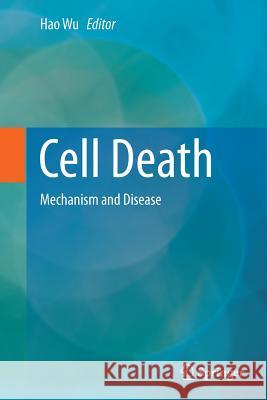
Cell Death: Mechanism and Disease Wu, Hao 9781493943258 Springer - książkaWidoczna okładka, to zdjęcie poglądowe, a rzeczywista szata graficzna może różnić się od prezentowanej.

Cell Death: Mechanism and Disease

ISBN-13: 9781493943258 / Angielski / Miękka / 2016 / 272 str.

Hao Wu
cena 603,34
(netto: 574,61 VAT:  5%)

Najniższa cena z 30 dni: 576,49
Termin realizacji zamówienia:
ok. 22 dni roboczych
Bez gwarancji dostawy przed świętami

Darmowa dostawa!

Beginning from centuries of anecdotal descriptions of cell death, such as those on the development of the midwife toad in 1842 by Carl Vogt, to modern-day investigations of cell death as a biological discipline, it has become accepted that cell death in multicellular organisms is a normal part of life. This book provides a comprehensive view of cell death, from its mechanisms of initiation and execution, to its implication in human disease and therapy.Physiological cell death plays critical roles in almost all aspects of biology, and the book details its roles in lymphocyte homeostasis, neuronal function, metabolism, and the DNA damage response. When physiological cell death goes awry, diseases can arise, and cancer is presented as a central paradigm for the consequences of derangements in the interplay between cell survival and cell death. At the same time, the potential promise of targeted therapies aimed at interdicting cell death machineries are also discussed extensively. The molecular mechanisms that underlie apoptotic cell death are illustrated from the perspectives of both the intrinsic, mitochondrial apoptotic pathway and the extrinsic, death receptor pathway. Key players in these pathways, such as the Bcl2 family proteins, cytochrome c, Apaf-1, caspases, death receptor adapter proteins, and inhibitor of apoptosis proteins, are presented from both functional and structural angles. Until only a few years ago, programmed cell death has been considered essentially synonymous with apoptosis. However, we now know that programmed cell death can also take other forms such as necrosis or necroptosis, and to this end, the mechanisms that underlie programmed necrosis in development and host defense are illustrated. The past twenty plus years have seen an incredible growth of research in cell death, with one breakthrough after another, and the legacy still goes on with constant new surprises and findings. Long live cell death


Kategorie:
Nauka, Biologia i przyroda
Kategorie BISAC:
Science > Biologia molekularna
Science > Cytologia
Science > Biochemia
Wydawca:
Springer
Język:
Angielski
ISBN-13:
9781493943258
Rok wydania:
2016
Wydanie:
Softcover Repri
Ilość stron:
272
Waga:
4.34 kg
Wymiary:
23.5 x 15.5
Oprawa:
Miękka
Wolumenów:
01

From the book reviews:

"This new book comprises reviews of primary studies that elucidate apoptotic pathways in specialized cells and suggest points of intervention for the treatment of various cancers. ... Summing Up: Highly recommended. Upper-division undergraduates through professionals." (S. K. Sommers Smith, Choice, Vol. 51 (11), August, 2014)

1. Historical Perspective – the Seven Ages of Cell Death Research.- 2. The Intrinsic Apoptotic Pathway.- 3. Molecular Basis of Cell Death Programs in Mature T Cell Homeostasis.- 4. Bcl-2 family and their therapeutic potential.- 5. IAP proteins and their therapeutic potential.- 6. Cell Death and Cancer.- 7. The DNA damage response mediates apoptosis and tumor suppression.- 8. Neuronal Death Mechanisms in Development and Disease.- 9. The Complex Interplay Between Metabolism and Apoptosis.- 10. Programmed Necrosis/Necroptosis: An Inflammatory Form of Cell Death.- 11. Structural Perspectives on BCL-2 Family of Proteins.- 12. Structural basis of death receptor signaling.

Hao Wu, Ph.D., is the Asa and Patricia Springer Professor at Harvard Medical School where she is a member of the Department of Biological Chemistry and Molecular Pharmacology. She is also a Senior Investigator in the Program in Cellular and Molecular Medicine at Boston Children’s Hospital. Her research focuses on elucidating the molecular basis of signal transduction by immune receptors, including the induction of cell death pathways.

Beginning from centuries of anecdotal descriptions of cell death, such as those on the development of the midwife toad in 1842 by Carl Vogt, to modern-day investigations of cell death as a biological discipline, it has become accepted that cell death in multicellular organisms is a normal part of life. This book provides a comprehensive view of cell death, from its mechanisms of initiation and execution, to its implication in human disease and therapy.

Physiological cell death plays critical roles in almost all aspects of biology, and the book details its roles in lymphocyte homeostasis, neuronal function, metabolism, and the DNA damage response. When physiological cell death goes awry, diseases can arise, and cancer is presented as a central paradigm for the consequences of derangements in the interplay between cell survival and cell death. At the same time, the potential promise of targeted therapies aimed at interdicting cell death machineries are also discussed extensively. The molecular mechanisms that underlie apoptotic cell death are illustrated from the perspectives of both the intrinsic, mitochondrial apoptotic pathway and the extrinsic, death receptor pathway. Key players in these pathways, such as the Bcl2 family proteins, cytochrome c, Apaf-1, caspases, death receptor adapter proteins, and inhibitor of apoptosis proteins, are presented from both functional and structural angles. Until only a few years ago, programmed cell death has been considered essentially synonymous with apoptosis. However, we now know that programmed cell death can also take other forms such as necrosis or necroptosis, and to this end, the mechanisms that underlie programmed necrosis in development and host defense are illustrated. The past twenty plus years have seen an incredible growth of research in cell death, with one breakthrough after another, and the legacy still goes on with constant new surprises and findings. Long live cell death!

Hao Wu, Ph.D., is the Asa and Patricia Springer Professor at Harvard Medical School where she is a member of the Department of Biological Chemistry and Molecular Pharmacology. She is also a Senior Investigator in the Program in Cellular and Molecular Medicine at Boston Children’s Hospital. Her research focuses on elucidating the molecular basis of signal transduction by immune
receptors, including the induction of cell death pathways.


Udostępnij

Facebook - konto krainaksiazek.pl


Opinie o Krainaksiazek.pl na Opineo.pl

Partner Mybenefit

Krainaksiazek.pl w programie rzetelna firma Krainaksiaze.pl - płatności przez paypal

Czytaj nas na:

Facebook - krainaksiazek.pl
  • książki na zamówienie
  • granty
  • książka na prezent
  • kontakt
  • pomoc
  • opinie
  • regulamin
  • polityka prywatności

Zobacz:

  • Księgarnia czeska

  • Wydawnictwo Książkowe Klimaty

1997-2025 DolnySlask.com Agencja Internetowa

© 1997-2022 krainaksiazek.pl
     
KONTAKT | REGULAMIN | POLITYKA PRYWATNOŚCI | USTAWIENIA PRYWATNOŚCI
Zobacz: Księgarnia Czeska | Wydawnictwo Książkowe Klimaty | Mapa strony | Lista autorów
KrainaKsiazek.PL - Księgarnia Internetowa

Polityka prywatnosci - link
Krainaksiazek.pl - płatnośc Przelewy24
Przechowalnia Przechowalnia






