• Wyszukiwanie zaawansowane
  • Kategorie
  • Kategorie BISAC
  • Książki na zamówienie
  • Promocje
  • Granty
  • Książka na prezent
  • Opinie
  • Pomoc
  • Załóż konto
  • Zaloguj się

Catalysis in Asymmetric Synthesis » książka


zaloguj się | załóż konto
Logo Krainaksiazek.pl

koszyk

konto

szukaj
topmenu
Księgarnia internetowa
Szukaj
Książki na zamówienie
Promocje
Granty
Książka na prezent
Moje konto
Pomoc
 
 
Wyszukiwanie zaawansowane
Pusty koszyk
Bezpłatna dostawa dla zamówień powyżej 20 złBezpłatna dostawa dla zamówień powyżej 20 zł

Kategorie główne

• Nauka
 [2949965]
• Literatura piękna
 [1857847]

  więcej...
• Turystyka
 [70818]
• Informatyka
 [151303]
• Komiksy
 [35733]
• Encyklopedie
 [23180]
• Dziecięca
 [617748]
• Hobby
 [139972]
• AudioBooki
 [1650]
• Literatura faktu
 [228361]
• Muzyka CD
 [398]
• Słowniki
 [2862]
• Inne
 [444732]
• Kalendarze
 [1620]
• Podręczniki
 [167233]
• Poradniki
 [482388]
• Religia
 [509867]
• Czasopisma
 [533]
• Sport
 [61361]
• Sztuka
 [243125]
• CD, DVD, Video
 [3451]
• Technologie
 [219309]
• Zdrowie
 [101347]
• Książkowe Klimaty
 [123]
• Zabawki
 [2362]
• Puzzle, gry
 [3791]
• Literatura w języku ukraińskim
 [253]
• Art. papiernicze i szkolne
 [7933]
Kategorie szczegółowe BISAC

Catalysis in Asymmetric Synthesis

ISBN-13: 9781405190916 / Angielski / Twarda / 2009 / 408 str.
Vittorio Caprio; Jonathan M. J. Williams
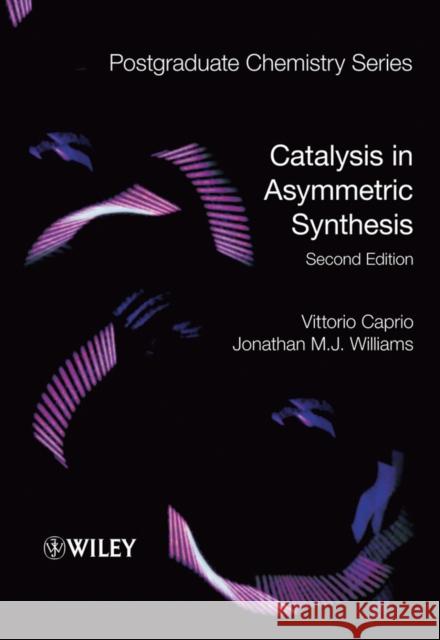
Catalysis in Asymmetric Synthesis Vittorio Caprio Jonathan M. J. Williams 9781405190916 Wiley-Blackwell - książkaWidoczna okładka, to zdjęcie poglądowe, a rzeczywista szata graficzna może różnić się od prezentowanej.

Catalysis in Asymmetric Synthesis

ISBN-13: 9781405190916 / Angielski / Twarda / 2009 / 408 str.

Vittorio Caprio; Jonathan M. J. Williams
cena 701,74
(netto: 668,32 VAT:  5%)

Najniższa cena z 30 dni: 695,98
Termin realizacji zamówienia:
ok. 30 dni roboczych
Bez gwarancji dostawy przed świętami

Darmowa dostawa!

Asymmetric synthesis has become a major aspect of modern organic chemistry. The stereochemical properties of an organic compound are often essential to its bioactivity, and the need for stereochemically pure pharmaceutical products is a key example of the importance of stereochemical control in organic synthesis. However, achieving high levels of stereoselectivity in the synthesis of complex natural products represents a considerable intellectual and practical challenge for chemists. Written from a synthetic organic chemistry perspective, this text provides a practical overview of the field, illustrating a wide range of transformations that can be achieved. The book captures the latest advances in asymmetric catalysis with emphasis placed on non-enzymatic methods. Topics covered include:

  • Reduction of alkenes, ketones and imines
  • Nucleophilic addition to carbonyl compounds
  • Catalytic carbon-carbon bond forming reactions
  • Catalytic reactions involving metal carbenoids
  • Conjugate addition reactions
Catalysis in Asymmetric Synthesis bridges the gap between undergraduate and advanced level textbooks and provides a convenient point of entry to the primary literature for the experienced synthetic organic chemist.

Kategorie:
Nauka, Chemia
Kategorie BISAC:
Science > Chemia - Fizyczna
Science > Chemia - Organiczna
Wydawca:
Wiley-Blackwell
Seria wydawnicza:
Postgraduate Chemistry
Język:
Angielski
ISBN-13:
9781405190916
Rok wydania:
2009
Numer serii:
000307607
Ilość stron:
408
Waga:
0.70 kg
Wymiary:
22.86 x 15.24 x 2.54
Oprawa:
Twarda
Wolumenów:
01
Dodatkowe informacje:
Bibliografia
Wydanie ilustrowane

Preface to the Second Edition.

Preface to the First Edition.

1 Introduction.

1.1 Reactions Amenable to Asymmetric Catalysis.

1.2 Assignment of (R) and (S) Stereochemical Descriptors.

Futher Reading.

References.

2 Reduction of Alkenes.

2.1 Asymmetric Hydrogenation with Rhodium Complexes.

2.2 Asymmetric Hydrogenation with Ruthenium Catalysts.

2.3 Alkene Hydrogenation with Titanium and Zirconium Catalysts.

2.4 Alkene Hydrogenation with Iridium Catalysts.

2.5 Alkene Hydrogenation with Organocatalysts.

2.6 Alkene Hydrosilylation.

2.7 Alkene Hydroboration.

2.8 Hydroamination.

2.9 Hydroformylation.

2.10 Hydroacylation of Alkenes.

2.11 Hydrocyanation of Alkenes.

References.

3 Reduction of Ketones and Imines.

3.1 Hydrogenation of Ketones.

3.2 Hydrogenation and Transfer Hydrogenation of Imines and Related Compounds.

3.3 Transfer Hydrogenation of Ketones.

3.4 Heterogeneous Hydrogenation.

3.5 Reduction of Ketones Using Enantioselective Borohydride Reagents.

3.6 Hydrosilylation of Ketones.

3.7 Hydrosilylation of Imines and Nitrones.

References.

4 Epoxidation.

4.1 Epoxidation of Allylic Alcohols.

4.2 Epoxidation with Metal(salen) Complexes.

4.3 Epoxidation Using Metal Porphyrin–Based Catalysts.

4.4 OtherMetal–Catalysed Epoxidations of Unfunctionalised Olefins.

4.5 Epoxidation of Electron–Deficient Alkenes.

4.6 Epoxidation with Iminium Salts.

4.7 Epoxidation with Ketone Catalysts.

4.8 Epoxidation of Aldehydes.

4.9 Aziridination of Alkenes.

4.10 Aziridination of Imines.

References.

5 Further Oxidation Reactions.

5.1 Dihydroxylation.

5.2 Aminohydroxylation.

5.3 –Heterofunctionalisation of Aldehydes and Ketones.

5.4 Oxidation of C H.

5.5 Baeyer Villiger Oxidation.

5.6 Oxidation of Sulfides.

References.

6 Nucleophilic Addition to Carbonyl Compounds.

6.1 Addition of Organozincs to Carbonyl Compounds.

6.2 Addition of Cyanide to Aldehydes and Ketones.

6.3 Allylation of Aldehydes.

6.4 Hydrophosphonylation of Aldehydes.

6.5 Nucleophilic Additions to Imines.

References.

7 The Aldol and Related Reactions.

7.1 The Aldol Reaction.

7.2 Isocyanide and Related Aldol Reactions.

7.3 The Nitroaldol Reaction.

7.4 Addition of Enolates to Imines.

7.5 Darzens Condensation.

7.6 Morita Baylis Hillman Reaction.

7.7 Carbonyl–Ene Reactions.

References.

8 Cycloadditions.

8.1 Diels Alder Reactions.

8.2 Inverse Electron Demand Diels Alder Reactions.

8.3 Hetero–Diels Alder Reactions.

8.4 1,3–Dipolar Cycloaddition Reactions.

8.5 [2+2] Cycloadditions.

8.6 Pauson Khand–Type Reactions.

References.

9 Catalytic Reactions Involving Carbenes and Ylides.

9.1 Cyclopropanation.

9.2 Insertion Reactions.

9.3 Asymmetric Ylide Reactions.

References.

10 Catalytic Carbon Carbon Bond–Forming Reactions.

10.1 Cross–Coupling Reactions.

10.2 Metal–Catalysed Allylic Substitution.

10.3 Heck Reactions.

10.4 Alkylmetalation of Alkenes.

References.

11 Conjugate Addition Reactions.

11.1 Conjugate Addition of Enolates.

11.2 Conjugate Addition of Sulfur Nucleophiles.

11.3 Conjugate Addition of Nonstabilised Nucleophiles.

11.4 Conjugate Addition with Nitrogen–Based Nucleophiles and Electrophiles.

References.

12 Further Catalytic Reactions.

12.1 Isomerisations and Rearrangements.

12.2 Deprotonation Reactions.

12.3 Protonation Reactions.

12.4 Alkylation and Allylation of Enolates.

12.5 Formation of Alkenes.

12.6 Oxyselenylation–Elimination Reactions.

12.7 The Benzoin Condensation.

12.8 Ester Formation and Hydrolysis.

12.9 Ring–Opening of Epoxides.

References.

Index.

Dr Vittorio Caprio Lecturer in Organic and Medicinal Chemistry in the Department of Chemistry, University of Auckland, New Zealand. His research interests lie in the application of synthetic organic methods to the synthesis of bioactive natural products of diverse structure. A central aim is the efficient and elegant syntheses of target core structures in a stereocontrolled manner using nature as the source of chirality. The ultimate goal is to use natural medicines as the basis for designing and synthesizing drugs of greater therapeutic value.   Professor Jonathan MJ Williams (author of the first edition) Department of Chemistry, University of Bath, UK Research involves with the use of transition metals for the synthesis of useful organic molecules.  In particular, we have been developing reactions using borrowing hydrogen.   In this chemistry, ruthenium or iridium catalysts temporarily remove hydrogen to give an aldehyde.  This aldehyde then reacts to give an alkene (or imine) and the hydrogen is then returned to give a C–C or C–N bond.  These procedures allow alcohols to be used as alkylating agents in place of more conventional, but often toxic/mutagenic alkyl halides.


Udostępnij

Facebook - konto krainaksiazek.pl


Opinie o Krainaksiazek.pl na Opineo.pl

Partner Mybenefit

Krainaksiazek.pl w programie rzetelna firma Krainaksiaze.pl - płatności przez paypal

Czytaj nas na:

Facebook - krainaksiazek.pl
  • książki na zamówienie
  • granty
  • książka na prezent
  • kontakt
  • pomoc
  • opinie
  • regulamin
  • polityka prywatności

Zobacz:

  • Księgarnia czeska

  • Wydawnictwo Książkowe Klimaty

1997-2025 DolnySlask.com Agencja Internetowa

© 1997-2022 krainaksiazek.pl
     
KONTAKT | REGULAMIN | POLITYKA PRYWATNOŚCI | USTAWIENIA PRYWATNOŚCI
Zobacz: Księgarnia Czeska | Wydawnictwo Książkowe Klimaty | Mapa strony | Lista autorów
KrainaKsiazek.PL - Księgarnia Internetowa

Polityka prywatnosci - link
Krainaksiazek.pl - płatnośc Przelewy24
Przechowalnia Przechowalnia







