• Wyszukiwanie zaawansowane
  • Kategorie
  • Kategorie BISAC
  • Książki na zamówienie
  • Promocje
  • Granty
  • Książka na prezent
  • Opinie
  • Pomoc
  • Załóż konto
  • Zaloguj się

Carotenoids: Volume 2: Synthesis » książka


zaloguj się | załóż konto
Logo Krainaksiazek.pl

koszyk

konto

szukaj
topmenu
Księgarnia internetowa
Szukaj
Książki na zamówienie
Promocje
Granty
Książka na prezent
Moje konto
Pomoc
 
 
Wyszukiwanie zaawansowane
Pusty koszyk
Bezpłatna dostawa dla zamówień powyżej 20 złBezpłatna dostawa dla zamówień powyżej 20 zł

Kategorie główne

• Nauka
 [2946912]
• Literatura piękna
 [1852311]

  więcej...
• Turystyka
 [71421]
• Informatyka
 [150889]
• Komiksy
 [35717]
• Encyklopedie
 [23177]
• Dziecięca
 [617324]
• Hobby
 [138808]
• AudioBooki
 [1671]
• Literatura faktu
 [228371]
• Muzyka CD
 [400]
• Słowniki
 [2841]
• Inne
 [445428]
• Kalendarze
 [1545]
• Podręczniki
 [166819]
• Poradniki
 [480180]
• Religia
 [510412]
• Czasopisma
 [525]
• Sport
 [61271]
• Sztuka
 [242929]
• CD, DVD, Video
 [3371]
• Technologie
 [219258]
• Zdrowie
 [100961]
• Książkowe Klimaty
 [124]
• Zabawki
 [2341]
• Puzzle, gry
 [3766]
• Literatura w języku ukraińskim
 [255]
• Art. papiernicze i szkolne
 [7810]
Kategorie szczegółowe BISAC

Carotenoids: Volume 2: Synthesis

ISBN-13: 9783034893251 / Angielski / Miękka / 2011 / 362 str.
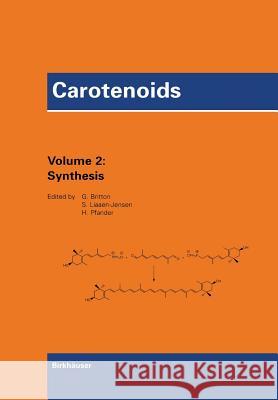
Hanspeter Pfander; George Britton; Synnove Liaaen-Jensen
Carotenoids: Volume 2: Synthesis Pfander, Hanspeter 9783034893251 Birkh User - książkaWidoczna okładka, to zdjęcie poglądowe, a rzeczywista szata graficzna może różnić się od prezentowanej.

Carotenoids: Volume 2: Synthesis

ISBN-13: 9783034893251 / Angielski / Miękka / 2011 / 362 str.

Hanspeter Pfander; George Britton; Synnove Liaaen-Jensen
cena 806,99
(netto: 768,56 VAT:  5%)

Najniższa cena z 30 dni: 771,08
Termin realizacji zamówienia:
ok. 22 dni roboczych
Bez gwarancji dostawy przed świętami

Darmowa dostawa!

George Britton, Synnl/Jve Liaaen-Jensen and Hanspeter Pfander This book, Volume 2 in the series Carotenoids, is the first book to be published that is devoted entirely to the total synthesis of carotenoids, but it is timely in view of the rapid development and the growing diversification of the carotenoid field. The 1971 Carotenoids book contained a major chapter of 250 pages on total synthesis by H. Mayer and O. Isler. That comprehensive and authoritative review described systematically the construction of many synthons and the synthesis of many natural and unnatural carotenoids and related compounds. Twenty five years on, that chapter remains an essential reference work and source of information, with its extensive collection of tabulated data and lists of references to the original literature. Surveys of progress since 1971 have been presented at the IUPAC International Symposia on Carotenoids and are included in the published proceedings of these symposia. The history of major publications in the carotenoid field, leading to the development of this series, was outlined in the preface to the series published in Vol. IA. The general philo sophy outlined in that preface, with emphasis on practical guidance and the inclusion of worked examples of some of the most useful procedures, is maintained in Vol. 2. In kceping with this philosophy, Vol. 2 is not intended to be an exhaustive review of the literature, but is planned as a practical book, as well as a source of information."


Kategorie:
Nauka, Chemia
Kategorie BISAC:
Science > Chemia
Wydawca:
Birkh User
Seria wydawnicza:
Carotenoids
Język:
Angielski
ISBN-13:
9783034893251
Rok wydania:
2011
Wydanie:
Softcover Repri
Numer serii:
000320667
Ilość stron:
362
Waga:
0.65 kg
Wymiary:
24.0 x 17.0
Oprawa:
Miękka
Wolumenów:
01

1: General Aspects.- I: Synthesis in Perspective.- II: Strategies for Building the Carbon Skeleton.- A. Introduction.- B. General Strategies.- C. Examples.- 1. Wittig reaction: Astaxanthin and zeaxanthin.- 2. Julia sulphone coupling: Zeaxanthin.- 3. Wittig reaction with unsymmetrical carotenoids: (S)-Trisanhydrobacterioruberin.- 4. Dimerization: ?,?-Carotene.- References.- III: Characterization of Products.- A. Introduction.- B. Isomers of ?,?-carotene.- C. (7Z)-Lycopene.- D. Lutein.- E. Zeaxanthin.- F. 3,4,3?,4?-Tetraacetoxypirardixanthin.- References.- 2: Coupling Reactions.- I: Enol Ether and Aldol Condensations.- A. Introduction.- B. Enol Ether Condensations.- 1. Alkyl enol ethers.- 2. Trimethylsilyl enol ethers.- C. Aldol Condensations.- References.- II: Organometallic Reactions.- A. Introduction.- B. General Procedures.- C. Metals of Groups IA, IIA and IIIB (Li, Na, Mg and Zn).- 1. Metal acetylides (alkynylides).- 2. Metal alkenyls.- 3. Allylic alkali metal derivatives.- 4. Zinc reagents.- D. Palladium-mediated and Nickel-mediated Reactions.- 1. Palladium.- 2. Nickel.- E. Copper.- 1. Cadiot-Chodkiewicz coupling reaction.- 2. Cuprates.- F. Low-valent Titanium.- References.- III: Wittig Olefination.- A. Introduction.- B. Phosphorus Ylides.- 1. Reactivity of phosphorus ylides.- 2. Production of phosphorus ylides.- C. Stereochemistry.- 1. Factors that influence stereoselectivity.- 2. Steric control.- D. Reaction Mechanisms.- E. Horner-Wadsworth-Emmons Olefination.- F. Use of the Wittig Reaction in Carotenoid Synthesis.- 1. Introduction.- 2. Bond formation between C(7)/C(8), or C(7?)/C(8?).- 3. Bond formation between C(11)/C(12), or C(11?)/C(12?).- 4. Bond formation between C(15)/C(15?).- References.- IV: Sulphone Coupling.- A. Alkylation — Elimination Method.- 1. Synthesis of vitamin A derivatives.- 2. Synthesis of carotenoids.- B. Double Elimination Method.- References.- 3: Carotenoid Synthesis.- I: Polyene Synthons.- A. Introduction.- B. Symmetrical Central C10-Components.- 1. C10-Components of various functionality.- 2. Industrial routes to the C10-dialdehyde.- 3. Unsymmetrically functionalized central C10-components.- C. Synthesis of Protected C15- and C20-Dialdehydes.- D. C10-Components for the Synthesis of Segments C(8) to C(15) and C(15?) to C(8?).- E. 1,4-Bifunctional Isoprenoid C5-Building Blocks.- 1. (E)-4-Acetyloxy-2-methylbut-2-enal.- 2. Monoacetals of (E)-2-methylbut-2-ene-1,4-dial.- 3. C5-Phosphonium ester salts and C5-phosphonate esters.- 4. 5-Hydroxy-4-methyl-2(5H)-furanone.- References.- II: Acyclic Carotenoids.- A. Introduction.- B. Carotenoids with the ? End Group.- C. Carotenoids with the 3,4-Didehydro-? End Group.- D. Carotenoids with the 1,2-Dihydro-? End Group.- E. Carotenoids with the l-Hydroxy-3,4-didehydro-l,2-dihydro-? End Group.- F. Carotenoids with the l-Methoxy-3,4-didehydro-l,2-dihydro-? End Group.- G. Carotenoids with the 1-Hydroxy-1,2-dihydro-? End Group.- H. Carotenoids with the 16-Hydroxy-? End Group.- I. Carotenoids with the l,2-Dihydroxy-3,4-didehydro-l,2-dihydro-? End Group.- J. Carotenoids with the 1,2-Epoxy-1,2-dihydro-? End Group.- K. Carotenoids with the 1-Methoxy-2-keto-3,4-didehydro-l,2-dihydro-? End Group.- L. C45- and C50-Carotenoids.- M. Diapocarotenoids.- References.- III: Synthesis of Cyclic Carotenoids.- A. Introduction.- B. Carotenoids with the ? End Group.- 1. ?,?-Carotene.- 2. Carotenoids with the 3,4-didehydro-? end group.- 3. Retro-carotenes.- 4. Carotenoids with the 2-hydroxy-? end group.- 5. Carotenoids with the 3-hydroxy-? end group.- 6. Carotenoids with the 4-hydroxy-? end group.- 7. Carotenoids with the 3,4-dihydroxy-? end group.- 8. Carotenoids with the 5,6-dihydroxy-5,6-dihydro-? end group.- 9. Carotenoids with the 3,5,6-trihydroxy-5,6-dihydro-? end group.- 10. Carotenoids with the 5,6-epoxy-5,6-dihydro-? end group.- 11. Carotenoids with the 5,8-epoxy-5,8-dihydro-? end group.- 12. Carotenoids with the 3-hydroxy-5,6-epoxy-5,6-dihydro-? end group.- 13. Carotenoids with the 2-oxo-3,4-didehydro-? end group.- 14. Carotenoids with the 3-oxo-retro-? end group.- 15. Carotenoids with the 4-oxo-? end group.- 16. Carotenoids with the 3-hydroxy-4-oxo-? end group.- C. Carotenoids with the ? End Group.- 1. ?,?-Carotene and ?,?-carotene.- 2. Carotenoids with the 3-hydroxy-? end group.- D. Carotenoids with the ? End Group.- E. Carotenoids with the ? End Group.- F. Carotenoids with Aromatic End Groups.- 1. Carotenoids with the ? end group.- 2. Carotenoids with the 3-hydroxy-? end group.- 3. Carotenoids with the ? end group.- G. C50-Carotenoids.- 1. Carotenoids with a substituted ? end group.- 2. Carotenoids with a substituted ? end group.- 3. Carotenoids with a substituted ? end group.- H. Norcarotenoids.- References.- IV: Synthesis of Acetylenic, Allenic and In-chain Substituted Carotenoids.- A. Introduction.- B. Synthesis of Acetylenic Carotenoids.- C. Synthesis of Allenic Carotenoids.- D. Synthesis of Butenolide Carotenoids.- 1. Sulphone method.- 2. Synthesis of the optically active C15-epoxyformyl ester.- 3. Synthesis of the optically active C22-allenic sulphone with an abnormal location of the in-chain methyl group.- 4. Synthesis of optically active peridinin.- E. Synthesis of ?-Diketone Carotenoids.- 1. The aldol condensation route.- 2. The Wittig condensation route.- 3. The Claisen condensation route.- References.- V: Total Synthesis of (Z)-Isomers.- A. Introduction.- B. Strategy.- C. Formation of (Z)-Double Bonds by Synthesis.- 1. Sterically unhindered disubstituted (Z)-double bond (15Z).- 2. Sterically hindered disubstituted (Z)-double bonds (7Z and 11Z).- 3. Trisubstituted (Z)-double bonds (5Z, 9Z and 13Z).- 4. Thermodynamicly favoured cis double bonds.- D. Direct synthesis of (Z)-isomers.- 1. Carotenes.- 2. Xanthophylls.- 3. Apocarotenoids.- References.- VI: Labelled Carotenoids.- Synthesis.- 1. Synthesis and use of 13C-labelled synthons.- 2. Synthesis of the central C10-unit with 13C-labels.- 3. Synthesis of unlabelled synthons.- 4. Synthesis of labelled carotenoids.- 5. Deuterium-labelled spheroidenes.- References.- VII: Technical Syntheses.- A. Economic Importance.- 1. Sales.- 2. Areas of application.- B. Industrial Carotenoid Syntheses not involving any Wittig Olefination.- 1. Carotenoid synthons from the Roche synthesis of vitamin A.- 2. ?,?-Carotene.- 3. Apo-?-carotenoids.- 4. Xanthophylls.- C. Industrial Carotenoid Syntheses by means of Wittig Olefination.- 1. Carotenoid building blocks from the BASF synthesis of vitamin A.- 2. ?,?-Carotene.- 3. Apo-?-carotenoids.- 4. Xanthophylls.- D. Formulation.- 1. Colouration of lipophilic media.- 2. Colouration of hydrophilic media – Production of bioavailable preparations.- References.- VIII: Partial Synthesis of Glycosides and Glycosyl Esters.- A. Carotenoid Glycosides.- B. Carotenoid Glycosyl Esters.- References.- IX: Partial Synthesis of Sulphates.- A. Introduction.- B. General Route.- C. Synthesis of Stable Carotenoid Sulphates.- D. Synthesis of Less Stable Carotenoid Sulphates.- E. Preparation and Solvolysis Reactions of Unstable Carotenoid Sulphates.- F. Properties of Carotenoid Sulphates.- References.- Worked Examples.- Example 1: Enol Ether Condensation.- A. Introduction.- B. Examples.- References.- Example 2: Organometallic Reactions.- A. Introduction.- B. Synthesis of Ethynyl-?-ionol.- C. Synthesis of Vinyl-?-ionol.- D. Synthesis of (Z)-?-Ionylideneacetic Acid.- References.- Example 3: Wittig and Horner-Emmons Reaction.- A. Introduction.- B. Syntheses of ?-Apo-8?-carotenoic acid ethyl esters.- References.- Example 4: Sulphone Coupling.- A. Retinoic Acid by the Alkylation-Desulphonylation Method.- B. (all-E)-Retinyl Acetate by the Double Elimination Method.- References.- Example 5: Asymmetric Syntheses.- Asymmetric Epoxidation.- Asymmetric Dihydroxylation.- References.- Example 6: Synthesis ex Chiral Pool.- A. Introduction.- B. Examples.- References.- Example 7: Optical Resolution of Racemic ?-Ionone.- A. Introduction.- B. Synthesis of (R)-(+)-?-Ionone.- Example 8: ?,?-Carotene.- A. Introduction.- B. Synthesis of ?,?-Carotene by use of the Wittig Reaction.- C. Synthesis of ?,?-Carotene by use of Low-valent Titanium.- Appendix I: List of Synthons.- Appendix II: List of Naturally Occurring Carotenoids Prepared by Total Synthesis.- List of abbreviations.


Udostępnij

Facebook - konto krainaksiazek.pl


Opinie o Krainaksiazek.pl na Opineo.pl

Partner Mybenefit

Krainaksiazek.pl w programie rzetelna firma Krainaksiaze.pl - płatności przez paypal

Czytaj nas na:

Facebook - krainaksiazek.pl
  • książki na zamówienie
  • granty
  • książka na prezent
  • kontakt
  • pomoc
  • opinie
  • regulamin
  • polityka prywatności

Zobacz:

  • Księgarnia czeska

  • Wydawnictwo Książkowe Klimaty

1997-2025 DolnySlask.com Agencja Internetowa

© 1997-2022 krainaksiazek.pl
     
KONTAKT | REGULAMIN | POLITYKA PRYWATNOŚCI | USTAWIENIA PRYWATNOŚCI
Zobacz: Księgarnia Czeska | Wydawnictwo Książkowe Klimaty | Mapa strony | Lista autorów
KrainaKsiazek.PL - Księgarnia Internetowa

Polityka prywatnosci - link
Krainaksiazek.pl - płatnośc Przelewy24
Przechowalnia Przechowalnia





