• Wyszukiwanie zaawansowane
  • Kategorie
  • Kategorie BISAC
  • Książki na zamówienie
  • Promocje
  • Granty
  • Książka na prezent
  • Opinie
  • Pomoc
  • Załóż konto
  • Zaloguj się

Carbohydrate-Based Vaccines and Immunotherapies » książka


zaloguj się | załóż konto
Logo Krainaksiazek.pl

koszyk

konto

szukaj
topmenu
Księgarnia internetowa
Szukaj
Książki na zamówienie
Promocje
Granty
Książka na prezent
Moje konto
Pomoc
 
 
Wyszukiwanie zaawansowane
Pusty koszyk
Bezpłatna dostawa dla zamówień powyżej 20 złBezpłatna dostawa dla zamówień powyżej 20 zł

Kategorie główne

• Nauka
 [2946912]
• Literatura piękna
 [1852311]

  więcej...
• Turystyka
 [71421]
• Informatyka
 [150889]
• Komiksy
 [35717]
• Encyklopedie
 [23177]
• Dziecięca
 [617324]
• Hobby
 [138808]
• AudioBooki
 [1671]
• Literatura faktu
 [228371]
• Muzyka CD
 [400]
• Słowniki
 [2841]
• Inne
 [445428]
• Kalendarze
 [1545]
• Podręczniki
 [166819]
• Poradniki
 [480180]
• Religia
 [510412]
• Czasopisma
 [525]
• Sport
 [61271]
• Sztuka
 [242929]
• CD, DVD, Video
 [3371]
• Technologie
 [219258]
• Zdrowie
 [100961]
• Książkowe Klimaty
 [124]
• Zabawki
 [2341]
• Puzzle, gry
 [3766]
• Literatura w języku ukraińskim
 [255]
• Art. papiernicze i szkolne
 [7810]
Kategorie szczegółowe BISAC

Carbohydrate-Based Vaccines and Immunotherapies

ISBN-13: 9780470197561 / Angielski / Twarda / 2009 / 434 str.
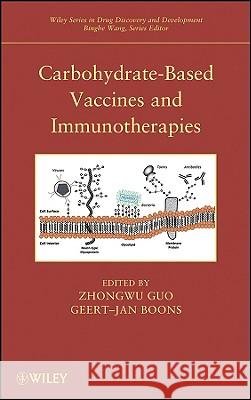
Zhongwu Guo; Geert-Jan Boons
Carbohydrate-Based Vaccines and Immunotherapies Zhongwu Guo Geert-Jan Boons 9780470197561 John Wiley & Sons - książkaWidoczna okładka, to zdjęcie poglądowe, a rzeczywista szata graficzna może różnić się od prezentowanej.

Carbohydrate-Based Vaccines and Immunotherapies

ISBN-13: 9780470197561 / Angielski / Twarda / 2009 / 434 str.

Zhongwu Guo; Geert-Jan Boons
cena 763,95
(netto: 727,57 VAT:  5%)

Najniższa cena z 30 dni: 768,18
Termin realizacji zamówienia:
ok. 16-18 dni roboczych
Bez gwarancji dostawy przed świętami

Darmowa dostawa!

The fundamental science and the latest developments in carbohydrate-based vaccines The relatively new field of glycoimmunology has emerged from the marriage of glycobiology and immunology, in recognition of the important role carbohydrates play as antigenic determinants. Carbohydrate-Based Vaccines and Immunotherapies comprehensively reviews the state of this exciting field, offering a single source for both the fundamental science and the latest developments. With contributions by leading experts, this resource covers the design, synthesis, evaluation, and applications of various carbohydrate-based vaccines, including polysaccharides, neoglycoproteins, and neoglycolipids. The text approaches vaccine design from a chemical and molecular focus, staying in line with current advances. Key topics covered by Carbohydrate-Based Vaccines and Immunotherapies include:

  • Recent developments towards clinically useful vaccines against bacteria, viruses, parasites, and fungi
  • Using adjuvants to improve immunogenicity and/or immunological properties of vaccines
  • Choosing and designing proper adjuvants for specific targets
  • Abnormal carbohydrates expressed by tumors
  • Carbohydrate-based therapeutic cancer vaccines or cancer immunotherapy
  • Clinical trials results for synthetic cancer vaccines
  • Glycoengineering of cell surface carborhydrates and its anticancer applications
  • Using cell surface carbohydrates for disease diagnosis
A single, convenient source of state-of-the-art information from leading authorities in the field, Carbohydrate-Based Vaccines and Immunotherapies is an essential reference for organic chemists and biochemists, academic researchers, and other students and professionals involved in vaccine design.

Kategorie:
Nauka, Chemia
Kategorie BISAC:
Science > Chemistry - Industrial & Technical
Medical > Immunology
Wydawca:
John Wiley & Sons
Seria wydawnicza:
Wiley Series in Drug Discovery and Development
Język:
Angielski
ISBN-13:
9780470197561
Rok wydania:
2009
Numer serii:
000320264
Ilość stron:
434
Waga:
0.72 kg
Wymiary:
23.88 x 15.75 x 2.54
Oprawa:
Twarda
Wolumenów:
01
Dodatkowe informacje:
Bibliografia

Preface.

Contributors.

Chapter 1: Glycobiology and Immunology (Udayanath Aich and Kevin J. Yarema).

1. Introduction.

2. Glycobiology.

2.1 Glycosylation – Is it Worth the Cost.

2.2 Glycan Biosynthesis – A Dauntingly Complex Process.

2.3 Glycoproteins.

2.4 Lipid–based Glycans.

2.5 Polysaccharides: Glycosaminoglycans (GAGs) and Bacterial Capsular Components.

3. The Immune System.

3.1 Introductory Comments.

3.2 Overview of the Immune System.

3.3 Glycoimmunobiology.

3.4 The Interplay between Glycosylation and Sugars is a Two Way Street.

4. Carbohydrate Antigens.

4.1 Carbohydrate Antigens in Man.

4.2 Carbohydrates and Pathogens.

4.3 Carbohydrate–based Vaccines.

4.4 Concluding Comments: Building on Success.

Acknowledgement.

References Cited.

Chapter 2: Preparation of Glycoconjugate Vaccines (Wei Zou and Harold J. Jennings).

1. Introduction.

2. Capsular Polysaccharide–Protein Conjugates.

2.1 Haemophilus influenzae type b.

2.2 Streptococcus pneumoniae.

2.3 Neisseria meningitidis.

2.4 Salmonella typhi Vi.

2.5 Group B streptococcus.

2.6 Staphylococcus aureus type 5 and 8.

3. Lipopolysaccharide (LPS) and Lipooligosaccharide (LOS) conjugates.

3.1 Escherichia coli O157.

3.2 Vibrio cholerae O1 and O139.

3.3 Shigella dysenteriae type 1, sonnei and flexneri 2a.

3.4 Neisseria meningitidis and Non–typeable Haemophilus influenzae.

4. Total synthetic glycoconjugate vaccines.

References Cited.

Chapter 3: Adjuvants for Protein– and Carbohydrate–Based Vaccines (Bruno Guy).

1. Introduction.

2. Initiation and stimulation of adaptive responses.

3. "Old" adjuvants and formulations.

3.1. Aluminium.

3.2. Emulsions.

3.3. Saponins, QS21, ISCOMS.

3.4. Liposomes, microparticles.

3.5. Antigen/formulation targeting.

3.6. Induction of CD8 CTLs with soluble antigens.

4. Renaissance of innate immunity.

4.1. TLRs, agonists and roles.

4.2. Non–TLRs innate receptors.

4.3. Other receptors involved in antigen capture and recognition.

5. From basic research to practical applications: identification of new adjuvants.

5.1. TLR synthetic agonists.

5.2. Combination of PRR agonists.

6. Adjuvants for carbohydrate–based vaccines.

6.1. Td and Ti B cell responses.

6.2. Adjuvants for "free" polysaccharides (Ti antigens).

6.3. Adjuvants for glycoconjugate vaccines (T–dependent antigens).

7. Combinations of adjuvants: preclinical and clinical developments.

8. Immunomodulation of existing responses: adjuvants for therapeutic vaccines.

9. Take another route.

9.1. Adjuvants for mucosal immunization.

9.2. Epidermal or intradermal routes.

10. Practical aspects of adjuvant development.

10.1. Regulatory aspects.

10.2. Safety versus efficacy: risk/benefit ratio.

11. Preclinical models used in adjuvant development.

11.1. Animal models.

11.2. In vitro models.

12. Conclusions and perspectives.

Acknowledgement.

References Cited.

Chapter 4: Carbohydrate–Based Antibacterial Vaccines (Robert A. Pon and Harold J. Jennings).

1. Introduction.

2. Polysaccharide and glycoconjugate immunobiology.

3. Deficiencies in the human immune response to polysaccharides.

4. Glycoconjugate vaccines.

5. Haemophilus influenzae.

5.1 Hib polysaccharides.

5.2 Hib conjugate vaccines.

6. Neisseria meningitidis.

6.1 Meningococcal polysaccharide vaccines.

6.2 Meningococcal conjugate vaccines.

7. Streptococcus pneumoniae.

7.1 Impact on invasive pneumococcal disease.

7.2 Impact on acute otitis media.

8. Group B Streptococcus.

9. Salmonella typhi.

10. Conjugate vaccines– Future concerns.

11. Summary.

References Cited.

Chapter 5: Carbohydrate–Based Antiviral Vaccines (Benjamin M. Swarts and Zhongwu Guo).

1. Introduction.

2. Viral Glycosylation.

2.1 Viral N–glycosylation.

2.2 Carbohydrates of HIV.

2.3 Carbohydrates of influenza A virus.

2.4 Carbohydrates in hepatits C virus.

2.5 Carbohydrates in other viruses.

3. Vaccine and Drug Development.

3.1 HIV.

3.2. Influenza A virus.

3.3. Hepatitis C virus.

4. Conclusions.

Acknowledgement.

References Cited.

Chapter 6: Carbohydrate–Based Antiparasitic Vaccines (Faustin Kamena, Xinyu Liu and Peter H. Seeberger).

1. Introduction.

2. GPI–based antimalarial vaccine.

2.1 GPI as a malaria toxin.

2.2 Synthetic GPI as antitoxic malaria vaccine candidate.

2.3 Synthetic GPI microarray to define antimalarial antibody response.

3. LPG–based antileishmanial vaccine.

3.1 LPG in leishmaniasis pathogenesis.

3.2 Synthetic phosphoglycan repeating unit as potential antileishmanial vaccine.

3.3 Synthetic LPG cap oligosaccharide as antileishmanial vaccine candidate.

4. Other examples.

4.1 Fucosylated N–glycan as potential vaccine lead against schistosomiasis.

4.2 GPIs as potential vaccine lead against toxoplasmosis and chagas disease.

5. Perspectives and Future Challenge.

Acknowledgement.

References cited.

Chapter 7: Carbohydrate–Based Antifungal Vaccines (Magdia De Jesus, Liise–anne Pirofski and Arturo Casadevall).

1. Introduction.

2. Terminology.

2.1 Vaccination vs Immunization.

2.2 Toxoids.

2.3 Glycoconjugates.

3. antifungal Glycoconjugate vaccines.

3.1 C. neoformans polysaccharide–protein conjugates.

3.2 Development of alternative vaccines in C. neoformans.

3.3 C. albicans mannan–protein conjugates.

3.4 –Glucan–protein conjugates.

4. Antifungal vaccines and the immune system.

5. Summary.

Acknowledgement.

References Cited.

Chapter 8: Cancer–Associated and Related Glycosphingolipid Antigens (Steve Levery).

1. Introduction.

2. Structural Classification of Antigens.

3. "Abnormal" Expression of Glycosphingolipid (GSL) Glycan Structures in Cancer Tissues.

4. Discussion of Delected Antigens.

4.1 Globo–series and related antigens.

4.2 Ganglio–series antigens.

4.3 Lacto–series (Type 1 chain; Lcn) antigens.

4.4 Neolacto–series (Type 2 chain; nLcx) antigens.

5. Other Antigens.

5.1 Lea–Lea and Leb–Lea.

5.2 Lea–Lex.

Acknowledgement.

References Cited.

Chapter 9: Synthetic Carbohydrate–Based Anticancer Vaccines (Therese Buskas, Pamela Thompson, and Geert–Jan Boons).

1. Introduction to Cancer Vaccines.

2. Tumor–Associated Carbohydrate Antigens (TACAs).

3. Carbohydrate–Based Cancer Vaccines.

4. Humoral Immune Response to Carbohydrates.

5. MHC Mediated Immune Response to Glycopeptides.

6. Toll–like Receptors and the Link Between Innate and Adaptive Immunity.

7. Chemical synthesis of tumor–associated carbohydrates and glycopeptides.

8. Semi–synthetic carbohydrate–based cancer vaccines.

9. Fully synthetic carbohydrate–based cancer vaccines.

10. B–epitope and receptor ligand di–epitope constructs.

11. B– and T–cell di–epitope constructs.

12. Tri–component vaccines.

References.

Chapter 10: Glycoengineering of Cell Surface Sialic Acid and Its Application to Cancer Immunotherapy (Zhongwu Guo).

1. Introduction.

2. Engineering of Cell Surface Sialic Acids.

3. Sialic Acid engineering for Modulation of Cell Surface Reactivity.

4. Sialic Acids engineering for Cancer Immunotherapy.

5. Summary.

Acknowledgement.

References Cited.

Chapter 11: Therapeutic Cancer Vaccines: Clinical Trials and Applications (Hans H. Wandall and Mads A. Tarp).

1. Introduction.

2. Innate and adaptive immunity in relation to cancer immunotherapy.

3. Design issues for clinical cancer vaccine trials.

4. Clinical development of cancer vaccines.

5. Proof of principle trials.

5.1 Toxicity and pharmacokinetics.

5.2 Dose and administration schedule.

5.3 Endpoints: Biological activity and clinical activity.

6. Efficacy Trials.

7. Clinical endpoints in efficacy trials.

8. Challenges in vaccine development.

9. Defining the target tumor–associated antigens.

10. Production and storage issues.

11. Clinical trials.

11.1 Glycosphingolipid–based vaccines.

11.2 O–glycan–based vaccines.

12. Conclusions.

Acknowledgement.

References Cited.

Chapter 12: Carbohydrates as Unique Structures for Disease Diagnosis (Kate Rittenhouse–Olson).

1. Introduction.

2. Viruses.

2.1 Infectious mononucleosis.

2.2 Influenza A and B.

3. Bacteria.

3.1 Streptococcus pyogenes.

3.2 Groups A, B, C, D, F and G Streptococcus.

3.3 Streptococcus pneumoniae.

3.4 Meningitis.

3.5 Chlamydia trachomatis.

3.6 Future.

4. Fungi.

4.1 Aspergillus fumigatus.

4.2 Invasive Candidiasis.

4.3 Cryptococcus neoformans.

4.4 Histoplasma capsulatum.

5. Parasites.

5.1 Echinococcus multilocularis.

5.2 Clonorchis sinensis.

5.3 Trichinella.

5.4 Schistomsoma mansoni.

6. Autoimmunity.

6.1 Diabetes.

6.2 Cold agglutinin disease.

6.3 Inflammatory bowel disease.

7. Tumors.

7.1 Bladder.

7.2 Breast.

7.3 Colon.

7.4 Liver.

7.5 Lung.

7.6 Melanoma.

7.7 Ovarian.

7.8 Pancreatic.

7.9 Prostate.

8. Inherited or acquired disorders of glycosylation.

References Cited.

Zhongwu Guo is a Professor of Chemistry at Wayne State University. The winner of the American Chemical Society′s 2005 New Investigator Award in Carbohydrate Chemistry, Dr. Guo serves on the editorial board of the Journal of Carbohydrate Chemistry, speaks regularly at international conferences, and has authored more than ninety peer–reviewed publications.

Geert–Jan Boons is a Franklin Professor of Chemistry at the Complex Carbohydrate Research Center (CRCR) of the University of Georgia. The winner of the European Carbohydrate Association′s Carbohydrate Research Award for Creativity in Carbohydrate Science, and the American Chemical Society′s Horace Isbell Award, Dr. Boons serves on the editorial boards of Journal of Carbohydrate Chemistry and Advances in Carbohydrate Chemistry and Biochemistry.

The fundamental science and the latest developments in carbohydrate–based vaccines

The relatively new field of glycoimmunology has emerged from the marriage of glycobiology and immunology, in recognition of the important role carbohydrates play as antigenic determinants. Carbohydrate–Based Vaccines and Immunotherapies comprehensively reviews the state of this exciting field, offering a single source for both the fundamental science and the latest developments.

With contributions by leading experts, this resource covers the design, synthesis, evaluation, and applications of various carbohydrate–based vaccines, including polysaccharides, neoglycoproteins, and neoglycolipids. The text approaches vaccine design from a chemical and molecular focus, staying in line with current advances.

Key topics covered by Carbohydrate–Based Vaccines and Immunotherapies include:

  • Recent developments towards clinically useful vaccines against bacteria, viruses, parasites, and fungi

  • Using adjuvants to improve immunogenicity and/or immunological properties of vaccines

  • Choosing and designing proper adjuvants for specific targets

  • Abnormal carbohydrates expressed by tumors

  • Carbohydrate–based therapeutic cancer vaccines or cancer immunotherapy

  • Clinical trials results for synthetic cancer vaccines

  • Glycoengineering of cell surface carborhydrates and its anticancer applications

  • Using cell surface carbohydrates for disease diagnosis

A single, convenient source of state–of–the–art information from leading authorities in the field, Carbohydrate–Based Vaccines and Immunotherapies is an essential reference for organic chemists and biochemists, academic researchers, and other students and professionals involved in vaccine design.


Udostępnij

Facebook - konto krainaksiazek.pl


Opinie o Krainaksiazek.pl na Opineo.pl

Partner Mybenefit

Krainaksiazek.pl w programie rzetelna firma Krainaksiaze.pl - płatności przez paypal

Czytaj nas na:

Facebook - krainaksiazek.pl
  • książki na zamówienie
  • granty
  • książka na prezent
  • kontakt
  • pomoc
  • opinie
  • regulamin
  • polityka prywatności

Zobacz:

  • Księgarnia czeska

  • Wydawnictwo Książkowe Klimaty

1997-2025 DolnySlask.com Agencja Internetowa

© 1997-2022 krainaksiazek.pl
     
KONTAKT | REGULAMIN | POLITYKA PRYWATNOŚCI | USTAWIENIA PRYWATNOŚCI
Zobacz: Księgarnia Czeska | Wydawnictwo Książkowe Klimaty | Mapa strony | Lista autorów
KrainaKsiazek.PL - Księgarnia Internetowa

Polityka prywatnosci - link
Krainaksiazek.pl - płatnośc Przelewy24
Przechowalnia Przechowalnia





