• Wyszukiwanie zaawansowane
  • Kategorie
  • Kategorie BISAC
  • Książki na zamówienie
  • Promocje
  • Granty
  • Książka na prezent
  • Opinie
  • Pomoc
  • Załóż konto
  • Zaloguj się

Biointensive Integrated Pest Management in Horticultural Ecosystems » książka


zaloguj się | załóż konto
Logo Krainaksiazek.pl

koszyk

konto

szukaj
topmenu
Księgarnia internetowa
Szukaj
Książki na zamówienie
Promocje
Granty
Książka na prezent
Moje konto
Pomoc
 
 
Wyszukiwanie zaawansowane
Pusty koszyk
Bezpłatna dostawa dla zamówień powyżej 20 złBezpłatna dostawa dla zamówień powyżej 20 zł

Kategorie główne

• Nauka
 [2950560]
• Literatura piękna
 [1849509]

  więcej...
• Turystyka
 [71097]
• Informatyka
 [151150]
• Komiksy
 [35848]
• Encyklopedie
 [23178]
• Dziecięca
 [617388]
• Hobby
 [139064]
• AudioBooki
 [1657]
• Literatura faktu
 [228597]
• Muzyka CD
 [383]
• Słowniki
 [2855]
• Inne
 [445295]
• Kalendarze
 [1464]
• Podręczniki
 [167547]
• Poradniki
 [480102]
• Religia
 [510749]
• Czasopisma
 [516]
• Sport
 [61293]
• Sztuka
 [243352]
• CD, DVD, Video
 [3414]
• Technologie
 [219456]
• Zdrowie
 [101002]
• Książkowe Klimaty
 [124]
• Zabawki
 [2311]
• Puzzle, gry
 [3459]
• Literatura w języku ukraińskim
 [254]
• Art. papiernicze i szkolne
 [8079]
Kategorie szczegółowe BISAC

Biointensive Integrated Pest Management in Horticultural Ecosystems

ISBN-13: 9788132218432 / Angielski / Twarda / 2014 / 277 str.
Parvatha P. Reddy; Dr P. Parvatha Reddy; P. Parvatha Reddy
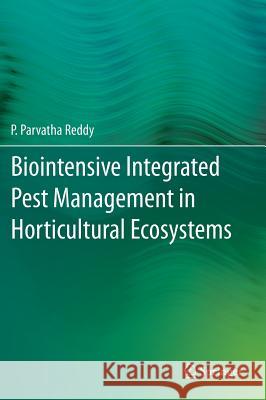
Biointensive Integrated Pest Management in Horticultural Ecosystems Parvatha P. Reddy Dr P. Parvatha Reddy P. Parvatha Reddy 9788132218432 Springer - książkaWidoczna okładka, to zdjęcie poglądowe, a rzeczywista szata graficzna może różnić się od prezentowanej.

Biointensive Integrated Pest Management in Horticultural Ecosystems

ISBN-13: 9788132218432 / Angielski / Twarda / 2014 / 277 str.

Parvatha P. Reddy; Dr P. Parvatha Reddy; P. Parvatha Reddy
cena 805,10
(netto: 766,76 VAT:  5%)

Najniższa cena z 30 dni: 771,08
Termin realizacji zamówienia:
ok. 22 dni roboczych
Dostawa w 2026 r.

Darmowa dostawa!

Through Green Revolution in late 1960s, India achieved self-sufficiency in food production, but still the country has not achieved self-sufficiency in production of horticultural crops. Most of the growth in food production during the green revolution period is attributed to the use of higher levels of fertilizers and pesticides which are continuing to destroy stable traditional ecosystems. The challenge before the crop protection scientist is to increase yields from the existing land without harming the environment and resource base. This can be achieved by adopting eco-friendly Biointensive Integrated Pest Management (BIPM) strategy.BIPM incorporates ecological and economic factors into agricultural system design and decision making, and addresses public concerns about environmental quality and food safety. The benefits of implementing BIPM can include reduced chemical input costs, reduced on-farm and off-farm environmental impacts, and more effective and sustainable pest management. An ecology-based IPM has the potential of decreasing inputs of fuel, machinery, and synthetic chemicals-all of which are energy intensive and increasingly costly in terms of financial and environmental impact. Such reductions will benefit the grower and society.The present book deals with the most recent biointensive integrated approaches for pest management utilizing components such as bioagents predators, parasitoids and pathogens (bacteria, fungi, viruses)], botanicals (biofumigation, oil cakes, FYM, compost, crop residues, green manuring and other organic amendments), arbuscular mycorrhizal fungi, physical methods (hot water treatment of planting material, soil solarization), cultural methods (crop rotation, summer ploughing, fallowing, intercropping, pruning, mulching, spacing, planting date, trap cropping, etc.), biorational chemicals (pheromones) and resistant cultivars. This book can serve as a useful reference to policy makers, research and extension workers, practicing farmers and students. The material can also be used for teaching post-graduate courses."


Kategorie:
Nauka, Biologia i przyroda
Kategorie BISAC:
Science > Botanika
Technology & Engineering > Agriculture - General
Science > Life Sciences - Zoology - Entomology
Wydawca:
Springer
Język:
Angielski
ISBN-13:
9788132218432
Rok wydania:
2014
Wydanie:
2014
Ilość stron:
277
Waga:
0.72 kg
Wymiary:
25.4 x 17.78 x 1.75
Oprawa:
Twarda
Wolumenów:
01
Dodatkowe informacje:
Wydanie ilustrowane

Section I Introduction.- 1. Introduction.- Section II Fruit Crops.- 2. Tropical Fruit Crops.- 3. Sub-tropical Fruit Crops.- 4. Temperate Fruit Crops.- 5. Semi-arid Fruit Crops.- Section III Vegetable Crops.- 6. Solanaceous Vegetable Crops.- 7. Bulbous Vegetable Crops.- 8. Cruciferous Vegetable Crops.- 9. Malvaceous Vegetable Crops.- 10. Root Vegetable Crops.- 11. Leguminous Vegetable Crops.- 12. Cucurbitaceous Vegetable Crops.- 13. Leafy Vegetable Crops.- Section IV Ornamental, Medicinal, Aromatic and Tuber Crops.- 14. Ornamental Crops.- 15. Medicinal Plants.- 16. Aromatic Crops.- 17. Tuber Crops.- Section V Plantation and Spice Crops.- 18. Plantation Crops.- 19. Spice Crops.- Section VI Transfer of Crop Protection Technology and Conclusions.- 20. Transfer of Crop Protection Technology and Conclusions.- References.- Subject Index.

Dr. P. Parvatha Reddy obtained his M.Sc. (Agri.) degree from Karnataka University, Dharwad and Ph. D. degree jointly from the University of Florida, USA and the University of Agricultural Sciences, Bangalore.

Dr. Reddy served as the Director of the prestigious Indian Institute of Horticultural Research (IIHR) at Bangalore from 1999 to 2002 during which period the Institute was honoured with “ICAR Best Institution Award”. He also served as the Head, Division of Entomology and Nematology at IIHR and gave tremendous impetus and direction to research, extension and education in developing bio-intensive integrated pest management strategies in horticultural crops. These technologies are being practiced widely by the farmers across the country since they are effective, economical, eco-friendly and residue-free. Dr. Reddy has about 34 years of experience working with horticultural crops and involved in developing an F1 tomato hybrid “Arka Varadan” resistant to root-knot nematodes. He has also developed bio-intensive integrated pest management strategies in horticultural crops using eco-friendly components such as bio-control agents, botanicals and arbuscular mycorrhizal fungi.

Dr. Reddy has over 237 scientific publications to his credit, which also include 25 books. He has also guided two Ph.D. students at the University of Agricultural Sciences, Bangalore.

Dr. Reddy has been awarded with the prestigious “Association for Advancement Pest Management in Horticultural Ecosystems Award”, “Dr. G.I. D’souza Memorial Lecture Award”, “Prof. H.M. Shah Memorial Award” and “ Hexamar Agricultural Research and Development Foundation Award” for his unstinted efforts in developing sustainable, bio-intensive and eco-friendly integrated pest management strategies in horticultural crops.

Dr. Reddy served as a member of the Research Advisory Committee of the National Centre for Integrated Pest Management, New Delhi; the National Research Centre for Citrus, Nagpur and the Project Directorate of Biological Control, Bangalore. He also served as a Member of the ICAR Scientific Panel for Nematology, Member, QRT to review the progress of AICRP on Nematodes and AINRP on Betelvine. He is the Honorary Fellow of the Society for Plant Protection Sciences, New Delhi, Fellow of the Indian Phytopathological Society, New Delhi and Founder President of the Association for Advancement of Pest Management in Horticultural Ecosystems (AAPMHE), Bangalore.

Dr. Reddy has organized “Fourth International Workshop on Biological Control and Management of Chromolaena odorata”, “National Seminar on Hitech Horticulture”, “First National Symposium on Pest Management in Horticultural Crops: Environmental Implications and Thrusts” and “Second National Symposium on Pest Management in Horticultural Crops: New Molecules and Biopesticides”.

Through ‘Green Revolution’ in late 1960s, India achieved self-sufficiency in food production, but still the country has not achieved self-sufficiency in production of horticultural crops. Most of the growth in food production during the green revolution period is attributed to the use of higher levels of fertilizers and pesticides which are continuing to destroy stable traditional ecosystems. The challenge before the crop protection scientist is to increase yields from the existing land without harming the environment and resource base. This can be achieved by adopting eco-friendly Biointensive Integrated Pest Management (BIPM) strategy.

BIPM incorporates ecological and economic factors into agricultural system design and decision making, and addresses public concerns about environmental quality and food safety. The benefits of implementing BIPM can include reduced chemical input costs, reduced on-farm and off-farm environmental impacts, and more effective and sustainable pest management. An ecology-based IPM has the potential of decreasing inputs of fuel, machinery, and synthetic chemicals-all of which are energy intensive and increasingly costly in terms of financial and environmental impact. Such reductions will benefit the grower and society.

The present book deals with the most recent biointensive integrated approaches for pest management utilizing components such as bioagents [predators, parasitoids and pathogens (bacteria, fungi, viruses)], botanicals (biofumigation, oil cakes, FYM, compost, crop residues, green manuring and other organic amendments), arbuscular mycorrhizal fungi, physical methods (hot water treatment of planting material, soil solarization), cultural methods (crop rotation, summer ploughing, fallowing, intercropping, pruning, mulching, spacing, planting date, trap cropping, etc.), biorational chemicals (pheromones) and resistant cultivars. This book can serve as a useful reference to policy makers, research and extension workers, practicing farmers and students. The material can also be used for teaching post-graduate courses.


Udostępnij

Facebook - konto krainaksiazek.pl


Opinie o Krainaksiazek.pl na Opineo.pl

Partner Mybenefit

Krainaksiazek.pl w programie rzetelna firma Krainaksiaze.pl - płatności przez paypal

Czytaj nas na:

Facebook - krainaksiazek.pl
  • książki na zamówienie
  • granty
  • książka na prezent
  • kontakt
  • pomoc
  • opinie
  • regulamin
  • polityka prywatności

Zobacz:

  • Księgarnia czeska

  • Wydawnictwo Książkowe Klimaty

1997-2025 DolnySlask.com Agencja Internetowa

© 1997-2022 krainaksiazek.pl
     
KONTAKT | REGULAMIN | POLITYKA PRYWATNOŚCI | USTAWIENIA PRYWATNOŚCI
Zobacz: Księgarnia Czeska | Wydawnictwo Książkowe Klimaty | Mapa strony | Lista autorów
KrainaKsiazek.PL - Księgarnia Internetowa

Polityka prywatnosci - link
Krainaksiazek.pl - płatnośc Przelewy24
Przechowalnia Przechowalnia






