• Wyszukiwanie zaawansowane
  • Kategorie
  • Kategorie BISAC
  • Książki na zamówienie
  • Promocje
  • Granty
  • Książka na prezent
  • Opinie
  • Pomoc
  • Załóż konto
  • Zaloguj się

Beyond the Asterisk: Understanding Native Students in Higher Education » książka


zaloguj się | załóż konto
Logo Krainaksiazek.pl

koszyk

konto

szukaj
topmenu
Księgarnia internetowa
Szukaj
Książki na zamówienie
Promocje
Granty
Książka na prezent
Moje konto
Pomoc
 
 
Wyszukiwanie zaawansowane
Pusty koszyk
Bezpłatna dostawa dla zamówień powyżej 20 złBezpłatna dostawa dla zamówień powyżej 20 zł

Kategorie główne

• Nauka
 [2952079]
• Literatura piękna
 [1850969]

  więcej...
• Turystyka
 [71058]
• Informatyka
 [151066]
• Komiksy
 [35579]
• Encyklopedie
 [23181]
• Dziecięca
 [620496]
• Hobby
 [139036]
• AudioBooki
 [1646]
• Literatura faktu
 [228729]
• Muzyka CD
 [379]
• Słowniki
 [2932]
• Inne
 [445708]
• Kalendarze
 [1409]
• Podręczniki
 [164793]
• Poradniki
 [480107]
• Religia
 [510956]
• Czasopisma
 [511]
• Sport
 [61267]
• Sztuka
 [243299]
• CD, DVD, Video
 [3411]
• Technologie
 [219640]
• Zdrowie
 [100984]
• Książkowe Klimaty
 [124]
• Zabawki
 [2281]
• Puzzle, gry
 [3363]
• Literatura w języku ukraińskim
 [258]
• Art. papiernicze i szkolne
 [8020]
Kategorie szczegółowe BISAC

Beyond the Asterisk: Understanding Native Students in Higher Education

ISBN-13: 9781579226244 / Angielski / Miękka / 2013 / 204 str.
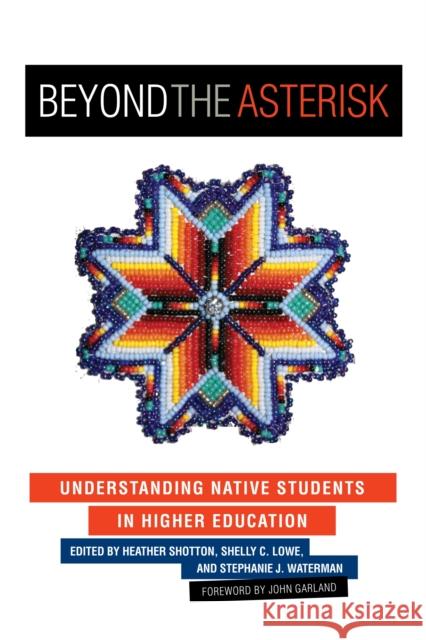
Heather Shotton; Shelly C. Lowe; Stephanie J. Waterman
Beyond the Asterisk: Understanding Native Students in Higher Education Shotton, Heather J. 9781579226244 Stylus Publishing (VA) - książkaWidoczna okładka, to zdjęcie poglądowe, a rzeczywista szata graficzna może różnić się od prezentowanej.

Beyond the Asterisk: Understanding Native Students in Higher Education

ISBN-13: 9781579226244 / Angielski / Miękka / 2013 / 204 str.

Heather Shotton; Shelly C. Lowe; Stephanie J. Waterman
cena 180,80
(netto: 172,19 VAT:  5%)

Najniższa cena z 30 dni: 178,58
Termin realizacji zamówienia:
ok. 22 dni roboczych.

Darmowa dostawa!

A Choice Outstanding Academic Title for 2013

While the success of higher education and student affairs is predicated on understanding the students we serve, the reality is, where the Native American population is concerned, that this knowledge is generally lacking. This lack may be attributed to this population's invisibility within the academy - it is often excluded from institutional data and reporting, and frequently noted as not statistically significant - and its relegation to what is referred to as the -American Indian research asterisk.-

The purpose of this book is to move beyond the asterisk in an effort to better understand Native students, challenge the status quo, and provide an informed base for leaders in student and academic affairs, and administrators concerned with the success of students on their campuses.

The authors of this book share their understanding of Native epistemologies, culture, and social structures, offering student affairs professionals and institutions a richer array of options, resources, and culturally-relevant and inclusive models to better serve this population.

The book begins by providing insights into Native student experiences, presenting the first-year experience from a Native perspective, illustrating the role of a Native living/learning community in student retention, and discussing the importance of incorporating culture into student programming for Native students as well as the role of Native fraternities and sororities.

The authors then consider administrative issues, such as the importance of outreach to tribal nations, the role of Tribal Colleges and Universities and opportunities for collaborations, and the development of Native American Student Services Units.
.
The book concludes with recommendations for how institutions can better serve Native students in graduate programs, the role that Indigenous faculty play in student success, and how professional associations can assist student affairs professionals with fulfilling their role of supporting the success of Native American students, staff, and faculty.

This book moves beyond the asterisk to provide important insights from Native American higher education leaders and non-Native practitioners who have made Native students a priority in their work.

While predominantly addressed to the student affairs profession - providing an understanding of the needs of the Native students it serves, describing the multi-faceted and unique issues, characteristics and experiences of this population, and sharing proven approaches to developing appropriate services - it also covers issues of broader administrative concern, such as collaboration with tribal colleges; as well academic issues, such as graduate and professional education.

The book covers new material, as well as expanding on topics previously addressed in the literature, including Native American Greek organizations, incorporating Native culture into student programming, and the role of Native American Special Advisors.

The contributors are themselves products of colleges and universities where Native students are too often invisible, and who succeeded despite the odds. Their insights and the examples they provide add richness to this book. It will provide a catalyst for new higher education practices that lead to direct, and increased support for, Native Americans and others who are working to remove the Native American asterisk from research and practice.


Kategorie:
Nauka, Pedagogika i oświata
Kategorie BISAC:
Education > Schools - Levels - Higher
Wydawca:
Stylus Publishing (VA)
Język:
Angielski
ISBN-13:
9781579226244
Rok wydania:
2013
Ilość stron:
204
Waga:
0.36 kg
Wymiary:
22.61 x 15.24 x 1.52
Oprawa:
Miękka
Wolumenów:
01
Dodatkowe informacje:
Bibliografia

“Beyond the Asterisk is conceptualized as a tool for action in that it provides examples of successful student support practices and illustrations of responsive programming for Native American/Alaska Native/Indigenous students in higher education. Beyond the Asterisk is much needed for moving with intentionality to action that addressed the challenges and problems that currently exist for these students in higher education.

“Readers will feel invited by these Native scholars to witness or engage in the issues from a Native perspective and will even be tutored in that way of seeing and doing by the unapologetic use of concepts and language.

“I found this approach necessary if non-Native educators like me are to begin to reframe issues and dilemmas in culturally appropriate ways. If so, then Native/Indigenous students’ dilemmas and issues might then be addressed by non-Native educators in a multiculturally competent manner.”

The Review of Higher Education, The Journal of the Association for the Study of Higher Education

"Editors Shotton, Lowe, and Waterman accomplish their goal of moving Native American college Students "beyond the asterisk." This must-read text challenges academicians to go beyond the "American Indian research asterisk": exclusion from institutional data and reporting, omission from the curriculum, and nonexistence in research and literature. No longer should Native students be invisible in the academy. The contributors explore ways in which higher education professionals and institutions can serve Native students. A key strength of the collection is the inclusion of research by Native American student practitioners, faculty members, and non-Native allies "who are on the ground, in the trenches, working with the Native students every day." Definitions and the history of Native education in the US strengthen the book. The organization of this work suggests that the writers value Native students. Topics are varied and include first-year experiences, Native culture, the Native fraternity and sorority movement, Native American affairs, tribal college collaborations, indigenous faculty role models, and support from national organizations. All involved in academia need to understand Native students in higher education. Summing Up: Essential.

A.A. Hodge, Buffalo State College

CHOICE

“Within this important and long overdue addition to the literature, higher education faculty, and administrators, have important new resources for helping shift the landscape of Native American college student experiences toward success. The importance of this particular new text cannot be understated. It has been conceived, written, and edited by Native American higher education leaders and those who have made Native students a priority in their practice. My hope is that this book becomes a catalyst for new higher education practices that lead to direct, and increased support for, Native Americans and others who are vigorously working to remove the Native American asterisk from research and practice. This text also signals a renewed call-to-action for increasing the representation of Native students, faculty, and staff on our campuses”

John Garland

Acknowledgments Thanksgiving Freida Jacques (Onondaga, Turtle. Foreword Dr. John Garland (Choctaw. Introduction Dr. Heather J. Shotton (Wichita/Kiowa/Cheyenne. Shelly C. Lowe (Dine´. Dr. Stephanie J. Waterman (Onondaga, Turtle. 1. The First Year Experience for Native Americans. The University of Arizona First-Year Scholars Program Amanda Tachine (Dine´. Karen Francis-Begay (Dine´. 2. Incorporating Native Culture into Student Affairs Steven C. Martin (Muscogee Creek. Adrienne L. Thunder (Ho-Chunk. 3. Extending the Rafters. Cultural Context for Native American Students Dr. Timothy Ecklund Danielle Terrance (Mohawk. 4. The Historically Native American Fraternity and Sorority Movement Derek Oxendine (Lumbee. Symphony Oxendine (Cherokee/Mississippi Choctaw. Dr. Robin Minthorn (Kiowa/Apache/Nez Perce/Assiniboine/Umatilla. 5. The Role of the Special Advisor to the President on Native American Affairs Karen Francis-Begay (Dine´. 6. Tribal College Collaborations Dr. Justin Guillory (Nez Perce Descendant. 7. Academic and Student Affairs Partnerships Molly Springer (Cherokee Nation of Oklahoma. Dr. Charlotte E. Davidson (Dine´/Mandan, Hidatsa, and Arikara. Dr. Stephanie J. Waterman (Onondaga, Turtle. 8. How Institutions Can Support Native Professional and Graduate Students CHiXapkaid (Dr. D. Michael Pavel. (Skokomish. 9. Fancy War Dancing on Academe’s Glass Ceiling. Supporting and Increasing Indigenous Faculty Role Models in Higher Education Dr. Cornel Pewewardy (Comanche/Kiowa. 10. Best Practices for National Organizations to Support the Native Experience in Higher Education Dr. John L. Garland (Choctaw. Dr. George S. McClellan Conclusion Dr. Stephanie J. Waterman (Onondaga, Turtle. Dr. Heather J. Shotton (Wichita/Kiowa/Cheyenne. Shelly C. Lowe (Dine´. Dr. Donna Brown (Turtle Mountain Chippewa. About the Editors and Contributors Index

Heather J. Shotton is a member of the Wichita & Affiliated Tribes, and is also of Kiowa and Cheyenne descent. She currently serves as an Assistant Professor in Native American Studies at the University of Oklahoma. Her research focuses on Native American student success, Indigenous higher education, and Indigenous women in the academy.

Shelly C. Lowe is Navajo from Ganado, Arizona. She is the Executive Director of the Harvard University Native American Program (HUNAP). Prior to being at Harvard she worked in Native American student affairs at Yale University and in American Indian Studies at The University of Arizona, where she is completing her Ph.D. in Higher Education.

Stephanie J. Waterman is Onondaga, Turtle Clan. She is an Associate Professor, in Leadership, Higher & Adult Education, at the Ontario Institute for Studies in Education, and coordinates the Student Development/Student Services in Postsecondary Education at the University of Toronto. Prior to her appointment at OISE, she was a faculty member in Higher Education administration in Educational Leadership at the Warner Graduate School of Education and Human Development, University of Rochester, and Faculty Associate for the Syracuse University Native Student Program, she researches Native student experiences, faculty/staff/student interaction, and First Nations/Native American Student Affairs units.

John Garland is Assistant Professor, Rehabilitation Counseling Program, University of Alabama.

Lowe, Shelly C. Shelly C. Lowe is Navajo from Ganado, Arizona. She... więcej >


Udostępnij

Facebook - konto krainaksiazek.pl


Opinie o Krainaksiazek.pl na Opineo.pl

Partner Mybenefit

Krainaksiazek.pl w programie rzetelna firma Krainaksiaze.pl - płatności przez paypal

Czytaj nas na:

Facebook - krainaksiazek.pl
  • książki na zamówienie
  • granty
  • książka na prezent
  • kontakt
  • pomoc
  • opinie
  • regulamin
  • polityka prywatności

Zobacz:

  • Księgarnia czeska

  • Wydawnictwo Książkowe Klimaty

1997-2025 DolnySlask.com Agencja Internetowa

© 1997-2022 krainaksiazek.pl
     
KONTAKT | REGULAMIN | POLITYKA PRYWATNOŚCI | USTAWIENIA PRYWATNOŚCI
Zobacz: Księgarnia Czeska | Wydawnictwo Książkowe Klimaty | Mapa strony | Lista autorów
KrainaKsiazek.PL - Księgarnia Internetowa

Polityka prywatnosci - link
Krainaksiazek.pl - płatnośc Przelewy24
Przechowalnia Przechowalnia




