• Wyszukiwanie zaawansowane
  • Kategorie
  • Kategorie BISAC
  • Książki na zamówienie
  • Promocje
  • Granty
  • Książka na prezent
  • Opinie
  • Pomoc
  • Załóż konto
  • Zaloguj się

Basic Pharmacokinetics and Pharmacodynamics: An Integrated Textbook and Computer Simulations » książka


zaloguj się | załóż konto
Logo Krainaksiazek.pl

koszyk

konto

szukaj
topmenu
Księgarnia internetowa
Szukaj
Książki na zamówienie
Promocje
Granty
Książka na prezent
Moje konto
Pomoc
 
 
Wyszukiwanie zaawansowane
Pusty koszyk
Bezpłatna dostawa dla zamówień powyżej 20 złBezpłatna dostawa dla zamówień powyżej 20 zł

Kategorie główne

• Nauka
 [2949965]
• Literatura piękna
 [1857847]

  więcej...
• Turystyka
 [70818]
• Informatyka
 [151303]
• Komiksy
 [35733]
• Encyklopedie
 [23180]
• Dziecięca
 [617748]
• Hobby
 [139972]
• AudioBooki
 [1650]
• Literatura faktu
 [228361]
• Muzyka CD
 [398]
• Słowniki
 [2862]
• Inne
 [444732]
• Kalendarze
 [1620]
• Podręczniki
 [167233]
• Poradniki
 [482388]
• Religia
 [509867]
• Czasopisma
 [533]
• Sport
 [61361]
• Sztuka
 [243125]
• CD, DVD, Video
 [3451]
• Technologie
 [219309]
• Zdrowie
 [101347]
• Książkowe Klimaty
 [123]
• Zabawki
 [2362]
• Puzzle, gry
 [3791]
• Literatura w języku ukraińskim
 [253]
• Art. papiernicze i szkolne
 [7933]
Kategorie szczegółowe BISAC

Basic Pharmacokinetics and Pharmacodynamics: An Integrated Textbook and Computer Simulations

ISBN-13: 9781119143154 / Angielski / Miękka / 2016 / 576 str.
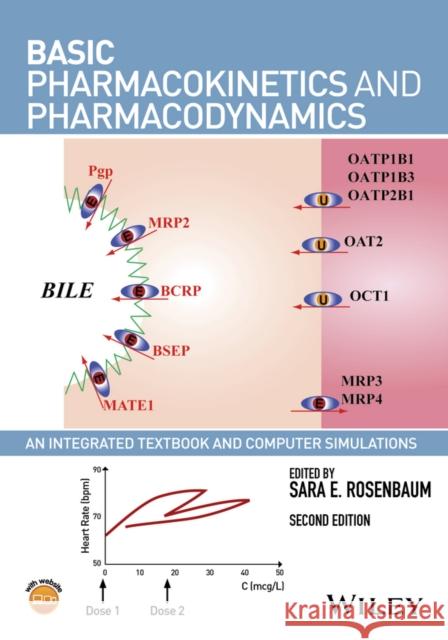
SE Rosenbaum
Basic Pharmacokinetics and Pharmacodynamics: An Integrated Textbook and Computer Simulations SE Rosenbaum 9781119143154 John Wiley & Sons Inc - książkaWidoczna okładka, to zdjęcie poglądowe, a rzeczywista szata graficzna może różnić się od prezentowanej.

Basic Pharmacokinetics and Pharmacodynamics: An Integrated Textbook and Computer Simulations

ISBN-13: 9781119143154 / Angielski / Miękka / 2016 / 576 str.

SE Rosenbaum
cena 354,03 zł
(netto: 337,17 VAT:  5%)

Najniższa cena z 30 dni: 350,41 zł
Termin realizacji zamówienia:
ok. 30 dni roboczych
Bez gwarancji dostawy przed świętami

Darmowa dostawa!

Updated with new chapters and topics, this book provides a comprehensive description of all essential topics in contemporary pharmacokinetics and pharmacodynamics. It also features interactive computer simulations for students to experiment and observe PK/PD models in action.


- Presents the essentials of pharmacokinetics and pharmacodynamics in a clear and progressive manner
- Helps students better appreciate important concepts and gain a greater understanding of the mechanism of action of drugs by reinforcing practical applications in both the book and the computer modules
- Features interactive computer simulations, available online through a companion website at: http: //www.uri.edu/pharmacy/faculty/rosenbaum/basicmodels.html
- Adds new chapters on physiologically based pharmacokinetic models, predicting drug-drug interactions, and pharmacogenetics while also strengthening original chapters to better prepare students for more advanced applications
- Reviews of the 1st edition: -This is an ideal textbook for those starting out ... and also for use as a reference book ....- (International Society for the Study of Xenobiotics) and -I could recommend Rosenbaum's book for pharmacology students because it is written from a perspective of drug action . . . Overall, this is a well-written introduction to PK/PD .... - (British Toxicology Society Newsletter)

Updated with new chapters and topics, this book explains basic concepts (including math and equations) of pharmacokinetics and pharmacodynamics and features interactive computer simulations for students to experiment and observe PK/PD models in action.

Kategorie:
Nauka, Chemia
Kategorie BISAC:
Medical > Farmakologia
Science > Chemistry - Computational & Molecular Modeling
Medical > Biostatistics
Wydawca:
John Wiley & Sons Inc
Język:
Angielski
ISBN-13:
9781119143154
Rok wydania:
2016
Ilość stron:
576
Waga:
1.01 kg
Wymiary:
25.8 x 17.9 x 3.0
Oprawa:
Miękka
Wolumenów:
01
Dodatkowe informacje:
Bibliografia
Glosariusz/słownik

Preface xix

Contributors xxi

1 Introduction to Pharmacokinetics and Pharmacodynamics 1
Sara E. Rosenbaum

1.1 Introduction: Drugs and Doses, 2

1.2 Introduction to Pharmacodynamics, 3

1.3 Introduction to Pharmacokinetics, 9

1.4 Dose–Response Relationships, 12

1.5 Therapeutic Range, 14

1.6 Summary, 18

Reference, 18

2 Passage of Drugs Through Membranes 19
Sara E. Rosenbaum

2.1 Introduction, 20

2.2 Structure and Properties of Membranes, 20

2.3 Passive Diffusion, 21

2.4 Carrier–Mediated Processes: Transport Proteins, 26

References, 33

3 Drug Administration and Drug Absorption 35
Steven C. Sutton

3.1 Introduction: Local and Systemic Drug Administration, 36

3.2 Routes of Drug Administration, 37

3.3 Overview of Oral Absorption, 41

3.4 Extent of Drug Absorption, 44

3.5 Determinants of the Fraction of the Dose Absorbed (F), 46

3.6 Factors Controlling the Rate of Drug Absorption, 61

3.7 Biopharmaceutics Classification System, 64

3.8 Food Effects, 65

Problems, 66

References, 67

4 Drug Distribution 71
Sara E. Rosenbaum

4.1 Introduction, 72

4.2 Extent of Drug Distribution, 72

4.3 Rate of Drug Distribution, 89

4.4 Distribution of Drugs to the Central Nervous System, 93

Problems, 96

References, 98

5 Drug Elimination and Clearance 99
Sara E. Rosenbaum

5.1 Introduction, 100

5.2 Clearance, 102

5.3 Renal Clearance, 108

5.4 Hepatic Elimination and Clearance, 119

Problems, 139

References, 142

6 Compartmental Models in Pharmacokinetics 145
Sara E. Rosenbaum

6.1 Introduction, 146

6.2 Expressions for Component Parts of the Dose–Plasma Concentration Relationship, 146

6.3 Putting Everything Together: Compartments and Models, 149

6.4 Examples of Complete Compartment Models, 152

6.5 Use of Compartmental Models to Study Metabolite Pharmacokinetics, 155

6.6 Selecting and Applying Models, 156

Problems, 157

Suggested Readings, 157

7 Pharmacokinetics of an Intravenous Bolus Injection in a One–Compartment Model 159
Sara E. Rosenbaum

7.1 Introduction, 160

7.2 One–Compartment Model, 160

7.3 Pharmacokinetic Equations, 162

7.4 Simulation Exercise, 163

7.5 Application of the Model, 165

7.6 Determination of Pharmacokinetic Parameters Experimentally, 168

7.7 Pharmacokinetic Analysis in Clinical Practice, 173

Problems, 174

Suggested Reading, 176

8 Pharmacokinetics of an Intravenous Bolus Injection in a Two–Compartment Model 177
Sara E. Rosenbaum

8.1 Introduction, 178

8.2 Tissue and Compartmental Distribution of a Drug, 179

8.3 Basic Equation, 181

8.4 Relationship Between Macro and Micro Rate Constants, 183

8.5 Primary Pharmacokinetic Parameters, 183

8.6 Simulation Exercise, 188

8.7 Determination of the Pharmacokinetic Parameters of the Two–Compartment Model, 191

8.8 Clinical Application of the Two–Compartment Model, 194

Problems, 197

Suggested Readings, 199

9 Pharmacokinetics of Extravascular Drug Administration 201
Dr. Steven C. Sutton

9.1 Introduction, 202

9.2 First–Order Absorption in a One–Compartment Model, 203

9.3 Modified Release and Gastric Retention Formulations, 214

9.4 Bioavailability, 215

9.5 In Vitro–In Vivo Correlation, 219

9.6 Simulation Exercise, 222

Problems, 223

References, 224

10 Introduction to Noncompartmental Analysis 225
Sara E. Rosenbaum

10.1 Introduction, 225

10.2 Mean Residence Time, 226

10.3 Determination of Other Important Pharmacokinetic Parameters, 229

10.4 Different Routes of Administration, 231

10.5 Application of Noncompartmental Analysis to Clinical Studies, 232

Problems, 234

11 Pharmacokinetics of Intravenous Infusion in a One–Compartment Model 237
Sara E. Rosenbaum

11.1 Introduction, 238

11.2 Model and Equations, 239

11.3 Steady–State Plasma Concentration, 242

11.4 Loading Dose, 246

11.5 Termination of Infusion, 248

11.6 Individualization of Dosing Regimens, 249

Problems, 252

12 Multiple Intravenous Bolus Injections in the One–Compartment Model 255
Sara E. Rosenbaum

12.1 Introduction, 256

12.2 Terms and Symbols Used in Multiple–Dosing Equations, 257

12.3 Monoexponential Decay During a Dosing Interval, 259

12.4 Basic Pharmacokinetic Equations for Multiple Doses, 260

12.5 Steady State, 262

12.6 Basic Formula Revisited, 270

12.7 Pharmacokinetic–Guided Dosing Regimen Design, 270

12.8 Simulation Exercise, 276

Problems, 277

Reference, 278

13 Multiple Intermittent Infusions 279
Sara E. Rosenbaum

13.1 Introduction, 279

13.2 Steady–State Equations for Multiple Intermittent Infusions, 281

13.3 Monoexponential Decay During a Dosing Interval: Determination of Peaks, Troughs, and Elimination Half–Life, 284

13.4 Determination of the Volume of Distribution, 286

13.5 Individualization of Dosing Regimens, 289

13.6 Simulation, 289

Problems, 290

14 Multiple Oral Doses 293
Sara E. Rosenbaum

14.1 Introduction, 293

14.2 Steady–State Equations, 294

14.3 Equations Used Clinically to Individualize Oral Doses, 298

14.4 Simulation Exercise, 300

References, 301

15 Nonlinear Pharmacokinetics 303
Sara E. Rosenbaum

15.1 Linear Pharmacokinetics, 304

15.2 Nonlinear Processes in Absorption, Distribution, Metabolism, and Elimination, 306

15.3 Pharmacokinetics of Capacity–Limited Metabolism, 307

15.4 Phenytoin, 310

Problems, 321

References, 322

16 Introduction to Pharmacogenetics 323
Dr. Daniel Brazeau

16.1 Introduction, 324

16.2 Genetics Primer, 324

16.3 Pharmacogenetics, 328

16.4 Genetics and Pharmacodynamics, 334

16.5 Summary, 335

Reference, 335

Suggested Readings, 335

17 Models Used to Predict Drug–Drug Interactions for Orally Administered Drugs 337
Sara E. Rosenbaum

17.1 Introduction, 338

17.2 Mathematical Models for Inhibitors and Inducers of Drug Metabolism Based on In Vitro Data, 340

17.3 Surrogate In Vivo Values for the Unbound Concentration of the Perpetrator at the Site of Action, 345

17.4 Models Used to Predict DDIs In Vivo, 347

17.5 Predictive Models for Transporter–Based DDIs, 359

17.6 Application of Physiologically Based Pharmacokinetic Models to DDI Prediction: The Dynamic Approach, 362

17.7 Conclusion, 362

Problems, 363

References, 364

18 Introduction to Physiologically Based Pharmacokinetic Modeling 367
Sara E. Rosenbaum

18.1 Introduction, 368

18.2 Components of PBPK Models, 369

18.3 Equations for PBPK Models, 369

18.4 Building a PBPK Model, 373

18.5 Simulations, 377

18.6 Estimation of Human Drug–Specific Parameters, 378

18.7 More Detailed PBPK Models, 381

18.8 Application of PBPK Models, 387

References, 388

19 Introduction to Pharmacodynamic Models and Integrated Pharmacokinetic–Pharmacodynamic Models 391
Drs. Diane Mould and Paul Hutson

19.1 Introduction, 392

19.2 Classic Pharmacodynamic Models Based on Receptor Theory, 393

19.3 Direct Effect Pharmacodynamic Models, 402

19.4 Integrated PK–PD Models: Intravenous Bolus Injection in the One–Compartment Mode and the Sigmoidal Emax Model, 406

19.5 Pharmacodynamic Drug–Drug Interactions, 410

Problems, 411

References, 412

20 Semimechanistic Pharmacokinetic–Pharmacodynamic Models 413
Drs. Diane Mould and Paul Hutson

20.1 Introduction, 414

20.2 Hysteresis and the Effect Compartment, 416

20.3 Physiological Turnover Models and Their Characteristics, 419

20.4 Indirect Effect Models, 422

20.5 Other Indirect Effect Models, 432

20.6 Models of Tolerance, 442

20.7 Irreversible Drug Effects, 450

20.8 Disease Progression Models, 452

Problems, 459

References, 465

Appendix A Review of Exponents and Logarithms 469
Sara E. Rosenbaum

A.1 Exponents, 469

A.2 Logarithms: Log and Ln, 470

A.3 Performing Calculations in the Logarithmic Domain, 471

A.4 Calculations Using Exponential Expressions and Logarithms, 472

A.5 Decay Function: e−kt, 474

A.6 Growth Function: 1 − e−kt, 475

A.7 Decay Function in Pharmacokinetics, 475

Problems, 476

Appendix B Rates of Processes 479
Sara E. Rosenbaum

B.1 Introduction, 479

B.2 Order of a Rate Process, 480

B.3 Zero–Order Processes, 480

B.4 First–Order Processes, 482

B.5 Comparison of Zero– and First–Order Processes, 484

B.6 Detailed Example of First–Order Decay in Pharmacokinetics, 484

B.7 Examples of the Application of First–Order Kinetics to Pharmacokinetics, 487

Appendix C Creation of Excel Worksheets for Pharmacokinetic Analysis 489
Sara E. Rosenbaum

C.1 Measurement of AUC and Clearance, 489

C.2 Analysis of Data from an Intravenous Bolus Injection in a One–Compartment Model, 494

C.3 Analysis of Data from an Intravenous Bolus Injection in a Two–Compartment Model, 496

C.4 Analysis of Oral Data in a One–Compartment Model, 498

C.5 Noncompartmental Analysis of Oral Data, 501

Appendix D Derivation of Equations for Multiple Intravenous Bolus Injections 505
Sara E. Rosenbaum

D.1 Assumptions, 505

D.2 Basic Equation for Plasma Concentration After Multiple Intravenous Bolus Injections, 505

D.3 Steady–State Equations, 508

Appendix E Enzyme Kinetics: Michaelis–Menten Equation and Models for Inhibitors and Inducers of Drug Metabolism 509
Sara E. Rosenbaum and Roberta S. King

E.1 Kinetics of Drug Metabolism: The Michaelis–Menten Model, 510

E.2 Effect of Perpetrators of DDI on Enzyme Kinetics and Intrinsic Clearance, 515

References, 526

Appendix F Summary of the Properties of the Fictitious Drugs Used in the Text 527
Sara E. Rosenbaum

Appendix G Computer Simulation Models 529
Sara E. Rosenbaum

Glossary of Terms 531

Index 537

Sara E. Rosenbaum, PhD, is Professor of Biomedical and Pharmaceutical Sciences at the University of Rhode Island, where she teaches courses in pharmacokinetics and pharmacodynamics. Her research interests concentrate on the development and application of pharmacokinetic and pharmacodynamic models to better understand the drug dose–response relationship.

Reviews of the First Edition:
 
“I could recommend Rosenbaum’s book for pharmacology students because it is written from a perspective of drug action . . . Overall, this is a well–written introduction to PK/PD that may fill a small niche in a well–served market. “  (British Toxicology Society Newsletter, 1 June 2012)
"In summary, I believe that this book is successful in what it sets out to do. For those readers who are interested in getting to grips with the basics of the time course of onset, offset and extent of drug effects then this is the book for you. I am certainly recommending this book for my graduate students." (British Journal of Clinical Pharmacology, 2011)

Scientists working in pharmacokinetics and pharmacodynamics (PK and PD) study the behavior of drugs in the body. This includes how drugs are absorbed into the body, where they go, what they do, and how the body gets rid of them. Models can be applied to help understand these processes. The combined subject of PK/PD is an important component of the education of health professionals and research scientists involved with drugs.

Updated with new chapters and topics, the new edition of Basic Pharmacokinetics and Pharmacodynamics; presents the essentials of PK / PD in a clear and coordinated manner. Maintaining its clear and straightforward presentation, the text enables you to understand the dose–response relationship and dosing regimen design.

Your understanding of the material will be enhanced by guided computer exercises available on a companion website, which makes the book ideal for self–study. Simulations will allow you to visualize drug behaviour, experiment with different dosing regimens, and observe the influence of patient characteristics and model parameters.

The second edition updates and strengthens existing chapters and adds new topics to address newer applications of pharmacokinetics in clinical practice and drug development, including physiologically based pharmacokinetic modeling and the prediction of drug–drug interactions.

Because Basic Pharmacokinetics and Pharmacodynamics, 2nd Edition is an introductory textbook, the material is presented as simply as possible. As a result, you′ll find it easy to gain an understanding of all the core principles, apply them to understand drug dosages, drug–drug interactions, and to evaluate the literature on clinical pharmacokinetics and pharmacodynamics.


Udostępnij

Facebook - konto krainaksiazek.pl


Opinie o Krainaksiazek.pl na Opineo.pl

Partner Mybenefit

Krainaksiazek.pl w programie rzetelna firma Krainaksiaze.pl - płatności przez paypal

Czytaj nas na:

Facebook - krainaksiazek.pl
  • książki na zamówienie
  • granty
  • książka na prezent
  • kontakt
  • pomoc
  • opinie
  • regulamin
  • polityka prywatności

Zobacz:

  • Księgarnia czeska

  • Wydawnictwo Książkowe Klimaty

1997-2025 DolnySlask.com Agencja Internetowa

© 1997-2022 krainaksiazek.pl
     
KONTAKT | REGULAMIN | POLITYKA PRYWATNOŚCI | USTAWIENIA PRYWATNOŚCI
Zobacz: Księgarnia Czeska | Wydawnictwo Książkowe Klimaty | Mapa strony | Lista autorów
KrainaKsiazek.PL - Księgarnia Internetowa

Polityka prywatnosci - link
Krainaksiazek.pl - płatnośc Przelewy24
Przechowalnia Przechowalnia




