• Wyszukiwanie zaawansowane
  • Kategorie
  • Kategorie BISAC
  • Książki na zamówienie
  • Promocje
  • Granty
  • Książka na prezent
  • Opinie
  • Pomoc
  • Załóż konto
  • Zaloguj się

Ancient Wheats » książka


zaloguj się | załóż konto
Logo Krainaksiazek.pl

koszyk

konto

szukaj
topmenu
Księgarnia internetowa
Szukaj
Książki na zamówienie
Promocje
Granty
Książka na prezent
Moje konto
Pomoc
 
 
Wyszukiwanie zaawansowane
Pusty koszyk
Bezpłatna dostawa dla zamówień powyżej 20 złBezpłatna dostawa dla zamówień powyżej 20 zł

Kategorie główne

• Nauka
 [2948695]
• Literatura piękna
 [1824038]

  więcej...
• Turystyka
 [70868]
• Informatyka
 [151073]
• Komiksy
 [35227]
• Encyklopedie
 [23181]
• Dziecięca
 [621575]
• Hobby
 [138961]
• AudioBooki
 [1642]
• Literatura faktu
 [228651]
• Muzyka CD
 [371]
• Słowniki
 [2933]
• Inne
 [445341]
• Kalendarze
 [1243]
• Podręczniki
 [164416]
• Poradniki
 [479493]
• Religia
 [510449]
• Czasopisma
 [502]
• Sport
 [61384]
• Sztuka
 [243086]
• CD, DVD, Video
 [3417]
• Technologie
 [219673]
• Zdrowie
 [100865]
• Książkowe Klimaty
 [124]
• Zabawki
 [2168]
• Puzzle, gry
 [3372]
• Literatura w języku ukraińskim
 [260]
• Art. papiernicze i szkolne
 [7838]
Kategorie szczegółowe BISAC

Ancient Wheats

ISBN-13: 9783031072840 / Angielski / Twarda / 2022
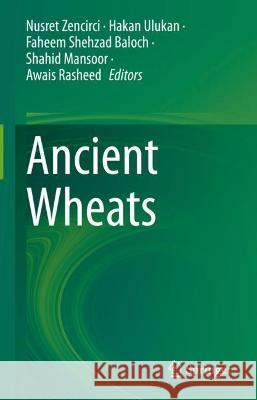
Ancient Wheats  9783031072840 Springer International Publishing - książkaWidoczna okładka, to zdjęcie poglądowe, a rzeczywista szata graficzna może różnić się od prezentowanej.

Ancient Wheats

ISBN-13: 9783031072840 / Angielski / Twarda / 2022

cena 602,40
(netto: 573,71 VAT:  5%)

Najniższa cena z 30 dni: 578,30
Termin realizacji zamówienia:
ok. 22 dni roboczych.

Darmowa dostawa!
inne wydania

Wheat (Triticum L.), an annual herbaceous plant in Poacae (Gramineae) family, settles in the Triticeae (Hordeae) subfamily. The grasses (Poaceae Barnhart) are the fifth largest (monocotyledonous flowering) plant family and of great importance for human civilization and life. Cereal crops such as maize, wheat, rice, barley, and millet are the domesticated ones in the family. It is still the most vital economical plant family in modern times, providing food, forage, building materials (bamboo, thatch), and fuel (ethanol). Wheat has many accessions in national and international gene banks. The estimated number of wheats by FAO in 2010 is 856,000, and, followed by rice (774,000), and barley (467,000). However, the recent consumer's (misdirected) focus on gluten content and nutritional value urges scientists to reexamine their knowledge about wheat (i.e., origin, evolution, and general and special quality characteristics), as well as their wild relatives and landraces for newer possible genetic resources. Cultured or non-cultured ancestral wheats: einkorn, emmer, wild emmer, spelt, macha, and vavilovii are still limitedly grown on the higher areas in Turkey, Italy, Germany, Morocco, Israel, and Balkan countries. They are exploited mostly for their desired agronomic, and specific quality. In some cultures, wheat species are believed to be therapeutic, with bioactive compounds that reduce and inhibit stubborn illnesses such as diabetes, cancer, Alzheimer, and cardiovascular diseases. In this book, we summarize the importance of ancestral wheat species, and provide a prospect for their future with special considerations in terms of species conservation and improvement. 

Kategorie:
Nauka, Biologia i przyroda
Kategorie BISAC:
Technology & Engineering > Agriculture - General
Science > Life Sciences - Ecology
Technology & Engineering > Food Science - General
Wydawca:
Springer International Publishing
Język:
Angielski
ISBN-13:
9783031072840
Rok wydania:
2022
Waga:
0.58 kg
Wymiary:
23.5 x 15.5
Oprawa:
Twarda
Dodatkowe informacje:
Wydanie ilustrowane

Chapter. 1 Introduction

Chapter. 2 Domestication and Evolution of Ancient Wheats

Chapter. 3 Origin, Taxonomy and Distribution of Ancient Wheats in Turkey

Chapter. 4 Genetic Diversity in Ancient Wheats

Chapter. 5 Conservation Strategies

Chapter. 6 Chemical Composition of Einkorn (Triticum monococcum ssp. monococcum), Emmer (Triticum dicoccum), and Spelt (Triticum spelta)

Chapter. 7 Nutritional and Technological Aspects of Ancient Wheat

Chapter. 8 From hologenomes to biofertilizers in wheat production

Chapter. 9 Wild relatives and their contributions to wheat breeding

Chapter. 10 Socio-economic evaluation of einkorn wheat production

Nusret Zencirci is a graduate of Çukurova University, Faculty of Agriculture, Department of Field Crops. He worked as a wheat breeder in the Central Research Institute of for Field Crops, Ankara and served as a National and International Coordinator to National and International Wheat programs and also to International Winter Wheat Improvement Program. He is professor now at Bolu Abant İzzet Baysal University, Science and Art Faculty, Biology Department, Bolu, Turkey. He is a member of various editorial boards in many international journals. He is, with his team, breeder of 22 bread and durum wheat cultivars. His research interests are Cereals, Biotic and Abiotic Stresses, Plant Genetic Resources, and Wheat Breeding.

Hakan Ulukan graduated from The University of Ankara, Faculty of Agriculture, Department of Field Crops, 06110, Dışkapı, Ankara, Türkiye in 1987. After graduation he began MSc, and upon the completion it was sent to Italy for 7 months on “Cereal Agriculture”. After returning, he started his Ph.D. thesis in 1990, and completed it in 1997 on “wheat rust diseases”. Now, he is an academic staff at the same Dept. His study areas are cereals (major and minor), wheat rusts diseases, wheat landraces, wheat growing and breeding, plant genetic resources, biotic/abiotic stresses, global warming effect(s) on field crop(s)’ production, agronomy, and ecology, etc.

Dr. Faheem Shehzad Baloch is working as Associate Professor of plant genetics at Sivas University of Science and Technology, Sivas, Turkey. He received his Ph.D. with a dissertation on ‘QTL mapping in wheat’ from the faculty of agriculture, University of Çukurova, Adana, Turkey in 2012 with a joint fellowship of Turkish ministry of education and Turkish scientific and Technological council of Turkey (TÜBİTAK). In 2013, he started to work as assistant professor at Niğde Ömer Halis Demir university, Niğde Turkey. In 2015, he joined Bolu Abant izzet Baysal University, Turkey as Assistant professor. In 2018, he promoted to associate professor in the same institute. In August 2020, he joined Sivas University of science and Technology as associate professor and currently working in the same university. He participated in many international trainings on plant molecular genetics particularly at ICARDA-Syria, Cophenhagon University -Denmark, Minnesota University-USA. He has over 90 publications in Web of Sciences database. He has co-edited 3 books and written over 11 book chapters on important aspects of molecular genetics in relation to plant species. He has extensive array of citations with over 2000 times as per google scholar with an h-Index of 24. Dr. Faheem serves as Editorial board member of several impacted journals such as Turkish journal Agriculture and Forestry, BMC Genomic data, Agronomy Journal. Biotechnology and Biotechnological Equipment, BMC Plant Biology, PLOS ONE and guest editor for special issues in Plants and Molecular Biology Reports and reviewer for more than 49 peer-reviewed international journals with more than 108 verified reviews.

Prof. Dr. Shahid Mansoor is currently serving as Director of National Institute for Biotechnology and Genetic Engineering (NIBGE), Faisalabad, Pakistan and Principal of NIBGE-C, a constituent college of Pakistan Institute for Engineering and Applied Sciences, Islamabad. Dr. Mansoor completed his Ph.D. from John Innes Center, Norwich, UK. He is also recipient of Royal Society and Fulbright Fellowships. Dr. Mansoor is HEC Distinguished National Professor and Fellow Pakistan Academy of Sciences. He is using genomics and genome editing tools to enhance yield, nutritional value and quality of food crops and livestock for food and nutritional value.

Dr. Awais Rasheed is currently serving as Assistant Professor at Quaid-i-Azam University, Pakistan. He is leading a research group on wheat biology where major focus is to develop new genotyping platforms for wheat breeding. He was awarded Vavilov-Frankel Fellowship in 2013 and excellent young researcher award from Chinese Academy of Agricultural Sciences in 2016. He has published more than 60 research papers in first-tier journals on wheat genetics, pre-breeding, genomics, and molecular breeding.


Wheat (Triticum L.), an annual herbaceous plant in Poacae (Gramineae) family, settles in the Triticeae (Hordeae) subfamily. The grasses (Poaceae Barnhart) are the fifth largest (monocotyledonous flowering) plant family and of great importance for human civilization and life. Cereal crops such as maize, wheat, rice, barley, and millet are the domesticated ones in the family. It is still the most vital economical plant family in modern times, providing food, forage, building materials (bamboo, thatch), and fuel (ethanol).

Wheat has many accessions in national and international gene banks. The estimated number of wheats by FAO in 2010 is 856,000, and, followed by rice (774,000), and barley (467,000). However, the recent consumer's (misdirected) focus on gluten content and nutritional value urges scientists to reexamine their knowledge about wheat (i.e., origin, evolution, and general and special quality characteristics), as well as their wild relatives and landraces for newer possible genetic resources. Cultured or non-cultured ancestral wheats: einkorn, emmer, wild emmer, spelt, macha, and vavilovii are still limitedly grown on the higher areas in Turkey, Italy, Germany, Morocco, Israel, and Balkan countries. They are exploited mostly for their desired agronomic, and specific quality. In some cultures, wheat species are believed to be therapeutic, with bioactive compounds that reduce and inhibit stubborn illnesses such as diabetes, cancer, Alzheimer, and cardiovascular diseases. In this book, we summarize the importance of ancestral wheat species, and provide a prospect for their future with special considerations in terms of species conservation and improvement. 



Udostępnij

Facebook - konto krainaksiazek.pl


Opinie o Krainaksiazek.pl na Opineo.pl

Partner Mybenefit

Krainaksiazek.pl w programie rzetelna firma Krainaksiaze.pl - płatności przez paypal

Czytaj nas na:

Facebook - krainaksiazek.pl
  • książki na zamówienie
  • granty
  • książka na prezent
  • kontakt
  • pomoc
  • opinie
  • regulamin
  • polityka prywatności

Zobacz:

  • Księgarnia czeska

  • Wydawnictwo Książkowe Klimaty

1997-2026 DolnySlask.com Agencja Internetowa

© 1997-2022 krainaksiazek.pl
     
KONTAKT | REGULAMIN | POLITYKA PRYWATNOŚCI | USTAWIENIA PRYWATNOŚCI
Zobacz: Księgarnia Czeska | Wydawnictwo Książkowe Klimaty | Mapa strony | Lista autorów
KrainaKsiazek.PL - Księgarnia Internetowa

Polityka prywatnosci - link
Krainaksiazek.pl - płatnośc Przelewy24
Przechowalnia Przechowalnia






