• Wyszukiwanie zaawansowane
  • Kategorie
  • Kategorie BISAC
  • Książki na zamówienie
  • Promocje
  • Granty
  • Książka na prezent
  • Opinie
  • Pomoc
  • Załóż konto
  • Zaloguj się

Analytical Atomic Spectroscopy » książka


zaloguj się | załóż konto
Logo Krainaksiazek.pl

koszyk

konto

szukaj
topmenu
Księgarnia internetowa
Szukaj
Książki na zamówienie
Promocje
Granty
Książka na prezent
Moje konto
Pomoc
 
 
Wyszukiwanie zaawansowane
Pusty koszyk
Bezpłatna dostawa dla zamówień powyżej 20 złBezpłatna dostawa dla zamówień powyżej 20 zł

Kategorie główne

• Nauka
 [2950560]
• Literatura piękna
 [1849509]

  więcej...
• Turystyka
 [71097]
• Informatyka
 [151150]
• Komiksy
 [35848]
• Encyklopedie
 [23178]
• Dziecięca
 [617388]
• Hobby
 [139064]
• AudioBooki
 [1657]
• Literatura faktu
 [228597]
• Muzyka CD
 [383]
• Słowniki
 [2855]
• Inne
 [445295]
• Kalendarze
 [1464]
• Podręczniki
 [167547]
• Poradniki
 [480102]
• Religia
 [510749]
• Czasopisma
 [516]
• Sport
 [61293]
• Sztuka
 [243352]
• CD, DVD, Video
 [3414]
• Technologie
 [219456]
• Zdrowie
 [101002]
• Książkowe Klimaty
 [124]
• Zabawki
 [2311]
• Puzzle, gry
 [3459]
• Literatura w języku ukraińskim
 [254]
• Art. papiernicze i szkolne
 [8079]
Kategorie szczegółowe BISAC

Analytical Atomic Spectroscopy

ISBN-13: 9781468408133 / Angielski / Miękka / 2012 / 375 str.
William Schrenk
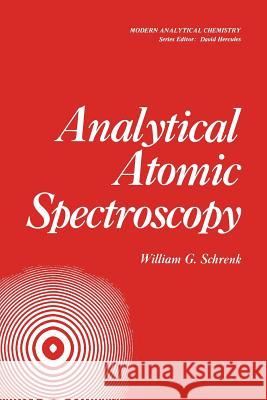
Analytical Atomic Spectroscopy William Schrenk 9781468408133 Springer - książkaWidoczna okładka, to zdjęcie poglądowe, a rzeczywista szata graficzna może różnić się od prezentowanej.

Analytical Atomic Spectroscopy

ISBN-13: 9781468408133 / Angielski / Miękka / 2012 / 375 str.

William Schrenk
cena 523,30
(netto: 498,38 VAT:  5%)

Najniższa cena z 30 dni: 462,63
Termin realizacji zamówienia:
ok. 22 dni roboczych
Dostawa w 2026 r.

Darmowa dostawa!

This textbook is an outgrowth of the author's experience in teaching a course, primarily to graduate students in chemistry, that included the subject matter presented in this book. The increasing use and importance of atomic spectroscopy as an analytical tool are quite evident to anyone involved in elemental analysis. A number of books are available that may be considered treatises in the various fields that use atomic spectra for analytical purposes. These include areas such as arc-spark emission spectroscopy, flame emission spectroscopy, and atomic absorption spectroscopy. Other books are available that can be catalogued as "methods" books. Most of these books serve well the purpose for which they were written but are not well adapted to serve as basic textbooks in their fields. This book is intended to fill the aforementioned gap and to present the basic principles and instrumentation involved in analytical atomic spectro- scopy. To meet this objective, the book includes an elementary treatment of the origin of atomic spectra, the instrumentation and accessory equipment used in atomic spectroscopy, and the principles involved in arc-spark emission, flame emission, atomic absorption, and atomic fluorescence. The chapters in the book that deal with the methods of atomic spectro- scopy discuss such things as the basic principles involved in the method, the instrumentation requirements, variations of instrumentation, advantages and disadvantages of the method, problems of interferences, detection limits, the collection and processing of the data, and possible applications.


Kategorie:
Nauka, Chemia
Kategorie BISAC:
Science > Chemia - Fizyczna
Wydawca:
Springer
Seria wydawnicza:
Modern Analytical Chemistry
Język:
Angielski
ISBN-13:
9781468408133
Rok wydania:
2012
Wydanie:
Softcover Repri
Numer serii:
000186232
Ilość stron:
375
Waga:
0.58 kg
Wymiary:
22.9 x 15.2
Oprawa:
Miękka
Wolumenów:
01

1 Historical Introduction.- 1. Early Developments.- 2. The Newtonian Era.- 3. The Early 1800’s (to Kirchhoff and Bunsen).- 4. The Later 1800’s.- 5. Arc and Spark Excitation.- 6. Flame Emission Spectroscopy.- 7. Atomic Absorption Spectroscopy.- 8. Atomic Fluorescence Spectroscopy.- Selected Reading.- 2 The Origin of Atomic Spectra.- 1. The Nature of Electromagnetic Radiation.- 2. Early Concepts.- 3. The Balmer Equation.- 4. From Balmer to Bohr.- 4.1. Spectral Line Series for Hydrogen.- 4.2. Energy Level Diagrams.- 5. Modifications of the Bohr Theory.- 5.1. Selection Rules for n and k(l).- 5.2. Atoms with Two Valence Electrons.- 5.3. Selection Rules and the Schrödinger Equation.- 6. Alkali Metal Atom Spectra.- 6.1. Doublet Structure of Alkali Metal Spectra.- 6.2. Electron Spin.- 7. Alkaline Earth Atomic Spectra.- 8. Spectral Series and Spectroscopic Term Symbols.- 9. Zeeman and Stark Effects.- 10. Spectral Line Intensities.- 10.1. Statistical Weight.- 10.2. The Boltzmann Distribution Factor.- 11. Transition Probabilities—Oscillator Strengths.- 12. Spectral Linewidths.- 13. Atomic Fluorescence.- 14. Metastable States—Laser Action.- 14.1. Laser Action.- 15. Molecular Spectra (Band Spectra).- Selected Reading.- 3 Filters, Prisms, Gratings, and Lenses.- 1. Filters.- 1.1. Absorption Filters.- 1.2. Interference Filters.- 1.3. Circular Variable Filters.- 2. Prisms.- 2.1. Dispersion of a Prism.- 2.2. Resolving Power of a Prism.- 2.3. Prism Materials.- 2.4. Types of Prisms.- 3. Interferometers.- 4. Diffraction Gratings.- 4.1. Dispersion of a Grating.- 4.2. Resolving Power of a Grating.- 4.3. Production and Characteristics of Gratings.- 4.4. Grating Replicas.- 4.5. Concave Gratings.- 4.6. Holographic Gratings.- 4.7. Echelle Gratings.- 5. Lenses.- 5.1. Uses of Lenses.- 5.2. Lens Defects.- Selected Reading.- 4 Spectrometers.- 1. prism Spectrometers.- 1.1. The Cornu Prism Spectrometer.- 1.2. The Littrow Spectrometer.- 2. Plane Grating Spectrometers.- 2.1. The Ebert Spectrometer.- 2.2. The Czerny—Turner Spectrometer.- 2.3. The Two-Mirror, Crossed-Beam, Plane Grating Spectrometer.- 2.4. The Double-Grating Spectrometer.- 3. Concave Grating Spectrometers.- 3.1. The Rowland Spectrometer.- 3.2. The Paschen-Runge Spectrometer.- 3.3. The Eagle Spectrometer.- 3.4. The Wadsworth Spectrometer.- 3.5. The Grazing Incidence Spectrometer.- 3.6. The Seya-Namioka Spectrometer.- 3.7. Vacuum Spectrometers.- 4. Direct Reading Spectrometers.- 5. Selection of a Spectrometer.- 6. Adjustment and Care of Spectrometers.- 6.1. Vertical Adjustment of the Entrance Slit.- 6.2. Focusing the Entrance Slit.- 6.2.1. Prism Instruments.- 6.2.2. Grating Instruments.- 6.3. Final Adjustments.- 6.4. General Care of Spectrometers.- Selected Reading.- 5 Accessory Equipment for Arc and Spark Spectrochemical Analysis.- 1. The Spectrometer Slit.- 2. The Hartmann Diaphragm.- 3. The Step Filter.- 4. Rotating Sectors.- 5. Excitation Sources.- 5.1. The Direct Current Arc.- 5.2. The Alternating Current Arc.- 5.3. The Electric Spark.- 5.4. The Plasma Arc.- 5.5. The Laser Source.- 5.6. Multiple Source Units.- 6. Arc and Spark Stands.- 6.1. Special Assemblies for the Arc-Spark Stand.- 6.1.1. The Stallwood Jet.- 6.1.2. The Petry Stand.- 6.1.3. Rotating Disk Electrode Device.- 7. Order Sorters.- 8. Densitometers and Comparators.- 9. Miscellaneous Accessory Equipment.- 9.1. Electrodes.- Selected Reading.- 6 Recording and Reading Spectra.- 1. The Photographic Process.- 1.1. Characteristics and Properties of the Photographic Emulsion.- 1.2. The Characteristic Curve.- 1.3. The Reciprocity Law.- 1.4. The Intermittency Effect.- 1.5. The Eberhard Effect.- 1.6. Graininess and Granularity.- 1.7. Resolving Power.- 1.8. Spectral Sensitivity.- 2. Processing of Spectroscopic Films and Plates.- 2.1. The Developing Process.- 3. Hadamard Transform and Fourier Transform Spectroscopy.- 4. Light-Sensitive Phototubes.- 4.1. Spectral Response Designation.- 4.2. General Characteristics of Multiplier Phototubes.- 4.3. Solar Blind Phototubes.- 5. Resonance Detectors.- 6. Vidicon Detectors.- Selected Reading.- 7 Qualitative and Semiquantitative Arc-Spark Emission Spectrochemical Analysis.- 1. Sample Excitation.- 2. Wavelength Measurements.- 2.1. Line Identification by Wavelength Measurement.- 3. Comparison Spectra.- 4. Spectral Charts.- 5. Wavelength Tables.- 6. Some Special Problems and Techniques of Spectrochemical Qualitative Analysis.- 6.1. Spectral Line Interferences.- 6.2. Spectral Band Interferences.- 6.3. Arc Continuum Interference.- 7. Increasing Spectral Line Intensities.- 8. Semiquantitative Spectrochemical Analysis.- 8.1. Determination of a Concentration Level.- 8.2. The Harvey Method of Semiquantitative Spectrochemical Analysis.- 8.3. Matrix Effects.- 8.4. The Wang Method of Semiquantitative Spectrochemical Analysis.- 9. Some Special Spectrochemical Problems.- 9.1. Microsamples.- 9.2. Microarea Sampling.- Selected Reading.- 8 Quantitative Spectrochemical Analysis.- 1. Some General Considerations.- 2. The Internal Standard.- 3. Spectroscopic Buffers.- 4. Excitation of the Sample.- 5. Selection of Spectral Lines.- 6. Comparison Standards.- 7. Sample Preparation.- 8. Emulsion Calibration and Analytical Working Curves.- 8.1. Emulsion Calibration.- 8.2. The Emulsion Calibration Curve.- 9. The Working Curve.- 9.1. Construction of a Typical Analytical Working Curve.- 10. The Calculating Board.- 11. Background Correction.- 12. Multielement Analysis with Direct Read-Out.- 13. Types of Samples.- 13.1. Liquid Samples.- 13.2. Metallic Samples.- 13.3. Powder Samples.- 13.4. Organic Samples.- 13.5. Special Samples.- 14. Some Special Techniques.- 14.1. Fractional Distillation.- 14.2. Carrier Distillation.- 14.3. Transfer Methods.- 14.4 Laser Methods.- 14.5. Controlled Atmospheres.- 14.6. Cathode Layer Excitation.- 14.7. Gases.- 14.8. Radioactive Samples.- 15. Time-Resolved Spectroscopy.- 15.1. Time-Resolving Components.- 15.2. Some Characteristics of Time-Resolved Spectra.- 15.3. Analytical Applications.- 16. Chemical Preparation of Samples.- 17. Applications of Spectrochemical Analysis.- 17.1. Metals and Alloys.- 17.2. Geology.- 17.3. Oils and Water.- 17.4. Plants and Soils.- 17.5. Men and Animals.- 17.6. Environmental Studies.- 17.7. Some Other Applications.- Selected Reading.- 9 Flame Emission Spectroscopy.- 1. Flame Emission Instrumentation Requirements.- 2. The Analytical Flame.- 2.1. Burners and Aspirators.- 2.2. Fuel-Oxidant Control.- 3. The Excitation Process in the Flame.- 3.1. Flame Emission Spectra.- 4. Flame Emission Interferences.- 4.1. Spectral.- 4.2. Ionization.- 4.3. Cation-Anion Interferences.- 4.4. Cation-Cation Interferences.- 4.5. Oxide Formation.- 4.6. Chemiluminescence.- 4.7. Physical Interferences.- 5. Control of Interferences.- 5.1. Spectral.- 5.2. Ionization Interference Control..- 5.3. Cation-Anion Interference Control.- 5.4. Control of Oxide Interference.- 5.5. Control of Physical Interference.- 6. Simultaneous Multielement Analysis.- 7. Analytical Treatment of Data.- 7.1. Establishment of a Working Curve.- 7.2. Background Correction.- 7.3. Sample Bracketing.- 7.4. The Method of Standard Additions.- Selected Reading.- 10 Analytical Atomic Absorption Spectroscopy.- 1. The Atomic Absorption Process.- 2. Instrumentation Requirements.- 3. Radiation Sources.- 3.1. Hollow Cathode Lamps.- 3.1.1. High-Intensity Lamps.- 3.1.2. Multiple-Element Lamps.- 3.1.3. Demountable Lamps.- 3.2. Gaseous Discharge Lamps.- 3.3. Electrodeless Discharge Lamps.- 3.4. Flame Emission Sources.- 3.5. Continuous Sources.- 4. Production of the Atomic Vapor.- 4.1. Nebulization of the Sample.- 4.1.1. Ultrasonic Nebulization.- 4.2. Flame Systems.- 5. Fuels and Oxidants.- 5.1. Atomic Distribution in Flames.- 6. Non-Flame Absorption Cells.- 6.1. Hollow Cathodes.- 6.2. L’vov Furnace.- 6.3. Woodriff Furnace.- 6.4. Delves Cup.- 6.5. Carbon Rod Analyzers.- 6.6. Tantalum Boat Analyzer.- 6.7. Other Non-Flame Cells.- 6.8. Special Systems.- 7. Monochromators.- 8. Detectors.- 8.1. Resonance Detection.- 9. Amplifiers.- 10. Read-Out Devices.- 11. Interferences in Atomic Absorption.- 11.1. Spectral Interferences.- 11.2. Ionization Interferences.- 11.3. Chemical Interferences.- 11.4. Interferences with Flameless Sampling.- 12. Control of Interferences.- 12.1. Spectral Interference Control.- 12.2. Ionization Interference Control.- 12.3. Chemical Interference Control.- 12.3.1. Flame Temperature.- 12.3.2. Fuel-to-Oxidant Ratio.- 12.3.3. Flame Region.- 12.3.4. Releasing and Chelating Agents.- 12.3.5. Chemical Separations.- 12.3.6. Background Correction.- 13. Analytical Treatment of Data.- 13.1. The Working Curve.- 13.2. Analytical Procedures.- 14. Simultaneous Multielement Analysis.- Selected Reading.- 11 Atomic Fluorescence Spectroscopy.- 1. Theoretical Basis of Analytical Atomic Fluorescence Spectroscopy.- 2. Advantages and Limitations of Atomic Fluorescence.- 3. Instrumentation.- 3.1. Excitation Sources.- 3.1.1 Hollow Cathode Lamps.- 3.1.2. Metal Vapor Lamps.- 3.1.3. Electrodeless Discharge Lamps.- 3.1.4. Continuous Sources.- 3.1.5. Laser Sources.- 4. The Sample Cell.- 4.1. Total-Consumption Aspirator Burners.- 4.2. Laminar Flow Burners.- 4.3. Non-Flame Sample Cells.- 5. Monochromators.- 6. Interferences in Atomic Fluorescence.- 6.1. Spectral Interferences.- 6.2. Chemical Interferences.- 6.3. Physical Interferences.- 7. Analytical Procedures.- 7.1. The Analytical Working Curve.- 7.2. Organic Solvents.- 7.3. Detection Limits.- 7.4. Sample Preparation.- 8. Applications and Future Developments.- Selected Reading.- Appendix I. Some Basic Definitions, Physical Constants, Units, and Conversion Factors.- Appendix IV. Spectral Charts.- Appendix V. Absorbance Values Calculated from Percentage Transmittances.- Appendix VI. Numerical Values of the Seidel Function.- Appendix VII. Four-Place Logarithm Table.- Appendix VIII. Detection Limits by Flame Emission and Atomic Absorption.- Appendix IX. Periodic Table of the Elements.- Appendix X. Relative Atomic Weights.- Author Index.


Udostępnij

Facebook - konto krainaksiazek.pl


Opinie o Krainaksiazek.pl na Opineo.pl

Partner Mybenefit

Krainaksiazek.pl w programie rzetelna firma Krainaksiaze.pl - płatności przez paypal

Czytaj nas na:

Facebook - krainaksiazek.pl
  • książki na zamówienie
  • granty
  • książka na prezent
  • kontakt
  • pomoc
  • opinie
  • regulamin
  • polityka prywatności

Zobacz:

  • Księgarnia czeska

  • Wydawnictwo Książkowe Klimaty

1997-2025 DolnySlask.com Agencja Internetowa

© 1997-2022 krainaksiazek.pl
     
KONTAKT | REGULAMIN | POLITYKA PRYWATNOŚCI | USTAWIENIA PRYWATNOŚCI
Zobacz: Księgarnia Czeska | Wydawnictwo Książkowe Klimaty | Mapa strony | Lista autorów
KrainaKsiazek.PL - Księgarnia Internetowa

Polityka prywatnosci - link
Krainaksiazek.pl - płatnośc Przelewy24
Przechowalnia Przechowalnia






