• Wyszukiwanie zaawansowane
  • Kategorie
  • Kategorie BISAC
  • Książki na zamówienie
  • Promocje
  • Granty
  • Książka na prezent
  • Opinie
  • Pomoc
  • Załóż konto
  • Zaloguj się

Agritech: Innovative Agriculture Using Microwaves and Plasmas: Thermal and Non-Thermal Processing » książka


zaloguj się | załóż konto
Logo Krainaksiazek.pl

koszyk

konto

szukaj
topmenu
Księgarnia internetowa
Szukaj
Książki na zamówienie
Promocje
Granty
Książka na prezent
Moje konto
Pomoc
 
 
Wyszukiwanie zaawansowane
Pusty koszyk
Bezpłatna dostawa dla zamówień powyżej 20 złBezpłatna dostawa dla zamówień powyżej 20 zł

Kategorie główne

• Nauka
 [2946600]
• Literatura piękna
 [1856966]

  więcej...
• Turystyka
 [72221]
• Informatyka
 [151456]
• Komiksy
 [35826]
• Encyklopedie
 [23190]
• Dziecięca
 [619653]
• Hobby
 [140543]
• AudioBooki
 [1577]
• Literatura faktu
 [228355]
• Muzyka CD
 [410]
• Słowniki
 [2874]
• Inne
 [445822]
• Kalendarze
 [1744]
• Podręczniki
 [167141]
• Poradniki
 [482898]
• Religia
 [510455]
• Czasopisma
 [526]
• Sport
 [61590]
• Sztuka
 [243598]
• CD, DVD, Video
 [3423]
• Technologie
 [219201]
• Zdrowie
 [101638]
• Książkowe Klimaty
 [124]
• Zabawki
 [2473]
• Puzzle, gry
 [3898]
• Literatura w języku ukraińskim
 [254]
• Art. papiernicze i szkolne
 [8170]
Kategorie szczegółowe BISAC

Agritech: Innovative Agriculture Using Microwaves and Plasmas: Thermal and Non-Thermal Processing

ISBN-13: 9789811638930 / Angielski / Miękka / 2022 / 349 str.
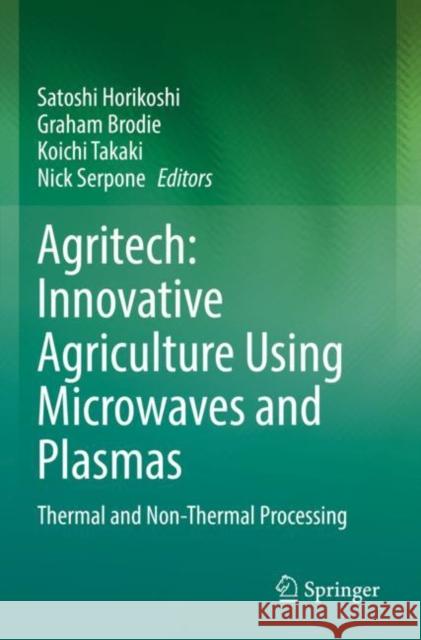
Satoshi Horikoshi; Graham Brodie; Koichi Takaki
Agritech: Innovative Agriculture Using Microwaves and Plasmas: Thermal and Non-Thermal Processing Satoshi Horikoshi Graham Brodie Koichi Takaki 9789811638930 Springer - książkaWidoczna okładka, to zdjęcie poglądowe, a rzeczywista szata graficzna może różnić się od prezentowanej.

Agritech: Innovative Agriculture Using Microwaves and Plasmas: Thermal and Non-Thermal Processing

ISBN-13: 9789811638930 / Angielski / Miękka / 2022 / 349 str.

Satoshi Horikoshi; Graham Brodie; Koichi Takaki
cena 685,93 zł
(netto: 653,27 VAT:  5%)

Najniższa cena z 30 dni: 655,41 zł
Termin realizacji zamówienia:
ok. 22 dni roboczych
Bez gwarancji dostawy przed świętami

Darmowa dostawa!

This book describes innovative agricultural methods using thermal and non-thermal microwave or plasma energies.Humans that were nomadic in the past can now stably obtain food by developing agriculture. Cities were formed as a result of remarkable development. Later, chemicals were introduced to agriculture to stabilize the food supply further. Natural products were initially used, but various artificial compounds have been developed for agriculture since the 1900s. To further improve crop productivity and diversification, gene recombination (genetic engineering) using biotechnology has progressed in recent years and continues to develop further. However, these technologies contain pesticide residues and pose safety risks. The innovative new agriculture explained in this book is based on the use of microwaves and plasma that do not rely on chemicals and genetic modification.This is one of the first books focusing on the agricultural usage of microwaves. In addition, it is a technical book that incorporates plasma into agriculture from this perspective. The book covers microwaves and plasmas, which are completely different fields. Thus, it will be attractive to many readers who want to acquaint themselves with these alternative technologies and implement them. This book will be useful to a broad audience including researchers and technicians at Universities and practitioners in industries. It is made accessible to readers across different fields by including abundant figures and by limiting the use of equations to the possible extent.


This book describes innovative agricultural methods using thermal and non-thermal microwave or plasma energies. Humans that were nomadic in the past can now stably obtain food by developing agriculture. Cities were formed as a result of remarkable development. Later, chemicals were introduced to agriculture to stabilize the food supply further. Natural products were initially used, but various artificial compounds have been developed for agriculture since the 1900s. To further improve crop productivity and diversification, gene recombination (genetic engineering) using biotechnology has progressed in recent years and continues to develop further. However, these technologies contain pesticide residues and pose safety risks. The innovative new agriculture explained in this book is based on the use of microwaves and plasma that do not rely on chemicals and genetic modification. This is one of the first books focusing on the agricultural usage of microwaves. In addition, it is a technical book that incorporates plasma into agriculture from this perspective. The book covers microwaves and plasmas, which are completely different fields. Thus, it will be attractive to many readers who want to acquaint themselves with these alternative technologies and implement them. This book will be useful to a broad audience including researchers and technicians at Universities and practitioners in industries. It is made accessible to readers across different fields by including abundant figures and by limiting the use of equations to the possible extent.

Kategorie:
Nauka, Biologia i przyroda
Kategorie BISAC:
Technology & Engineering > Agriculture - General
Technology & Engineering > Microwaves
Technology & Engineering > Food Science - General
Wydawca:
Springer
Język:
Angielski
ISBN-13:
9789811638930
Rok wydania:
2022
Dostępne języki:
Ilość stron:
349
Waga:
0.67 kg
Wymiary:
23.5 x 15.5
Oprawa:
Miękka

Part I. Tutorial   

1              Microwave thermal and non-thermal processes

2              Plasma thermal and non-thermal technologies

3              High-voltage and pulsed power technologies

4              Agricultural Engineering

Part II. Microwave Application   

5              Improvement and effective growth of plants' environmental stress tolerance on exposure to microwave electromagnetic wave effects

6              Food Processing

7              Stimulating the Aging of Beef with Microwaves

8              Controlling Weeds with Microwave Energy

9              Soil Modifications

10           Microwave application for animal feed processing to improve animal performance

11           Microwave heating for grain treatment

Part III. Plasma Applications        

12           Growth enhancement effect of gene expression of plants induced by active oxygen species in oxygen plasma

13           Improvement of plant growth and control of cultivation environment using electrical stimuli

14           Promotion of reproductive growth of mushroom using electrical stimuli

15           Keeping freshness of agricultural products

16           Enzyme activity control and protein conformational change

17           Plasma applications in microalgal biotechnology


Professor Satoshi Horikoshi

Sophia University, Department of Materials and Life Sciences, horikosi@sophia.ac.jp


Satoshi Horikoshi received his PhD degree in 1999, and was subsequently a postdoctoral researcher at the Frontier Research Center for the Global Environment Science in Meisei University (Ministry of Education, Culture, Sports, Science and Technology) until 2006. He joined Sophia University as Assistant Professor in 2006, and then moved to Tokyo University of Science as Associate Professor in 2008, after which he returned to Sophia University as Associate Professor in 2011 and was made Professor in 2020. Currently he is on the Editorial Advisory Board of the Journal of Microwave Power and Electromagnetic Energy, Molecules and three other international journals. His research interests involve new functional materials, nanomaterial synthesis, molecular biology, formation of sustainable energy, rubber and plastic recycling, in-liquid plasma chemical synthesis and environmental protection using microwave- and/or photo-energy. He has co-authored over 200 scientific publications and has contributed to and edited or co-authored 30 books. He frequently explains the role of microwaves on television and in newspapers.

Associate Professor Graham Brodie

The University of Melbourne, Department of Agriculture and Food, grahamb@unimelb.edu.au


Graham Brodie was awarded his Bachelor of Engineering degree in 1981 and worked in the electrical power industry for some time. In 1997, he joined the Agricultural Department of The University of Melbourne and, after teaching engineering principles to agricultural students for several years, he earned his PhD in 2005. Currently, he is on the Board of Governors for the International Microwave Power Institute; he is on the Research Advisory Board for Chitkara University, Punjab, India; he is an editor with De Gruyter Open; and is the chairman of the Australian Industrial Radio Frequency and Microwave Applications Group. His research interests include using microwave generated plasma to study surface sterilisation of materials and agricultural commodities; microwave heating of biomaterials and soil; microwave pyrolysis of plastic and bio-wastes; using microwaves holography for sensing objects in soil and built environments; improving water use efficiency in agriculture; producing and using renewable energy on farms; on-farm animal waste management; and applications of Geographic Information System (GIS) and Remote Sensing technologies in agriculture and archaeology. 

Professor Koichi Takaki

Iwate University, Faculty of Science and Engineering, Agri-Innovation Center, takaki@iwate-u.ac.jp

Koichi Takaki received the B. Eng., M. Eng. And Dr. Eng. degrees in electrical engineering from Kumamoto University, Japan, in 1986, 1988 and 1995, respectively. He joined Oita National College of Technology as a research associate in 1989 and was made an assistant professor in 1993. He moved to the Department of Electrical and Electronics Engineering, Iwate University as a research associate in 1996 and was an associate professor from 2000. During 2000-2001, he was a visiting scientist at the McMaster University, Hamilton, Canada. After that, he was made Professor of Iwate University in 2011. Currently he is also a Vice-Director of Agri-Innovation Center, Iwate University, and a senior member of IEEE. He received Prizes for Science and Technology in the Commendation for Science and Technology by the Minister of Education, Culture, Sports, Science and Technology in April 2016. He frequently explains the role of high-voltage technologies, general sciences, and electrostatic phenomena on thirty-four TV and radio programs including NHK (Ohayo-Nippon, Asa-Ichi, NHK world), TBS (Yumeno-Tobira+, Evening-wide) etc. His current research interests include pulsed power technology such as pulsed ion technology, agricultural applications (plant growth acceleration, fruition of mushrooms, retaining freshness of fruit and vegetables), and environmental applications (water purification, gas remediation, ozone production). He has research experiences of triggering lightning using water jets, ceramic joining using exploding foil, and exhaust gas processing in atmospheric pressure such as reduction of NOx and PFCs. He has co-authored 219 scientific publications and has contributed to and edited or co-authored 27 books.

Professor Dr. Nick Serpone: Cornell University (Ithaca, N.Y., Ph.D., 1968); Professor of Chemistry (1968-1998), Founder and Director of the Canadian Picosecond Laser Spectroscopy Center (1981-1990, 1994-1998), University Research Professor (1998-2004), and Professor Emeritus (2000-…) at Concordia University, Montreal, Canada; Professore a Contratto (2002-2005) and Visiting Professor at the University of Pavia, Italy (2005-…); Visiting Professor at the Universities of Bologna (1975-1976), Ferrara (1997-1998), and Tokyo University of Science (2008); Professeur Invité (École Polytechnique Fédérale de Lausanne, 1983-1984); Visiting Professor & Research Director (École Centrale de Lyon, 1990-1991); Guest Lecturer (University of Milan, 2015); Director of the IBO Program at the U.S. National Science Foundation (Arlington, VA, 1998–2001); Consultant to the 3M Company (USA, 1986–1996). His principal research interests focused on the photochemistry and photophysics of coordination compounds, photochemistry of sunscreen active ingredients, fundamental photophysics of semiconductor photocatalysts, Imaging Science for which he was the co-recipient of the Best Paper Award from the Society for Imaging Science and Technology (1997), Heterogeneous Photocatalysis for environmental remediation, and most recently Microwave-assisted Chemistry. He has co-edited/co-authored over 12 books, contributed 35 chapters and published over 490 articles (citation index h = 104, Google Scholar). In 2010 he was elected Fellow of the European Academy of Sciences, and was Head of its Materials Science Division (2014–2020).

This book describes innovative agricultural methods using thermal and non-thermal microwave or plasma energies.

Humans that were nomadic in the past can now stably obtain food by developing agriculture. Cities were formed as a result of remarkable development. Later, chemicals were introduced to agriculture to stabilize the food supply further. Natural products were initially used, but various artificial compounds have been developed for agriculture since the 1900s. To further improve crop productivity and diversification, gene recombination (genetic engineering) using biotechnology has progressed in recent years and continues to develop further. However, these technologies contain pesticide residues and pose safety risks. The innovative new agriculture explained in this book is based on the use of microwaves and plasma that do not rely on chemicals and genetic modification.

This is one of the first books focusing on the agricultural usage of microwaves. In addition, it is a technical book that incorporates plasma into agriculture from this perspective. The book covers microwaves and plasmas, which are completely different fields. Thus, it will be attractive to many readers who want to acquaint themselves with these alternative technologies and implement them. This book will be useful to a broad audience including researchers and technicians at Universities and practitioners in industries. It is made accessible to readers across different fields by including abundant figures and by limiting the use of equations to the possible extent.




Udostępnij

Facebook - konto krainaksiazek.pl


Opinie o Krainaksiazek.pl na Opineo.pl

Partner Mybenefit

Krainaksiazek.pl w programie rzetelna firma Krainaksiaze.pl - płatności przez paypal

Czytaj nas na:

Facebook - krainaksiazek.pl
  • książki na zamówienie
  • granty
  • książka na prezent
  • kontakt
  • pomoc
  • opinie
  • regulamin
  • polityka prywatności

Zobacz:

  • Księgarnia czeska

  • Wydawnictwo Książkowe Klimaty

1997-2025 DolnySlask.com Agencja Internetowa

© 1997-2022 krainaksiazek.pl
     
KONTAKT | REGULAMIN | POLITYKA PRYWATNOŚCI | USTAWIENIA PRYWATNOŚCI
Zobacz: Księgarnia Czeska | Wydawnictwo Książkowe Klimaty | Mapa strony | Lista autorów
KrainaKsiazek.PL - Księgarnia Internetowa

Polityka prywatnosci - link
Krainaksiazek.pl - płatnośc Przelewy24
Przechowalnia Przechowalnia



