• Wyszukiwanie zaawansowane
  • Kategorie
  • Kategorie BISAC
  • Książki na zamówienie
  • Promocje
  • Granty
  • Książka na prezent
  • Opinie
  • Pomoc
  • Załóż konto
  • Zaloguj się

Advances in Microbial Food Safety » książka


zaloguj się | załóż konto
Logo Krainaksiazek.pl

koszyk

konto

szukaj
topmenu
Księgarnia internetowa
Szukaj
Książki na zamówienie
Promocje
Granty
Książka na prezent
Moje konto
Pomoc
 
 
Wyszukiwanie zaawansowane
Pusty koszyk
Bezpłatna dostawa dla zamówień powyżej 20 złBezpłatna dostawa dla zamówień powyżej 20 zł

Kategorie główne

• Nauka
 [2949965]
• Literatura piękna
 [1857847]

  więcej...
• Turystyka
 [70818]
• Informatyka
 [151303]
• Komiksy
 [35733]
• Encyklopedie
 [23180]
• Dziecięca
 [617748]
• Hobby
 [139972]
• AudioBooki
 [1650]
• Literatura faktu
 [228361]
• Muzyka CD
 [398]
• Słowniki
 [2862]
• Inne
 [444732]
• Kalendarze
 [1620]
• Podręczniki
 [167233]
• Poradniki
 [482388]
• Religia
 [509867]
• Czasopisma
 [533]
• Sport
 [61361]
• Sztuka
 [243125]
• CD, DVD, Video
 [3451]
• Technologie
 [219309]
• Zdrowie
 [101347]
• Książkowe Klimaty
 [123]
• Zabawki
 [2362]
• Puzzle, gry
 [3791]
• Literatura w języku ukraińskim
 [253]
• Art. papiernicze i szkolne
 [7933]
Kategorie szczegółowe BISAC

Advances in Microbial Food Safety

ISBN-13: 9781782421078 / Angielski / Twarda / 2014 / 444 str.
J Sofos
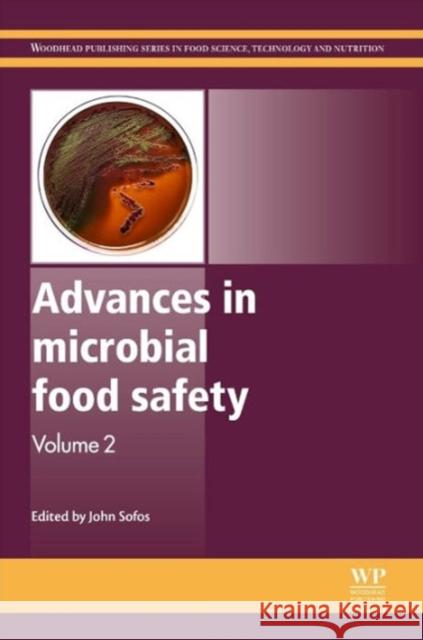
Advances in Microbial Food Safety J Sofos 9781782421078 Elsevier Science & Technology - książkaWidoczna okładka, to zdjęcie poglądowe, a rzeczywista szata graficzna może różnić się od prezentowanej.

Advances in Microbial Food Safety

ISBN-13: 9781782421078 / Angielski / Twarda / 2014 / 444 str.

J Sofos
cena 1341,39 zł
(netto: 1277,51 VAT:  5%)

Najniższa cena z 30 dni: 1327,67 zł
Termin realizacji zamówienia:
ok. 30 dni roboczych
Bez gwarancji dostawy przed świętami

Darmowa dostawa!

Research and legislation in food microbiology continue to evolve, and outbreaks of foodborne disease place further pressure on the industry to provide microbiologically safe products. This second volume in the series Advances in Microbial Food Safety summarises major recent advances in this field, and complements volume 1 to provide an essential overview of developments in food microbiology. Part one opens the book with an interview with a food safety expert. Part two provides updates on single pathogens, and part three looks at pathogen detection, identification and surveillance. Part four covers pathogen control and food preservation. Finally, part five focuses on pathogen control management.

  • Extends the breadth and coverage of the first volume in the series
  • Includes updates on specific pathogens and safety for specific foods
  • Reviews both detection and management of foodborne pathogens

Kategorie:
Inne
Kategorie BISAC:
Technology & Engineering > Food Science - General
Medical > Microbiology
Science > Mikrobiologia
Wydawca:
Elsevier Science & Technology
Język:
Angielski
ISBN-13:
9781782421078
Rok wydania:
2014
Wydanie:
UK
Numer serii:
000442047
Ilość stron:
444
Waga:
0.83 kg
Wymiary:
16.6 x 24.2 x 3.0
Oprawa:
Twarda
Wolumenów:
01

"...summarizes major recent advances in microbial food safety and provides an overview of developments in food microbiology." --IFIS

  • Contributor contact details
  • Editorial advisors
  • Woodhead Publishing Series in Food Science, Technology and Nutrition
  • Part I: Hazards
    • 1: Update on non-O157 Shiga toxin-producing E. coli as a foodborne pathogen: analysis and control
      • Abstract
      • 1.1 Introduction
      • 1.2 Virulence of non-O157 Shiga toxin-producing E. coli (STEC)
      • 1.3 Animal reservoirs of non-O157 STEC
      • 1.4 Outbreaks caused by non-O157 STEC
      • 1.5 Transmission of non-O157 STEC to humans
      • 1.6 Interventions for control of non-O157 STEC in produce
      • 1.7 Interventions for control of STEC in cattle
      • 1.8 Resistance of non-O157 STEC to stress
      • 1.9 Detection of non-O157 STEC
      • 1.10 Conclusions
    • 2: Update on Yersinia as a foodborne pathogen: analysis and control
      • Abstract
      • 2.1 Introduction
      • 2.2 History and background
      • 2.3 Evolution, genome, taxonomy and pathogenicity
      • 2.4 Detection and identification methods
      • 2.5 Epidemiology
      • 2.6 Control
      • 2.7 Future trends
    • 3: Update on Toxoplasma gondii as a parasite in food: analysis and control
      • Abstract
      • 3.1 Introduction
      • 3.2 Morphology, structure and life cycle
      • 3.3 Biology, genetics and genomics
      • 3.4 Diagnosis
      • 3.5 Epidemiology
      • 3.6 Pathogenesis and clinical features
      • 3.7 Treatment and prevention
      • 3.8 Future trends
    • 4: The role of free-living protozoa in protecting foodborne pathogens
      • Abstract
      • 4.1 Introduction
      • 4.2 Protozoa
      • 4.3 Free-living protozoa in food-related environments
      • 4.4 Free-living protozoa in drinking water and food
      • 4.5 Interactions between bacteria and free-living protozoa
      • 4.6 Significance of bacteria-protozoa interactions for food safety
      • 4.7 Conclusions and future trends
    • 5: Update on foodborne viruses: types, concentration and sampling methods
      • Abstract
      • 5.1 Introduction
      • 5.2 Challenges in detecting foodborne viruses
      • 5.3 Types of virus
      • 5.4 Methodologies for sampling and concentration
      • 5.5 Conclusions
    • 6: Update on foodborne viruses: molecular-based detection methods
      • Abstract
      • 6.1 Introduction
      • 6.2 Methods for detection of foodborne viruses
      • 6.3 RNA extraction and purification
      • 6.4 Molecular amplification and detection
      • 6.5 Confirmation of RNA-amplified products
      • 6.6 Real-time reverse-transcriptase polymerase chain reaction (RT-PCR) approaches
      • 6.7 Nucleic acid sequence-based amplification (NASBA) assay
      • 6.8 Reverse transcription loop-mediated isothermal amplification (RT-LAMP) assay
      • 6.9 Biosensors
      • 6.10 Microarrays
      • 6.11 Next-generation sequencing approaches
      • 6.12 Detection of infectious versus noninfectious viruses using molecular-based assays
      • 6.13 Conclusions
    • 7: Update on Listeria monocytogenes: reducing cross-contamination in food retail operations
      • Abstract
      • 7.1 Introduction to the food safety issue
      • 7.2 L. monocytogenes and listeriosis
      • 7.3 Presence and prevalence of L. monocytogenes in retail operations
      • 7.4 Transfer dynamics of L. monocytogenes at retail
      • 7.5 The role of food workers in L. monocytogenes cross-contamination at retail
      • 7.6 Risk assessment of L. monocytogenes in retail delicatessen
      • 7.7 Mitigation options to control cross-contamination with L. monocytogenes at retail
      • 7.8 Future trends
  • Part II: Hazard management and control
    • 8: Developments in food disease surveillance: using source attribution to inform risk management
      • Abstract
      • 8.1 Introduction
      • 8.2 Foodborne disease surveillance
      • 8.3 Surveillance and the role of typing of foodborne pathogens
      • 8.4 Producing evidence to inform policy to prevent and control foodborne diseases
      • 8.5 Usefulness and applicability of source attribution methods for foodborne hazards
      • 8.6 Future trends
    • 9: Modelling the spread of pathogen contamination in fresh produce
      • Abstract
      • 9.1 Introduction
      • 9.2 Contamination of fresh produce: modelling pathogen growth behaviour
      • 9.3 Case study: predicting pathogen growth on lettuce
      • 9.4 Case study: modelling Listeria monocytogenes contamination of minced tuna
      • 9.5 Summary
    • 10: Developments in validation and verification methods for hazard analysis and critical control points (HACCP) and other food safety systems
      • Abstract
      • 10.1 Introduction
      • 10.2 Validating food safety systems
      • 10.3 eassessment or revalidation of food safety controls
      • 10.4 Validation of food controls: case studies
      • 10.5 Verification of food safety management system activities
      • 10.6 Validation and verification: a Global Food Safety Initiative (GFSI) perspective
      • 10.7 Future trends
      • 10.10 Appendix: Comparison of critical control points (CCPs) and prerequisite programs (PRPs)
  • Part III: Particular foods
    • 11: Developments in sampling and test methods for pathogens in fresh meat
      • Abstract
      • 11.1 Introduction
      • 11.2 Sampling plans
      • 11.3 Testing for pathogens: hazard analysis critical control point (HACCP) systems
      • 11.4 Principles and limitations of sample testing
      • 11.5 Current US and EU methods of sample testing
      • 11.6 Future trends
    • 12: Developments in Salmonella control in eggs
      • Abstract
      • 12.1 Introduction
      • 12.2 Salmonella in laying flocks and eggs
      • 12.3 Monitoring and controls in Europe before the EU baseline survey
      • 12.4 The current situation in Europe
      • 12.5 Human salmonellosis outbreaks in Europe
      • 12.6 Incidence and control of egg-borne salmonellosis outside of Europe
      • 12.7 Potential for eradication of Salmonella Enteritidis from laying farms
      • 12.8 Potential treatments for eggs
      • 12.9 Future trends
    • 13: The role of animal manure in the contamination of fresh food
      • Abstract
      • 13.1 Introduction
      • 13.2 Animal manure
      • 13.3 Foodborne pathogens associated with animal manure
      • 13.4 Common practices in applying animal manure to agricultural fields
      • 13.5 Persistence and transmission of human pathogens after land application of animal manure
      • 13.6 Contamination of produce on farms originating from animal manure
      • 13.7 Animal waste treatments to minimize contamination
      • 13.8 Guidelines on direct application of raw animal manure or composted products to cropland
      • 13.9 Conclusions
    • 14: Developments in improving the safety of sprouts
      • Abstract
      • 14.1 Introduction
      • 14.2 Trends in the consumption of raw vegetables
      • 14.3 Microbiological hazards in seeds and sprouts
      • 14.4 Bacterial pathogens contaminating seeds and sprouts
      • 14.5 Outbreaks of foodborne illness associated with the consumption of sprouts
      • 14.6 Measures to control hazards associated with sprouts
      • 14.7 Conclusions and future trends
    • 15: Food safety standards in the fresh produce supply chain: advantages and disadvantages
      • Abstract
      • 15.1 Introduction
      • 15.2 Benefits and concerns relating to the implementation of food safety standards
      • 15.3 Improving food safety management systems in the fresh produce supply chain
      • 15.4 Future trends in food safety standards
      • 15.5 Conclusions: the importance of training and risk communication for well-accepted and functional food safety standards
      • 15.6 Sources of further information
      • 15.7 Acknowledgements
  • Index

John N. Sofos is Professor of Meat Microbiology at Colorado State University and a well-known authority on meat safety.


Udostępnij

Facebook - konto krainaksiazek.pl


Opinie o Krainaksiazek.pl na Opineo.pl

Partner Mybenefit

Krainaksiazek.pl w programie rzetelna firma Krainaksiaze.pl - płatności przez paypal

Czytaj nas na:

Facebook - krainaksiazek.pl
  • książki na zamówienie
  • granty
  • książka na prezent
  • kontakt
  • pomoc
  • opinie
  • regulamin
  • polityka prywatności

Zobacz:

  • Księgarnia czeska

  • Wydawnictwo Książkowe Klimaty

1997-2025 DolnySlask.com Agencja Internetowa

© 1997-2022 krainaksiazek.pl
     
KONTAKT | REGULAMIN | POLITYKA PRYWATNOŚCI | USTAWIENIA PRYWATNOŚCI
Zobacz: Księgarnia Czeska | Wydawnictwo Książkowe Klimaty | Mapa strony | Lista autorów
KrainaKsiazek.PL - Księgarnia Internetowa

Polityka prywatnosci - link
Krainaksiazek.pl - płatnośc Przelewy24
Przechowalnia Przechowalnia







