Advanced Water Technologies: Concepts and Applications » książka





Advanced Water Technologies: Concepts and Applications
ISBN-13: 9781138106604 / Angielski / Twarda / 2020 / 250 str.
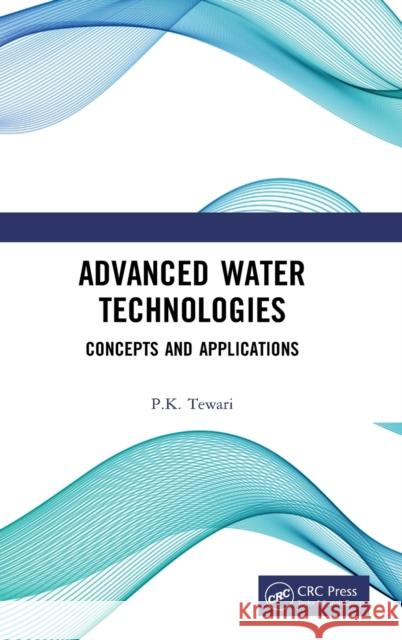
Advanced Water Technologies: Concepts and Applications
ISBN-13: 9781138106604 / Angielski / Twarda / 2020 / 250 str.
(netto: 723,00 VAT: 5%)
Najniższa cena z 30 dni: 654,86
ok. 16-18 dni roboczych.
Darmowa dostawa!
The book aims to provide the basic concepts and advanced topics in the field of water technologies in an easy to understand manner through desciption of advances in materials, material selection, preparation, characterization and application aspects including relevance of water technologies in industries.
Chapter 1
Water
1.1 Water- A Miracle Compound
1.2 Water on Earth
1.3 Water Quality
1.3.1 Trophic States
1.3.2 Dissolved Oxygen
1.3.3 Contaminants
1.4 Water Security
1.5 Water Resource Management
1.5.1 Water Harvesting
1.5.2 Recharge through Isotope Hydrology
1.6 Water Contaminants Monitoring through Isotope Techniques
1.7 Measurements of discharge rate in canals and mountainous rivers
1.8 Desalination & water Purification
Chapter 2
Membrane Technologies for Water Purification
2.1 Introduction
2.2 Membranes
2.2.1 Isotropic (Symmetric) Membranes
2.2.2 Anisotropic (Asymmetric) Membranes
2.3 Membrane Technologies
2.3.1 Microfiltration
2.3.2 Ultrafiltration (UF)
2.3.3 Nanofiltration (NF)
2.3.4 Reverse Osmosis (RO)
2.3.5 Electrodialysis
2.4 Membrane Characteristics & Applications
2.5 Other Membrane Systems and Membranes for Water Purification
2.5.1 Membrane Contactor
2.5.2 Membrane Distillation
2.5.3 Biomimetic Membranes
2.6 Transport Mechanism in Membrane Filtration
2.6.1 Gel Polarization Model
2.6.2 Resistance Model
2.7 Transport Mechanism in Electrodialysis Membrane
2.8 Membrane Structures
2.8.1 Neutral Microporous Membranes
2.8.2 Asymmetric Microporous Membranes
2.9 Homogeneous Membranes
2.9.1 Homogeneous Polymer Membranes
2.10 Liquid Membrane
2.11 Ion-Exchange Membranes
2.12 Composite membranes
2.12.1 Preparation Method of Composite Membranes
2.13 Membrane Modules
2.13.1 Hollow Fiber Modules
2.13.2 Plate & Frame module
2.13.3 Tubular Membrane Module
2.13.4 Spiral Wound Module
2.13.5 Module Selection
2.14 Concentration Polarization & Fouling
2.14.1 Concentration Polarisation
2.14.2 Membrane Fouling
2.15 Materials for Different Membrane Processes
2.15.1 Materials for Ultrafiltration Membrane
2.15.2 Materials for Reverse Osmosis Membrane
2.15.3 Materials for Nanofiltration Membrane
2.15.4 Materials for Pervaporation Membranes
2.15.5 Materials for Ion Exchange Membranes
2.16 Need for Nanocomposite Membrane
2.17 Case Studies
2.17.1 On-line Water Purifier Based on Polysulfone Ultrafiltration Membrane
2.17.2 Membrane Assisted Sorption Based Water Purification Installed in Rural Area
2.17.3 Ceramic Membrane Based Microfiltration
Chapter 3
Nanotechnology for Water Purification
3.1 Introduction
3.2 Nanomaterials and Water Purification
3.3 Nanomaterial for Water Purification
3.3.1 Zeolites
3.3.2 Dendrimers
3.3.3 Metal containing nanoparticles
3.3.4 Carbon nanotubes (CNTs)
3.3.5 Other nanomaterials
3.4 Synthesis of nanomaterials
3.5 Nanotechnology: Health, Safety and Environment
3.6 Domestic Water Purification
3.6.1 Sustainability of a Water Purification Technology
3.6.2 Challenges with Integrated Nano-Based Systems for Water Purification
Chapter 4
Nanocomposite Membranes in Water Treatment
4.1 Introduction
4.2 Nanocomposites
4.2.1 Carbon NanoTube (CNT) Reinforcement
4.2.2 Metal Oxide Reinforcement
4.2.3 Nano-Clay Reinforcement
4.2.4 Organic Materials Reinforcement
4.2.5 Dendrimers Reinforcement
4.2.6 Zeolite Reinforcement
4.2.7 Silver Reinforcement
4.2.8 Graphene Oxide (GO) Reinforcement
4.2.9 Hybrid Materials Reinforcement
4.3 Thin Film Nano-composite (TFN)
4.3.1 Chlorine Resistant Properties
4.3.2 Thermal Stability
4.3.3 Antifouling Properties
4.3.4 Antibacterial Properties
4.3.5 Permeability and Selectivity
4.3.6 Thin Film Composite with Nanocomposite Substrate
4.4 Bioinspired Membranes
4.4.1 Carbon Nanotube Membrane
4.4.2 Graphene Membranes
4.4.3 Aquaporin Membranes
4.5 Challenges & Opportunities
Chapter 5
Desalination
5.1 Introduction
5.2 Global Desalination Scenario
5.3 Commercial Desalination Processes
5.3.1 Multi-Stage Flash (MSF)
5.3.2 Multi- Effect Distillation (MED)
5.3.3 Vapour Compression (VC)
5.3.4 Reverse Osmosis (RO)
5.3.5 Electrodialysis (ED)
5.3.6 Comparison
5.4 Nuclear Desalination
5.5 Low Carbon Desalination
5.6 Recovery of Valuables from Brine Effluent
5.7 Brackish Water Desalination
5.8 Alternate Technologies
5.8.1 Solar and Wind Powered Desalination
5.8.2 Membrane Distillation
5.8.3 Capacitive Deionisation (CDI)
5.8.4 Desalination through Carbon Aerogel (CAG)
5.8.5 Freezing
5.8.6 Water Harvesting from Air
5.8.7 Submarine Desalination
5.8.8 Thermocline Driven Desalination
5.8.9 Utilization of Municipal Solid Waste (MSW)
5.9 Cost Reduction Strategies through Technological Innovations
5.10 Case Studies
5.10.1 Seawater Desalination
5.10.2 Brackish Water Desalination in Rural and Remote Area
Chapter 6
Water Treatment and Purification
6.1 Drinking Water Purification
6.1.1 Common Contaminants in Water
6.1.2 Monitoring
6.1.3 Conventional Water Purification
6.1.3.1 Sedimentation and Coagulation
6.1.3.2 Chemical Disinfection
6.1.3.3 BioSand Filtration
6.1.3.4 Ceramic Filtration
6.1.3.5 Rice Husk Concrete Filtration
6.1.3.6 Colloidal Silver Based Filtration
6.1.3.7 Ion-Exchange as Water Softener
6.1.4 Recommendations
6.2 Industrial Water Treatment
6.2.1 Industrial Water Uses
6.2.2 Water Treatment in Industries
6.2.3 Case Studies
6.3 Water Treatment for the River Rejuvenation
Chapter 7
Wastewater Treatment, Recycle & Reuse
7.1 Wastewater Treatment
7.2 Recycle and Reuse
7.2.1 Photocatalytic Method
7.2.2 Biotechnology
7.2.3 Membrane Processes for Recycle & Reuse
7.3 Industrial Wastewater
7.4 Case Studies
7.4.1 Wastewater in Tannery Industries
7.4.2 Recycle and Reuse in Textile Industries
7.5 Benefits of Water Reuse & Recovery of Valuables
Chapter 8
Guidelines for Setting-up Plant based on Advanced Water Technology
8.1. Introduction
8.2 Selection of Technology
8.3 Site Selection & Field Studies
8.4 Utilities & Auxiliary Services
8.5 Project Description
8.5.1 Process Description
8.5.2 Waste Generation
8.6 Safety Considerations
8.7 Project Completion Period
8.8 Contract & Delivery Models
8.9 Financial Analysis
8.10 Environment Impact Assessment
8.10.1 Scope of the EIA Study
Chapter 9
Challenges & Opportunities
9.1 Introduction
9.2 Challenges
9.2.1 Environmental Challenges
9.3 Rural Applications of the Technology
9.4 Environmental Protection and Pollution Prevention Aspects
9.5 Opportunities
9.6 Industry Academia Interaction
9.7 Business Model
9.8 Challenges & Opportunities
Chapter 10
Artificial Intelligence (AI) in Water Management
10.1 Artificial Intelligence (AI) and Machine Learning (ML) in Integrated Water Sector
10.2 AIoT Enabled Water Treatment
10.3 AIoT Driven Water Management
10.4 Sensor Development for AIoT in Water Sector
10.5 Major Focus Area
P.K. Tewari is one of the renowned distinguished scientists in the field of membrane technology as well as desalination and water purification. He has made outstanding contributions to many aspects of basic science and technology related to membrane and thermal processes. Dr. Tewari joined the Bhabha Atomic Research Centre (BARC) in 1977 and became its Associate Director of Chemical Engineering Group in 2014. Currently, he is Raja Ramanna Fellow in BARC and consultant to the Office of Principal Scientific Adviser to the Government of India on ‘Water Issues’. He is Professor in Homi Bhabha National Institute (HBNI) and guiding Ph.D. and post graduate students.
Dr. Tewari received his Ph.D. degree in Chemical Engineering from the Indian Institute of Technology (IIT) Bombay in 1987. He was Chairman of International Nuclear Desalination Advisory Group of International Atomic Energy Agency (IAEA) from 2005-2008 and Chairman of Technical Working Group on Nuclear Desalination of the IAEA (2009-2016). Dr. Tewari was Chairman of the Committee on ‘Water Quality for Industrial Purposes’ of Bureau of Indian Standard (BIS). He is member of several advisory committees on water issues in different Departments such as Office of Principal Scientific Advisor to Government of India, Department of Science & Technology, Oil & Natural Gas Commission, Chennai Metro Water etc. He is President of Indian Desalination Association (InDA) and Vice President of Asia pacific Desalination Association as well as Member of Board of Directors of International Desalination Association (IDA).
Dr. Tewari has more than 200 research publications in peer reviewed journals, proceedings, books and encyclopaedia. He is Editor-in-Chief of ‘International Journal of Nuclear Hydrogen Production & Applications’ (IJNHPA). He is Associate Editor of ‘International Journal of Nuclear Desalination’ (IJND) and a Member of the editorial board of ‘Desalination and Water Treatment’ journal. He is recipient of several awards and felicitations as well as Group Achievement Awards.




Czytaj nas na:
1997-2026 DolnySlask.com Agencja Internetowa
KrainaKsiazek.PL - Księgarnia Internetowa


