Termin realizacji zamówienia: ok. 30 dni roboczych Bez gwarancji dostawy przed świętami
Darmowa dostawa!
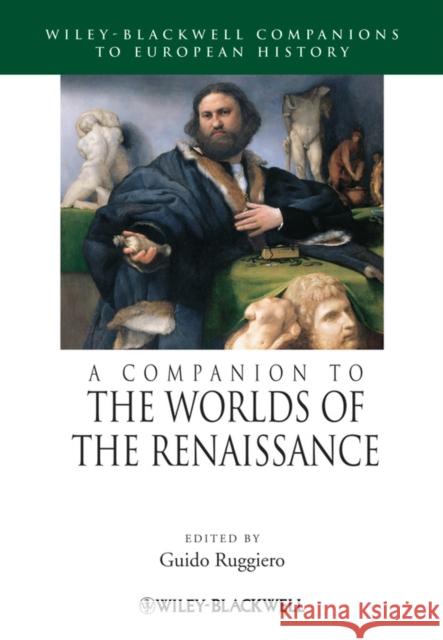
This volume brings together some of the most exciting renaissance scholars to suggest new ways of thinking about the period and to set a new series of agendas for Renaissance scholarship.
Overturns the idea that it was a period of European cultural triumph and highlights the negative as well as the positive.
Looks at the Renaissance from a world, as opposed to just European, perspective.
Views the Renaissance from perspectives other than just the cultural elite.
Gender, sex, violence, and cultural history are integrated into the analysis.
"This volume would be a useful tool in an academic library providing students of the period with a valuable source of both traditional and new thought on the Renaissance world. The essays are involved and need to be considered in some detail to fully appreciate the scholarly thought. Perhaps most useful as a stepping–stone to further study, it is an excellent volume that deserves shelf space in all non–specialist academic libraries and libraries that serve history lovers."
Louise Ellis–Barrett, Assistant Librarian, Dulwich College, London <!––end––>
"This companion sets new agendas for research and explores some refreshing ways of thinking about the Renaissance. Contributors include scholars from many disciplines. Recommended for scholars, researchers, upper–division under–graduates and graduates students" Choice
"This most impressive volume deserves considerable praise. The editor, in his helpful and wide–ranging introduction, ensures a fascinating and valuable volume." Journal of European Studies
"This Companion (with notes, and a rich composite bibliography) is strongest on social history and literature, as well as for historical insights and literary merits" History Today
"The articles are not simply factual summaries: they all have their own arguments, and many of them suggest places where the present state of knowledge is inadequate, so that the book is rich in suggestions for further research.... Ruggiero asks his readers to "applaud if you have enjoyed our performance"; yes, it is greatly enjoyable." John Considine, University of Alberta
Notes on Contributors viii
Introduction: Renaissance Dreaming: In Search of a Paradigm 1 Guido Rumiero
PART I THE COURSE of RENAISSANCEE EVENTS 21
1 The Italian Renaissance 23 Gene Brucker
2 The European Renaissance 39 Randolph Starn
3 The Renaissance and the Middle East 55 Linda T. Darling
4 The Renaissance World from the West 70 Matthew Restall
5 The Historical Geography of the Renaissance 88 Peter Burke
PART 11 THE WORLDS AND WAYS OF POWER 105
6 Governments and Bureaucracies 107 Edward Muir
7 Honor, Law, and Custom in Renaissance Europe 124 James R. Farr
8 Violence and its Control in the Late Renaissance: An Italian Model 139 Gregory Hanlon
9 Manners, Courts, and Civility 156 Robert Muchembled
10 Family and Clan in the Renaissance World 173 Joanne M. Feeraro
11 Gender 188 Elissa B. Weaver
12 The Myth of Renaissance Individualism 208 John Jeffiies Martin
PART I11 SOCIAL AND ECONOMIC WORLDS 225
13 Social Hierarchies: The Upper Classes 227 Matthew Ester
14 Social Hierarchies: The Lower Classes 243 James S. Amelang
15 Tools for the Development of the European Economy 259 Karl Appuhn
16 Economic Encounters and the First Stages of a World Economy 279 John A. Marino
PART IV CULTURAL WORLDS 297
17 The Subcultures of the Renaissance World 299 David C. Gentilcore
18 High Culture 316 Ingrid D. Rowland
19 Religious Cultures 333 R. Po–chia Hsia
20 Art 349 Loren Partridge
21 Literature 366 James Grantham Turner
22 Political Ideas 384 John M. Najemy
23 The Scientific Renaissance 403 William Eamon
PART V ANTI–WORLDS 425
24 Plague, Disease, and Hunger 427 Mary Lindemann
25 Renaissance Bogeymen: The Necessary Monsters of the Age 444 Linda Woodbridge
26 Violence and Warfare in the Renaissance World 460 Thomas F. Arnold
27 Witchcraft and Magic 475 Guido Ruggiero
28 The Illicit Worlds of the Renaissance 491 Ian Frederick Moulton
Consolidated Bibliography 506
Index 543
Guido Ruggiero is Professor and Chair of the History Department at the University of Miami. His previous publications include
Binding Passions: Tales of Magic Marriage and Power at the End of the Renaissance (1993),
The Boundaries of Eros: Sex Crime and Sexuality in Renaissance Venice (1985), and
Violence in Early Renaissance Venice (1980). He has also edited two series of books:
Studies in the History of Sexuality and Selections from Quaderni Storici.
The idea of the Renaissance as a period of European cultural triumph in which great men flourished has been largely demolished in the last fifty years. This provocative volume brings together some of the most exciting scholars who led this attack, to suggest different ways of thinking about the Renaissance and set new agendas for research.
The contributions focus on three major themes: transformative encounters between cultures, ancient and new, high and low, within Europe and beyond; fascination with all things Italian; and social realignment. In examining these themes, the contributors look at the Renaissance from a world perspective, illuminating the negative as well as the positive, and integrating considerations of gender, sex, violence, and non–elite culture. The vision of the Renaissance that emerges is one defined by a wide range of social, political, economic, and cultural developments rather than by the actions of a small cultural elite.