• Wyszukiwanie zaawansowane
  • Kategorie
  • Kategorie BISAC
  • Książki na zamówienie
  • Promocje
  • Granty
  • Książka na prezent
  • Opinie
  • Pomoc
  • Załóż konto
  • Zaloguj się

Structuring the Thesis: Matching Method, Paradigm, Theories and Findings » książka


zaloguj się | załóż konto
Logo Krainaksiazek.pl

koszyk

konto

szukaj
topmenu
Księgarnia internetowa
Szukaj
Książki na zamówienie
Promocje
Granty
Książka na prezent
Moje konto
Pomoc
 
 
Wyszukiwanie zaawansowane
Pusty koszyk
Bezpłatna dostawa dla zamówień powyżej 20 złBezpłatna dostawa dla zamówień powyżej 20 zł

Kategorie główne

• Nauka
 [2952079]
• Literatura piękna
 [1850969]

  więcej...
• Turystyka
 [71058]
• Informatyka
 [151066]
• Komiksy
 [35579]
• Encyklopedie
 [23181]
• Dziecięca
 [620496]
• Hobby
 [139036]
• AudioBooki
 [1646]
• Literatura faktu
 [228729]
• Muzyka CD
 [379]
• Słowniki
 [2932]
• Inne
 [445708]
• Kalendarze
 [1409]
• Podręczniki
 [164793]
• Poradniki
 [480107]
• Religia
 [510956]
• Czasopisma
 [511]
• Sport
 [61267]
• Sztuka
 [243299]
• CD, DVD, Video
 [3411]
• Technologie
 [219640]
• Zdrowie
 [100984]
• Książkowe Klimaty
 [124]
• Zabawki
 [2281]
• Puzzle, gry
 [3363]
• Literatura w języku ukraińskim
 [258]
• Art. papiernicze i szkolne
 [8020]
Kategorie szczegółowe BISAC

Structuring the Thesis: Matching Method, Paradigm, Theories and Findings

ISBN-13: 9789811305108 / Angielski / Twarda / 2018 / 427 str.
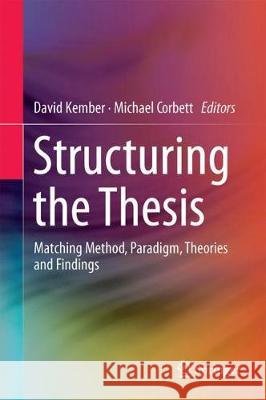
David Kember; Michael Corbett
Structuring the Thesis: Matching Method, Paradigm, Theories and Findings Kember, David 9789811305108 Springer - książkaWidoczna okładka, to zdjęcie poglądowe, a rzeczywista szata graficzna może różnić się od prezentowanej.

Structuring the Thesis: Matching Method, Paradigm, Theories and Findings

ISBN-13: 9789811305108 / Angielski / Twarda / 2018 / 427 str.

David Kember; Michael Corbett
cena 523,30
(netto: 498,38 VAT:  5%)

Najniższa cena z 30 dni: 501,19
Termin realizacji zamówienia:
ok. 22 dni roboczych.

Darmowa dostawa!
Kategorie:
Podręczniki
Kategorie BISAC:
Education > Schools - Levels - Higher
Education > Educational Psychology
Social Science > Methodology
Wydawca:
Springer
Język:
Angielski
ISBN-13:
9789811305108
Rok wydania:
2018
Wydanie:
2018
Ilość stron:
427
Waga:
0.79 kg
Wymiary:
23.39 x 15.6 x 2.54
Oprawa:
Twarda
Wolumenów:
01
Dodatkowe informacje:
Wydanie ilustrowane

Part A: Introduction.- 


Chapter 1. Critical reflections on the conventional thesis structure and guide to the research questions addressed in the book.-

Chapter 2. The collective voyage of discovery: How the book was developed and produced.-

Part B: Mixed Methods.-

Chapter 3. The paradigmatic challenge of mixed-methods research: Positivism, relativism or pragmatism?.-

Chapter 4. An exploration of the epistemological beliefs, learning environment expectations and persistence intentions: Insights into the shaping of student persistence in the first semester of university study at three Australian universities.- 

Chapter 5. Challenges faced by male primary teachers.-

Chapter 6. English language teaching in Nepal: An investigation of issues and challenges.-

Chapter 7. How do students make decisions about overseas higher education? A case study of Chinese international students at a regional Australian university.-

Chapter 8. Linguistic complexity in English Textbooks: A functional grammar perspective.-  

Chapter 9. Structure by design: Reasoning about covariation with TinkerPlots.-

Chapter 10. Researching in the ‘cultural interface’: working between non- Indigenous and Indigenous research paradigms.- 

Part C: Action Research.-

Chapter 11. Action research and criticality: Working out the stone in your shoe.-

Chapter 12. Students’ understanding of statistical inference: Implications for teaching.-

Chapter 13. The design and implementation of a short course, focusing on metacognition, to develop writing skills for university students for whom English is an additional language: An action research approach.-  

Chapter 14. Intersections of indigenous knowledge and place based education: Possibilities for new visions of sustainability education in Uganda.-

Chapter 15. “I only look forward to Mondays”. Facilitating creative writing groups: ageism, action and empowerment.- 

Chapter 16. A journey around Tongan education.-

Part D: Interpretive Methods.-

Chapter 17. Ways of working in the interpretive tradition.-

Chapter 18. Fluid methods to make sense of an unknown: An emergent grounded theory study of cultural wellbeing.-

Chapter 19. Exploring interpretations of sustainability across diverse social contexts.-

Chapter 20. Embracing change when ‘writing for change’: My PhD experience.-

Chapter 21. Teaching history in Australian museums: Pedagogy and praxis.-  

Chapter 22. Social justice and constructivist grounded theory.- 

Chapter 23. Language learning and integration of adult Bhutanese refugees: An ethnographic study.- 

Chapter 24. Exposure and effect: An investigation into a culture of body pedagogies.-  

Chapter 25. Arts-based research in education: Becomings from a doctoral research perspective.- 

Chapter 26. Silent, invisible and under-supported? An autoethnographic journey through the valley of the shadow of youth mental health in Australia.- 

Part E: Emerging Theories.-

Chapter 27. Emergent theory and/as doctoral research.-  

Chapter 28. The way that things are done around here: An investigation into the organisational and social structures that contribute to structural power within the Australian swim coach education pathway.- 

Chapter 29. Are we all foodies now? An ethnographic exploration of food experience in primary schools.-

Chapter 30. Governing Civil Society: How literacy, education and security were brought together.-

Chapter 31. From developing child to competent learner: A genealogical study of the kindergarten child and progressive reform in Aotearoa New Zealand.-

Chapter 32. Feeling-thinking for a feminist participatory visual ethnography.- 

Chapter 33. Girls’ tales: experiences of schooling: making a re/active documentary film.- 

Chapter 34. Intricacies of professional learning in health care: The case of supporting self-management in paediatric diabetes.- 

Chapter 35. Understanding new spaces and relations of global governance in education: The OECD’s PISA for schools.- 

Chapter 36. Now, then, when: working with qualitative longitudinal research to study pathways and futures in globalising times.- 

Chapter 37. Being chosen and performing choice: Young people engaging in imaginative and constrained secondary school practices in Vancouver, BC, Canada.- 

Chapter 38. Research secrets, research ‘messiness’ and the complexity of knowing: behind the thesis and the content’s page.- 

Part F: Meta-Analysis.-

Chapter 39. Reflections on methodological issues.- 

Chapter 40. Lessons learnt about structuring the thesis and implications for practice.

David Kember is Professor in Education: Curriculum Methods and Pedagogy in the Faculty of Education at the University of Tasmania. Prior to that he worked in Hong Kong for 25 years, first at the Polytechnic University, then the Chinese University and finally as a Professor in Higher Education at the University of Hong Kong. He spent six years running an inter-institutional initiative operating across the eight universities in Hong Kong, known as the Action Learning Project, which supported 90 action research projects in which teachers introduced a wide variety of initiatives aiming to improve the quality of student learning. His research in the following areas has been particularly highly cited: student approaches to learning and the influence of teaching and assessment on them; the Chinese and Asian learner; motivation; reflective thinking; teachers’ beliefs about and approaches to teaching; action learning and research for teaching quality improvement; distance and online learning.

Michael Corbett is an educational sociologist whose work draws on social theory, as well as historical and geographic traditions. He has worked at the School of Education at Acadia University in Canada since 2002 with a three-year sojourn at the University of Tasmania (2015-17), where he held a research professorship in rural and regional education, and where he continues to hold an adjunct professorship. Corbett’s work focuses principally on rural education and he is a global leader in this field. He has studied youth educational decision-making, mobilities and education, the politics of educational assessment, literacies in rural contexts, improvisation and the arts in education, the position of rural identities and experience in education, conceptions of space and place, the viability of small rural schools, and "wicked" policy problems and controversies in education.

The book is a collective investigation of the structuring of theses in education, the social sciences and other disciplines that commonly do not follow the standard procedures of the scientific method. To help research students design a structure for their own thesis and liberate their investigations from the constraints associated with the use of the conventional structure, it explains how the structures adopted were designed to suit the topic, methodology and paradigm. It also provides a wide range of examples to draw upon, which suit a broad spectrum of theory, methodological approaches, research methods and paradigms. Additionally, by analyzing the methodologies and paradigms, and reviewing the methodological and paradigmatic spectrum, it offers a significant contribution to the way research is conceptualized.

The book addresses a number of key questions faced by students, supervisors and examiners: 

•Why do examiners often find it difficult to read work in non-scientific disciplines when theses are structured in accordance with the conventional scientific method?

•Why do students in non-scientific disciplines struggle to write up the outcomes of their research in the conventional structure?

•What alternative thesis structures can be devised to better suit the wide range of methods?

•Which theories and paradigms are commonly followed in education and the social sciences and how do these perspectives influence the research process? 

•What methods, theories and paradigms are commonly adopted by education and social science students and what problems do these pose when students write their theses?



Kember, David Both David Kember and Carmel McNaught are Professo... więcej >


Udostępnij

Facebook - konto krainaksiazek.pl


Opinie o Krainaksiazek.pl na Opineo.pl

Partner Mybenefit

Krainaksiazek.pl w programie rzetelna firma Krainaksiaze.pl - płatności przez paypal

Czytaj nas na:

Facebook - krainaksiazek.pl
  • książki na zamówienie
  • granty
  • książka na prezent
  • kontakt
  • pomoc
  • opinie
  • regulamin
  • polityka prywatności

Zobacz:

  • Księgarnia czeska

  • Wydawnictwo Książkowe Klimaty

1997-2026 DolnySlask.com Agencja Internetowa

© 1997-2022 krainaksiazek.pl
     
KONTAKT | REGULAMIN | POLITYKA PRYWATNOŚCI | USTAWIENIA PRYWATNOŚCI
Zobacz: Księgarnia Czeska | Wydawnictwo Książkowe Klimaty | Mapa strony | Lista autorów
KrainaKsiazek.PL - Księgarnia Internetowa

Polityka prywatnosci - link
Krainaksiazek.pl - płatnośc Przelewy24
Przechowalnia Przechowalnia




