• Wyszukiwanie zaawansowane
  • Kategorie
  • Kategorie BISAC
  • Książki na zamówienie
  • Promocje
  • Granty
  • Książka na prezent
  • Opinie
  • Pomoc
  • Załóż konto
  • Zaloguj się

Seeing Stars: The Night Sky Through Small Telescopes » książka


zaloguj się | załóż konto
Logo Krainaksiazek.pl

koszyk

konto

szukaj
topmenu
Księgarnia internetowa
Szukaj
Książki na zamówienie
Promocje
Granty
Książka na prezent
Moje konto
Pomoc
 
 
Wyszukiwanie zaawansowane
Pusty koszyk
Bezpłatna dostawa dla zamówień powyżej 20 złBezpłatna dostawa dla zamówień powyżej 20 zł

Kategorie główne

• Nauka
 [2952079]
• Literatura piękna
 [1850969]

  więcej...
• Turystyka
 [71058]
• Informatyka
 [151066]
• Komiksy
 [35579]
• Encyklopedie
 [23181]
• Dziecięca
 [620496]
• Hobby
 [139036]
• AudioBooki
 [1646]
• Literatura faktu
 [228729]
• Muzyka CD
 [379]
• Słowniki
 [2932]
• Inne
 [445708]
• Kalendarze
 [1409]
• Podręczniki
 [164793]
• Poradniki
 [480107]
• Religia
 [510956]
• Czasopisma
 [511]
• Sport
 [61267]
• Sztuka
 [243299]
• CD, DVD, Video
 [3411]
• Technologie
 [219640]
• Zdrowie
 [100984]
• Książkowe Klimaty
 [124]
• Zabawki
 [2281]
• Puzzle, gry
 [3363]
• Literatura w języku ukraińskim
 [258]
• Art. papiernicze i szkolne
 [8020]
Kategorie szczegółowe BISAC

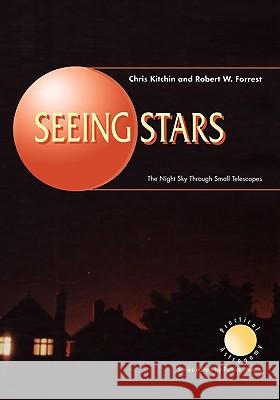
Seeing Stars: The Night Sky Through Small Telescopes

ISBN-13: 9783540760306 / Angielski / Twarda / 1997 / 186 str.
Chris Kitchin; Robert Forrest; C. R. Kitchin
Seeing Stars: The Night Sky Through Small Telescopes Kitchin, C. R. 9783540760306 Springer - książkaWidoczna okładka, to zdjęcie poglądowe, a rzeczywista szata graficzna może różnić się od prezentowanej.

Seeing Stars: The Night Sky Through Small Telescopes

ISBN-13: 9783540760306 / Angielski / Twarda / 1997 / 186 str.

Chris Kitchin; Robert Forrest; C. R. Kitchin
cena 402,53
(netto: 383,36 VAT:  5%)

Najniższa cena z 30 dni: 385,52
Termin realizacji zamówienia:
ok. 22 dni roboczych
Dostawa w 2026 r.

Darmowa dostawa!

Seeing Stars is written for astronomers, regardless of the depth of their theoretical knowledge, who are taking their first steps in observational astronomy. Chris Kitchin and Bob Forrest - both professional astronomers - take a conducted tour of the night sky and suggest suitable observing programmes for everyone from beginners to experts. How is this book different? We are all familiar with the beautiful images of planets and galaxies obtained by spacecraft and giant telescopes - but what can you really see with a small telescope? What should you expect from a small refractor or reflector? And what is the effect of observing from a site near a city? The answers are all here, with many photographs that will illustrate exactly what can be seen with different instruments (everything from the naked eye to a 300mm telescope) - and from different locations.


Kategorie:
Nauka, Fizyka
Kategorie BISAC:
Science > Astronomia, przestrzeń i czas
Science > Astrofizyka
Science > Geofizyka
Wydawca:
Springer
Seria wydawnicza:
Practical Astronomy
Język:
Angielski
ISBN-13:
9783540760306
Rok wydania:
1997
Wydanie:
1998
Numer serii:
000018767
Ilość stron:
186
Waga:
0.55 kg
Wymiary:
26.49 x 18.39 x 1.88
Oprawa:
Twarda
Wolumenów:
01
Dodatkowe informacje:
Bibliografia
Wydanie ilustrowane

1 Finding Your Way Around the Sky.- 1.1 Introduction.- 1.2 Constellations.- 1.2.1 Getting Started.- 1.2.2 Moving Onwards.- 1.3 Star Hopping.- 1.4 Positions in the Sky.- 1.5 Star Charts and Other Helpful Items.- 2 Your Telescope and How to get the Best Out of It.- 2.1 Telescope Designs.- 2.1.1 The Refractor.- 2.1.2 The Newtonian Reflector.- 2.1.3 The Cassegrain Reflector.- 2.1.4 The Schmidt-Cassegrain Telescope.- 2.2 Eyepieces.- 2.2.1 Magnification.- 2.2.2 Other Properties of Eyepieces.- 2.2.3 Choosing an Eyepiece.- 2.3 Collimation.- 2.4 Mountings.- 2.4.1 The Equatorial Mounting.- 2.4.2 The Alt-Azimuth Mounting.- 2.5 Optics.- 2.5.1 Light Grasp.- 2.5.2 Resolution.- 2.6 Cleaning and Aluminising.- 2.7 Dewing-up.- 2.8 Observing Techniques.- 2.8.1 Dark Adaption.- 2.8.2 Averted Vision.- 2.8.3 Seeing.- 2.8.4 Finding.- 2.8.5 Guiding.- 2.8.6 Apodisation.- 2.9 Twinkling.- 2.10 Finder Charts.- 2.11 Keeping a Log Book.- 2.12 Discoveries.- 3 The Sun.- 3.1 Warning.- 3.2 Observing the Sun.- 3.2.1 Stopping-down.- 3.2.2 Eyepiece Projection.- 3.2.3 Full-aperture Filters.- 3.2.4 Solar Diagonals.- 3.2.5 Finding the Sun.- 3.3 Solar Observing Programmes.- 3.4 More Advanced Work.- 3.4.1 The Prominence Spectroscope.- 3.4.2 The H-? Filter.- 3.4.3 The Spectrohelioscope.- 3.4.4 The Coronagraph.- 3.4.5 Solar Spectroscopy.- 4 The Moon.- 4.1 Introduction.- 4.2 Naked-eye Work and Binoculars.- 4.3 The Moon through the Telescope.- 4.4 An Optimum Telescope for Lunar Work.- 4.5 More Advanced Investigations.- 5 The Planets and Minor Solar System Objects.- 5.1 Introduction.- 5.2 Mercury, Venus, Mars, Jupiter and Saturn.- 5.2.1 Mercury.- 5.2.2 Venus.- 5.2.3 Mars.- 5.2.4 Jupiter.- 5.2.5 Saturn.- 5.3 Uranus, Neptune, Pluto and the Asteroids.- 6 Comets.- 6.1 Introduction.- 6.2 Cometary Orbits.- 6.2.1 Long-period Comets.- 6.2.2 Short-period Comets.- 6.2.3 Orbital Inclinations.- 6.3 The Structure of Comets.- 6.3.1 Composition.- 6.3.2 Coma and Tail.- 6.3.3 The View from Earth.- 6.4 Origins.- 6.5 Famous Comets.- 6.5.1 Halley’s Comet.- 6.5.2 Kohoutek’s Comet.- 6.5.3 Comet Shoemaker-Levy 9.- 6.6 Nomenclature of Comets.- 6.7 Observing Comets.- 6.7.1 Observing Information.- 6.7.2 What You Can Observe.- 6.7.3 Discovering Comets.- 7 Stars.- 7.1 Introduction.- 7.2 Brightness.- 7.2.1 Magnitudes.- 7.2.2 Estimating Visual Magnitudes.- 7.3 Variable Stars.- 7.3.1 Observing Variable Stars.- 7.3.2 Types of Variable Star.- 7.4 Visual Double and Binary Stars.- 7.5 Star Clusters.- 7.5.1 Galactic Clusters.- 7.5.2 Globular Clusters.- 8 Nebulae.- 8.1 Introduction.- 8.2 Gas and Dust Clouds.- 8.3 Dark Nebulae.- 8.3.1 Introduction.- 8.3.2 Nebulae.- 8.4 Reflection Nebulae.- 8.4.1 Introduction.- 8.4.2 Nebulae.- 8.5 Emission Nebulae.- 8.5.1 Introduction.- 8.5.2 The Spectra of Emission Nebulae and Planetary Nebulae.- 8.5.3 Nebulae.- 8.6 Supernova Remnants.- 8.6.1 Introduction.- 8.6.2 Nebulae.- 8.7 Planetary Nebulae.- 8.7.1 Introduction.- 8.7.2 Nebulae.- 9 Galaxies.- 9.1 Introduction.- 9.2 Spiral Galaxies.- 9.2.1 Observing Spiral Galaxies.- 9.3 Elliptical Galaxies.- 9.4 Irregular Galaxies.- 9.5 Quasars, Seyfert Galaxies and Other Active Galaxies.- 10 Unaided Observations.- 10.1 Introduction.- 10.2 The Moon.- 10.3 The Sun.- 10.4 Meteors.- 10.5 The Milky Way, the Zodiacal Light and Aurorae.- 10.6 Comets and Planets.- 10.7 Spacecraft.- 10.8 UFOs.- 11 Advanced Work.- 11.1 Introduction.- 11.2 Nebular and Light-pollution Filters.- 11.2.1 Introduction.- 11.2.2 Nebular Filters.- 11.2.3 Light-pollution Filters.- 11.2.4 Comet Filters.- 11.2.5 Practical Considerations.- 11.3 Colour Filters.- 11.3.1 Introduction.- 11.3.2 Types and Fittings.- 11.3.3 Planetary Observations.- 11.3.4 Imaging.- 11.3.5 Tri-colour Imaging.- 11.4 Photography with Your Telescope.- 11.4.1 Introduction.- 11.4.2 Piggyback Photography.- 11.4.3 Cameras for Telescopes.- 11.4.4 Focal Plane Photography through the Telescope.- 11.4.5 Using Telecompressors.- 11.4.6 Use of a Tele-extender for Eyepiece Projection.- 11.4.7 Guiding.- 11.4.8 Choice of Film and Processing.- 11.4.9 Projects.- 11.5 CCDs.- 11.5.1 Introduction.- 11.5.2 Camcorders.- 11.5.3 Purpose-designed CCD Cameras.- 11.5.4 CCD Chips.- 11.5.5 Sensitivity to Light.- 11.5.6 Astrometric Measurements.- 11.6 Photometry.- 11.6.1 Introduction.- 11.6.2 Photographic Photometry.- 11.6.3 Photometers.- 11.6.4 Filter Sets.- 11.6.5 CCD Photometry.- 11.6.6 Observing Projects.- 11.7 Occultations.- 11.7.1 Introduction.- 11.7.2 Lunar Occultations.- 11.7.3 Asteroid Occultations.- 11.7.4 Satellite Eclipses and Mutual Events.- 11.8 Computers in Astronomy.- 11.8.1 Introduction.- 11.8.2 Choice of Computer.- 11.8.3 “Planetarium” Programs.- 11.8.4 Databases.- 11.8.5 Ephemerides.- 11.8.6 Images and Image Processing.- 11.8.7 Data Processing.- 11.8.8 The Internet.- 11.9 Spectroscopy.- 11.9.1 Introduction.- 11.9.2 Objective Prisms.- 11.9.3 The Direct Vision Spectrograph.- 11.9.4 Slit Spectrographs.- 11.9.5 Observing Projects in Spectroscopy.- Appendix 1: Astronomical Societies.- Appendix 2: Bibliography.- Appendix 3: Messier and Caldwell Catalogues.- Appendix 4: A Selection of Choice Astronomical Objects for Viewing.- Appendix 5: The Greek Alphabet.- Appendix 6: Constellations.- Appendix 7: Useful World-Wide-Web and Internet Addresses.- Appendix 8: Terminology.

Chris Kitchin is Emeritus Professor of Astronomy at the University of Hertfordshire and has a lifelong interest in astronomical instrumentation, using telescopes of all sizes, studying the rapidly growing number of planets known to orbit other stars, and trying to communicate his own excitement at the recent explosion of discoveries about the universe. When not a hundred light years from Earth (at least in his imagination), Chris enjoys being taken for long country walks by his two border collies. He is author of a vast number of scientific papers and books by various publishers.


Udostępnij

Facebook - konto krainaksiazek.pl


Opinie o Krainaksiazek.pl na Opineo.pl

Partner Mybenefit

Krainaksiazek.pl w programie rzetelna firma Krainaksiaze.pl - płatności przez paypal

Czytaj nas na:

Facebook - krainaksiazek.pl
  • książki na zamówienie
  • granty
  • książka na prezent
  • kontakt
  • pomoc
  • opinie
  • regulamin
  • polityka prywatności

Zobacz:

  • Księgarnia czeska

  • Wydawnictwo Książkowe Klimaty

1997-2025 DolnySlask.com Agencja Internetowa

© 1997-2022 krainaksiazek.pl
     
KONTAKT | REGULAMIN | POLITYKA PRYWATNOŚCI | USTAWIENIA PRYWATNOŚCI
Zobacz: Księgarnia Czeska | Wydawnictwo Książkowe Klimaty | Mapa strony | Lista autorów
KrainaKsiazek.PL - Księgarnia Internetowa

Polityka prywatnosci - link
Krainaksiazek.pl - płatnośc Przelewy24
Przechowalnia Przechowalnia





