• Wyszukiwanie zaawansowane
  • Kategorie
  • Kategorie BISAC
  • Książki na zamówienie
  • Promocje
  • Granty
  • Książka na prezent
  • Opinie
  • Pomoc
  • Załóż konto
  • Zaloguj się

Chemical Engineering for the Food Industry » książka


zaloguj się | załóż konto
Logo Krainaksiazek.pl

koszyk

konto

szukaj
topmenu
Księgarnia internetowa
Szukaj
Książki na zamówienie
Promocje
Granty
Książka na prezent
Moje konto
Pomoc
 
 
Wyszukiwanie zaawansowane
Pusty koszyk
Bezpłatna dostawa dla zamówień powyżej 20 złBezpłatna dostawa dla zamówień powyżej 20 zł

Kategorie główne

• Nauka
 [2952079]
• Literatura piękna
 [1850969]

  więcej...
• Turystyka
 [71058]
• Informatyka
 [151066]
• Komiksy
 [35579]
• Encyklopedie
 [23181]
• Dziecięca
 [620496]
• Hobby
 [139036]
• AudioBooki
 [1646]
• Literatura faktu
 [228729]
• Muzyka CD
 [379]
• Słowniki
 [2932]
• Inne
 [445708]
• Kalendarze
 [1409]
• Podręczniki
 [164793]
• Poradniki
 [480107]
• Religia
 [510956]
• Czasopisma
 [511]
• Sport
 [61267]
• Sztuka
 [243299]
• CD, DVD, Video
 [3411]
• Technologie
 [219640]
• Zdrowie
 [100984]
• Książkowe Klimaty
 [124]
• Zabawki
 [2281]
• Puzzle, gry
 [3363]
• Literatura w języku ukraińskim
 [258]
• Art. papiernicze i szkolne
 [8020]
Kategorie szczegółowe BISAC

Chemical Engineering for the Food Industry

ISBN-13: 9781461367246 / Angielski / Miękka / 2012 / 462 str.
D. Leo Pyle; Peter J. Fryer; Chris D. Reilly
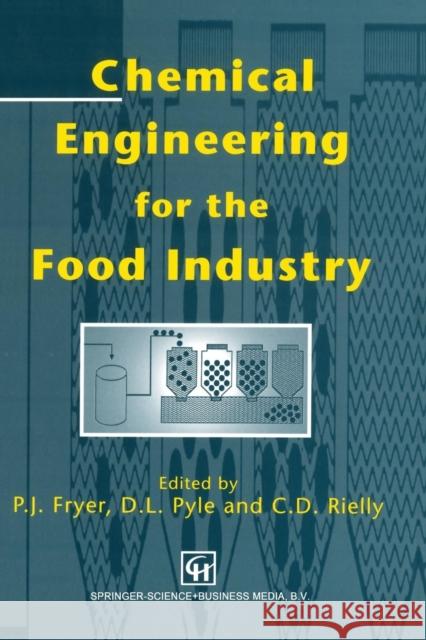
Chemical Engineering for the Food Industry D. Leo Pyle Peter J. Fryer Chris D. Reilly 9781461367246 Springer - książkaWidoczna okładka, to zdjęcie poglądowe, a rzeczywista szata graficzna może różnić się od prezentowanej.

Chemical Engineering for the Food Industry

ISBN-13: 9781461367246 / Angielski / Miękka / 2012 / 462 str.

D. Leo Pyle; Peter J. Fryer; Chris D. Reilly
cena 201,72
(netto: 192,11 VAT:  5%)

Najniższa cena z 30 dni: 192,74
Termin realizacji zamówienia:
ok. 22 dni roboczych
Dostawa w 2026 r.

Darmowa dostawa!

Industrial food processing involves the production of added value foods on a large scale; these foods are made by mixing and processing different ingredients in a prescribed way. The food industry, historically, has not designed its processes in an engineering sense, i.e. by understanding the physical and chemical principles which govern the operation of the plant and then using those principles to develop a process. Rather, processes have been 'designed' by purchasing equipment from a range of suppliers and then connecting that equipment together to form a complete process. When the process being run has essentially been scaled up from the kitchen then this may not matter. However, there are limits to the approach. - As the industry becomes more sophisticated, and economies of scale are exploited, then the size of plant reaches a scale where systematic design techniques are needed. - The range of processes and products made by the food industry has increased to include foods which have no kitchen counterpart, such as low-fat spreads. - It is vital to ensure the quality and safety of the product. - Plant must be flexible and able to cope with the need to make a variety of products from a range of ingredients. This is especially important as markets evolve with time. - The traditional design process cannot readily handle multi-product and multi-stream operations. - Processes must be energetically efficient and meet modern environmen- tal standards.


Kategorie:
Technologie
Kategorie BISAC:
Technology & Engineering > Food Science - General
Cooking > General
Wydawca:
Springer
Seria wydawnicza:
Food Engineering
Język:
Angielski
ISBN-13:
9781461367246
Rok wydania:
2012
Wydanie:
1997
Numer serii:
000156611
Ilość stron:
462
Waga:
0.67 kg
Wymiary:
23.39 x 15.6 x 2.49
Oprawa:
Miękka
Wolumenów:
01

1 Introduction to process design.- 1.1 Material requirements and flows.- 1.2 Energy balances.- 1.3 Process economics.- Appendix 1.A: Some basic definitions.- Conclusions.- Further reading.- 2 Newtonian fluid mechanics.- 2.1 Laminar and turbulent flow.- 2.2 Ideal fluids.- 2.3 Laminar flows.- 2.4 Dimensional analysis.- 2.5 Turbulent flow.- Conclusions.- Further reading.- 3 Introduction to heat transfer.- 3.1 Heat conduction.- 3.2 Heat transfer in flowing systems.- 3.3 Heat exchange: more practical aspects.- Conclusions.- Further reading.- 4 Mass transfer in food and bioprocesses.- 4.1 Why does transfer occur?.- 4.2 Mechanisms.- 4.3 Equilibrium.- 4.4 Diffusion.- 4.5 Transient behaviour.- 4.6 Flowing systems.- 4.7 Interphase transfer.- 4.8 Aeration.- 4.9 Mass transfer limitations.- Conclusions.- Further reading.- 5 Food rheology.- 5.1 Characteristics of non-Newtonian fluids.- 5.2 Viscometric flows.- 5.3 Application to engineering problems.- Appendix 5.A: Linear viscoelastic Maxwell element.- Appendix 5.B: Concentric cylinder viscometer.- Appendix 5.C: Cone and plate viscometer.- Conclusions.- References and further reading.- 6 Process design: heat integration.- 6.1 Design of process plant.- 6.2 Second-law analysis: heat integration.- 6.3 Heat and process integration in the food industry.- Conclusions.- 7 Process control.- 7.1 What is the control problem?.- 7.2 Block diagrams.- 7.3 Process dynamics.- 7.4 multiple inputs and linearization.- 7.5 Frequency response.- 7.6 Feedforward and feedback control.- 7.7 Types of controller action.- 7.8 Control system design for complete plants.- Conclusions.- Further reading.- 8 Reactors and reactions in food processing.- 8.1 Reactor types.- 8.2 Physical chemistry of food reactions.- 8.3 Analysis of isothermal ‘ideal’ reactor systems.- 8.4 Non-isothermal reactions.- 8.5 Non-ideal flow and mixing in continuous reactors.- Conclusions.- References and further reading.- 9 Thermal treatment of foods.- 9.1 Engineering principles.- 9.2 Continuous processing: problems and solutions.- 9.3 Fouling and cleaning in food process plant.- Conclusions.- References and further reading.- 10 Mixing in food processing.- 10.1 Fundamentals of mixing.- 10.2 Fluid-mixing equipment.- 10.3 Power consumption in stirred tanks.- 10.4 Miscible liquid blending operations.- 10.5 Gas-liquid mixing.- 10.6 Liquid-liquid dispersions and the creation of emulsions.- 10.7 Solids suspension and solid-liquid mass transfer.- 10.8 Scale-up of mixers from pilot trials.- 10.9 Alternative mixing devices.- 10.10 Mixing of particulate materials.- Conclusions.- References and further reading.- 11 Process design: an exercise and simulation examples.- 11.1 An integrated cheese plant: a design exercise.- 11.2 Computer simulations.- Conclusions.- Overall conclusions.


Udostępnij

Facebook - konto krainaksiazek.pl


Opinie o Krainaksiazek.pl na Opineo.pl

Partner Mybenefit

Krainaksiazek.pl w programie rzetelna firma Krainaksiaze.pl - płatności przez paypal

Czytaj nas na:

Facebook - krainaksiazek.pl
  • książki na zamówienie
  • granty
  • książka na prezent
  • kontakt
  • pomoc
  • opinie
  • regulamin
  • polityka prywatności

Zobacz:

  • Księgarnia czeska

  • Wydawnictwo Książkowe Klimaty

1997-2025 DolnySlask.com Agencja Internetowa

© 1997-2022 krainaksiazek.pl
     
KONTAKT | REGULAMIN | POLITYKA PRYWATNOŚCI | USTAWIENIA PRYWATNOŚCI
Zobacz: Księgarnia Czeska | Wydawnictwo Książkowe Klimaty | Mapa strony | Lista autorów
KrainaKsiazek.PL - Księgarnia Internetowa

Polityka prywatnosci - link
Krainaksiazek.pl - płatnośc Przelewy24
Przechowalnia Przechowalnia





