• Wyszukiwanie zaawansowane
  • Kategorie
  • Kategorie BISAC
  • Książki na zamówienie
  • Promocje
  • Granty
  • Książka na prezent
  • Opinie
  • Pomoc
  • Załóż konto
  • Zaloguj się

Plant Secondary Metabolites: Occurrence, Structure and Role in the Human Diet » książka

zaloguj się | załóż konto
Logo Krainaksiazek.pl

koszyk

konto

szukaj
topmenu
Księgarnia internetowa
Szukaj
Książki na zamówienie
Promocje
Granty
Książka na prezent
Moje konto
Pomoc
 
 
Wyszukiwanie zaawansowane
Pusty koszyk
Bezpłatna dostawa dla zamówień powyżej 20 złBezpłatna dostawa dla zamówień powyżej 20 zł

Kategorie główne

• Nauka
 [2946912]
• Literatura piękna
 [1852311]

  więcej...
• Turystyka
 [71421]
• Informatyka
 [150889]
• Komiksy
 [35717]
• Encyklopedie
 [23177]
• Dziecięca
 [617324]
• Hobby
 [138808]
• AudioBooki
 [1671]
• Literatura faktu
 [228371]
• Muzyka CD
 [400]
• Słowniki
 [2841]
• Inne
 [445428]
• Kalendarze
 [1545]
• Podręczniki
 [166819]
• Poradniki
 [480180]
• Religia
 [510412]
• Czasopisma
 [525]
• Sport
 [61271]
• Sztuka
 [242929]
• CD, DVD, Video
 [3371]
• Technologie
 [219258]
• Zdrowie
 [100961]
• Książkowe Klimaty
 [124]
• Zabawki
 [2341]
• Puzzle, gry
 [3766]
• Literatura w języku ukraińskim
 [255]
• Art. papiernicze i szkolne
 [7810]
Kategorie szczegółowe BISAC

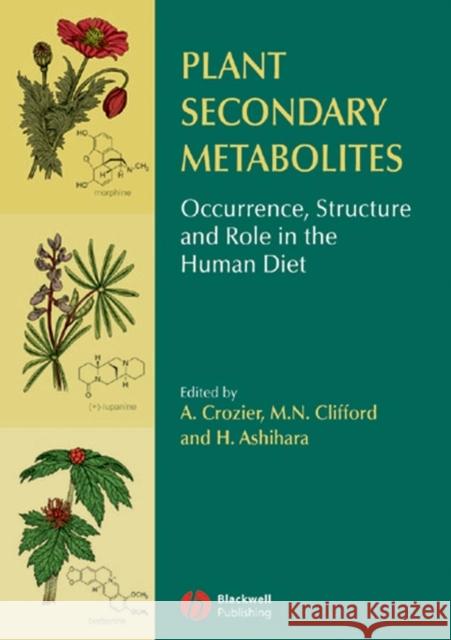
Plant Secondary Metabolites: Occurrence, Structure and Role in the Human Diet

ISBN-13: 9781405125093 / Angielski / Twarda / 2006 / 384 str.
Alan Crozier; Hiroshi Ashihara; Mike Clifford
Plant Secondary Metabolites: Occurrence, Structure and Role in the Human Diet Crozier, Alan 9781405125093 Blackwell Publishers - książkaWidoczna okładka, to zdjęcie poglądowe, a rzeczywista szata graficzna może różnić się od prezentowanej.

Plant Secondary Metabolites: Occurrence, Structure and Role in the Human Diet

ISBN-13: 9781405125093 / Angielski / Twarda / 2006 / 384 str.

Alan Crozier; Hiroshi Ashihara; Mike Clifford
cena 988,68
(netto: 941,60 VAT:  5%)

Najniższa cena z 30 dni: 980,57
Termin realizacji zamówienia:
ok. 30 dni roboczych
Bez gwarancji dostawy przed świętami

Darmowa dostawa!

Plant Secondary Metabolites: Occurrence, Structure and Role in the Human Diet covers the main groups of natural products from a chemical and biosynthetic perspective with illustrations of how genetic engineering can be applied to manipulate levels of secondary metabolites of economic value as well as those of potential importance in diet and health. These descriptive chapters are augmented by chapters showing where these products are found in the diet, how they are metabolized and reviewing the evidence for their beneficial bioactivity.


Kategorie:
Nauka, Biologia i przyroda
Kategorie BISAC:
Science > Biochemia
Science > Botanika
Wydawca:
Blackwell Publishers
Język:
Angielski
ISBN-13:
9781405125093
Rok wydania:
2006
Ilość stron:
384
Waga:
0.96 kg
Wymiary:
25.17 x 18.11 x 2.46
Oprawa:
Twarda
Wolumenów:
01
Dodatkowe informacje:
Bibliografia
Wydanie ilustrowane

"This book provides an excellent in–depth overview of the major plant secondary metabolities which have been inverstigated for health effects in recent years ... I believe this book will be of interest to a wide array of readers, including plant biologists, nutritional biochemists, public health scientists and medical doctors, who need an overview of natural products and the pathways of their formation." (The Biochemist, 1 February 2012) "I′d strongly recommend this book for a variety of scientists. Not only is it up to date, but it is also very readable. The topics are related to the real world of food science in an effective way. Most scientists (including graduate students) in areas of study related to chemistry, biology and food science will find the book of value and a good investment." Chemistry World "The information in the book is recent and easy to locate would serve well as a textbook for graduate students as well as a good reference source. Inform "Of great value for botanists looking for basic information about plant chemical compounds." Folia Geobotanica

Contributors.

1 Phenols, Polyphenols and Tannins: An Overview (Alan Crozier, Indu B. Jaganath and Michael N. Clifford).

1.1 Introduction.

1.2 Classification of phenolic compounds.

1.3 Biosynthesis.

1.4 Genetic engineering of the flavonoid biosynthetic pathway.

1.5 Databases.

2 Sulphur–Containing Compounds (Richard Mithen).

2.1 Introduction.

2.2 The glucosinolates–myrosinase system.

2.3 Chemical diversity of glucosinolates in dietary crucifers.

2.4 Biosynthesis.

2.5 Genetic factors affecting glucosinolate content.

2.6 Environmental factors affecting glucosinolate content.

2.7 Myrosinases and glucosinolate hydrolysis.

2.8 Hydrolytic products.

2.9 Metabolism and detoxification of isothiocyanates.

2.10 The Alliin–alliinase system.

2.11 Biological activity of sulphur–containing compounds.

2.12 Anti–nutritional effects in livestock and humans.

2.13 Beneficial effects of sulphur–containing compounds in the human diet.

3 Terpenes (Andrew J. Humphrey and Michael H. Beale).

3.1 Introduction.

3.2 The biosynthesis of IPP and DMAPP.

3.3 Enzymes of terpene biosynthesis.

3.4 Isoprenoid biosynthesis in the plastids.

3.5 Isoprenoid biosynthesis in the cytosol.

3.6 Terpenes in the environment and human health: future prospects.

4 Alkaloids (Katherine G. Zulak, David K. Liscombe, Hiroshi Ashihara and Peter J. Facchini).

4.1 Introduction.

4.2 Benzylisoquinoline alkaloids.

4.3 Tropane alkaloids.

4.4 Nicotine.

4.5 Terpenoid indole alkaloids.

4.6 Purine alkaloids.

4.7 Pyrrolizidine alkaloids.

4.8 Other alkaloids.

4.9 Metabolic engineering.

5 Acetylenes and Psoralens (Lars P. Christensen and Kirsten Brandt).

5.1 Introduction.

5.2 Acetylenes in common food plants.

5.3 Psoralens in common food plants.

5.4 Perspectives in relation to food safety.

6. Functions of the Human Intestinal Flora: The Use of Probiotics and Prebiotics (Kieran M. Tuohy and Glenn R. Gibson).

6.1 Introduction.

6.2 Composition of the gut microflora.

6.3 Successional development and the gut microflora in old age.

6.4 Modulation of the gut microflora through dietary means.

6.5 In vitro and in vivo measurement of microbial activities.

6.6 Molecular methodologies for assessing microflora changes.

6.7 Assessing the impact of dietary modulation of the gut microflora–does it improve health, what are the likelihoods for success and what are the biomarkers of efficacy?

6.8 Justification for the use of probiotics and prebiotics to modulate the gut flora composition.

7 Secondary Metabolites in Fruits, Vegetables, Beverages and Other Plant–Based Dietary Components (Alan Crozier, Takao Yokota, Indu B. Jaganath, Serena Marks, Michael Saltmarsh and Michael N. Clifford).

7.1 Introduction.

7.2 Dietary phytochemicals.

7.3 Vegetables.

7.4 Fruits.

7.5 Herbs and spices.

7.6 Cereals.

7.7 Nuts.

7.8 Algae.

7.9 Beverages.

7.10 Databases.

8 Absorption and Metabolism of Dietary Plant Secondary Metabolites (Jennifer L. Donovan, Claudine Manach, Richard M. Faulks and Paul A. Kroon).

8.1 Introduction.

8.2 Flavonoids.

8.3 Hydroxycinnamic acids.

8.4 Gallic acid and ellagic acid.

8.5 Dihydrochalcones.

8.6 Betalains.

8.7 Glucosinolates.

8.8 Carotenoids.

8.9 Conclusions.

Index.

Alan Crozier is Professor of Plant Biochemistry and Human Nutrition in the Institute of Biomedical and Life Sciences at the University of Glasgow, UK, Mike Clifford is Professor of Food Safety in the School of Biomedical and Molecular Sciences at the University of Surrey, UK, and Hiroshi Ashihara is Professor of Plant Biochemistry in the Department of Biology at Ochanomizu University, Tokyo, Japan.

Contributors to the book:

Dr Michael H Beale
Dr Kirsten Brandt
Dr Lars P Christensen
Dr Jennifer L Donovan
Professor Peter J Facchini
Dr Richard M Faulks
Professor Glenn R Gibson
Dr Andrew J Humphrey
Dr Indu B Jaganath
Dr Paul A Kroon
Dr David K Liscombe
Dr Claudine Manach
Dr Serena Marks
Professor Richard Mithen
Dr Michael Saltmarsh
Dr Kieran M Tuohy
Dr Takao Yokota
Dr Katherine G Zulak

Plant secondary metabolites have been a fertile area of chemical investigation for many years, driving the development of both analytical chemistry and of new synthetic reactions and methodologies. The subject is multi–disciplinary with chemists, biochemists and plant scientists all contributing to our current understanding. In recent years there has been an upsurge in interest from other disciplines, related to the realisation that secondary metabolites are dietary components that may have a considerable impact on human health, and to the development of gene technology that permits modulation of the contents of desirable and undesirable components.

Plant Secondary Metabolites: Occurrence, Structure and Role in the Human Diet addresses this wider interest by covering the main groups of natural products from a chemical and biosynthetic perspective with illustrations of how genetic engineering can be applied to manipulate levels of secondary metabolites of economic value as well as those of potential importance in diet and health. These descriptive chapters are augmented by chapters showing where these products are found in the diet, how they are metabolised and reviewing the evidence for their beneficial bioactivity.

Crozier, Alan Alan Crozier is Professor of Plant Biochemistry an... więcej >


Udostępnij

Facebook - konto krainaksiazek.pl


Opinie o Krainaksiazek.pl na Opineo.pl

Partner Mybenefit

Krainaksiazek.pl w programie rzetelna firma Krainaksiaze.pl - płatności przez paypal

Czytaj nas na:

Facebook - krainaksiazek.pl
  • książki na zamówienie
  • granty
  • książka na prezent
  • kontakt
  • pomoc
  • opinie
  • regulamin
  • polityka prywatności

Zobacz:

  • Księgarnia czeska

  • Wydawnictwo Książkowe Klimaty

1997-2025 DolnySlask.com Agencja Internetowa

© 1997-2022 krainaksiazek.pl
     
KONTAKT | REGULAMIN | POLITYKA PRYWATNOŚCI | USTAWIENIA PRYWATNOŚCI
Zobacz: Księgarnia Czeska | Wydawnictwo Książkowe Klimaty | Mapa strony | Lista autorów
KrainaKsiazek.PL - Księgarnia Internetowa

Polityka prywatnosci - link
Krainaksiazek.pl - płatnośc Przelewy24
Przechowalnia Przechowalnia





