• Wyszukiwanie zaawansowane
  • Kategorie
  • Kategorie BISAC
  • Książki na zamówienie
  • Promocje
  • Granty
  • Książka na prezent
  • Opinie
  • Pomoc
  • Załóż konto
  • Zaloguj się

Bioavailability, Bioaccessibility and Mobility of Environmental Contaminants » książka


zaloguj się | załóż konto
Logo Krainaksiazek.pl

koszyk

konto

szukaj
topmenu
Księgarnia internetowa
Szukaj
Książki na zamówienie
Promocje
Granty
Książka na prezent
Moje konto
Pomoc
 
 
Wyszukiwanie zaawansowane
Pusty koszyk
Bezpłatna dostawa dla zamówień powyżej 20 złBezpłatna dostawa dla zamówień powyżej 20 zł

Kategorie główne

• Nauka
 [2946912]
• Literatura piękna
 [1852311]

  więcej...
• Turystyka
 [71421]
• Informatyka
 [150889]
• Komiksy
 [35717]
• Encyklopedie
 [23177]
• Dziecięca
 [617324]
• Hobby
 [138808]
• AudioBooki
 [1671]
• Literatura faktu
 [228371]
• Muzyka CD
 [400]
• Słowniki
 [2841]
• Inne
 [445428]
• Kalendarze
 [1545]
• Podręczniki
 [166819]
• Poradniki
 [480180]
• Religia
 [510412]
• Czasopisma
 [525]
• Sport
 [61271]
• Sztuka
 [242929]
• CD, DVD, Video
 [3371]
• Technologie
 [219258]
• Zdrowie
 [100961]
• Książkowe Klimaty
 [124]
• Zabawki
 [2341]
• Puzzle, gry
 [3766]
• Literatura w języku ukraińskim
 [255]
• Art. papiernicze i szkolne
 [7810]
Kategorie szczegółowe BISAC

Bioavailability, Bioaccessibility and Mobility of Environmental Contaminants

ISBN-13: 9780470025772 / Angielski / Twarda / 2007 / 316 str.
John R. Dean
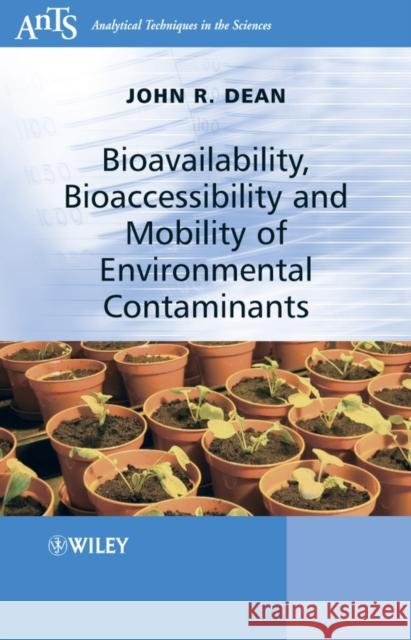
Bioavailability, Bioaccessibility and Mobility of Environmental Contaminants John R. Dean 9780470025772 John Wiley & Sons - książkaWidoczna okładka, to zdjęcie poglądowe, a rzeczywista szata graficzna może różnić się od prezentowanej.

Bioavailability, Bioaccessibility and Mobility of Environmental Contaminants

ISBN-13: 9780470025772 / Angielski / Twarda / 2007 / 316 str.

John R. Dean
cena 848,44
(netto: 808,04 VAT:  5%)

Najniższa cena z 30 dni: 848,44
Termin realizacji zamówienia:
ok. 30 dni roboczych

Darmowa dostawa!
inne wydania

This book covers all aspects of bioavailability, as related to environmental contaminants. After a discussion of the definition of bioavailability and its context, focus is placed on the role of risk assessment and bioavailability. Methods of analysis are then discussed including a range of atomic spectroscopic and electrochemical techniques for metal analysis and chromatographic approaches for persistent organic pollutants (POPs). The occurrence, properties and eco-toxicity of POPs and metals in the soil/sediment environment are discussed. Particular emphasis is placed on the uptake of POPs and metals by plants (phytoextraction). Examples of POPs and metals in the environment are reviewed. Methods to assess the bioavailability of POPs and metals in the environment are discussed. The particular approaches considered are:

  • non-exhaustive extraction techniques
  • single extraction techniques
  • sequential extraction techniques
  • use of cyclodextrin and surfactants
  • in-vitro gastrointestinal methods including physiological-based extraction test
  • the use of bioasssays including earthworms.
Finally, selected case studies highlight the importance of determining the bioavailability of POPs and metals.

Kategorie:
Nauka, Chemia
Kategorie BISAC:
Science > Environmental Science (see also Chemistry - Environmental)
Science > Chemia - Organiczna
Wydawca:
John Wiley & Sons
Seria wydawnicza:
Analytical Techniques in the Sciences
Język:
Angielski
ISBN-13:
9780470025772
Rok wydania:
2007
Numer serii:
000217765
Ilość stron:
316
Waga:
0.57 kg
Wymiary:
22.96 x 16.13 x 2.26
Oprawa:
Twarda
Wolumenów:
01
Dodatkowe informacje:
Bibliografia
Glosariusz/słownik
Wydanie ilustrowane

it will be a valuable and useful source of material for both individual students and teachers." ( International Journal of Environmental and Analytical Chemistry, October 2007)

Preface. Series Preface. Glossary of Terms. 1.0 Contaminated land and the link to human health. 1.1 Introduction. 1.2 Soil Guideline Values. 1.3 Risk to humans. 1.4 An approach to assess contaminated soils relative to soil guidelines values. 1.4.1 Mean value test. 1.4.2 Maximum value test. 1.5 Summary. 1.6 References. 2.0 Sample preparation and analytical techniques for elemental analysis of environmental contaminants. 2.1 Introduction. 2.2 Sample preparation for elemental analysis. 2.2.1 Solid samples. 2.2.2 Liquid samples. 2.3 Atomic absorption spectroscopy. 2.4 Atomic Emission Spectroscopy. 2.5 Inorganic Mass Spectrometry. 2.5.1 Interferences in ICP–MS. 2.6 X–ray fluorescence spectroscopy. 2.7 Electrochemistry. 2.8 Hyphenated Techniques. 2.9 Comparison of elemental analytical techniques. 2.10 Selected resources on elemental analytical techniques. 2.10.1 Specific books on atomic spectroscopy. 2.10.2 Specific books on electroanalytical techniques. 2.11 Summary.   3.0 Sample preparation and analytical techniques for persistent organic pollutant analysis of environmental contaminants. 3.1 Introduction. 3.2 Sample preparation for persistent organic pollutant analysis. 3.2.1 Solid samples. 3.2.2 Liquid samples. 3.3 Gas chromatography. 3.4 High performance liquid chromatography. 3.5 Interfacing chromatography and mass spectrometry. 3.6 Comparison of persistent organic pollutant analytical techniques. 3.7 Selected resources on persistent organic pollutant techniques. 3.7.1 Specific books on chromatography.  3.8 Summary. 4.0 Methods used to assess bioavailability of metals. 4.1 Non–exhaustive extraction techniques for metals. 4.2 Single extraction methods for metals. 4.3 Sequential extraction techniques for metals. 4.4 Earthworms. 4.4.1 Earthworms in bioavailability studies. 4.4.2 Chemical extraction methods to estimate bioavailability of metals by earthworms. 4.5 Plant uptake. 4.6 Certified Reference Materials. 4.7 Summary. 4.8 References. 5.0 Methods used to assess bioavailability of persistent organic pollutants. 5.1 Introduction. 5.2 Non–exhaustive extraction techniques for POPs. 5.2.1 Selective or mild–solvent extraction. 5.2.2 Cyclodextrin extraction. 5.2.3 Supercritical fluid extraction. 5.2.4 Other approaches. 5.3 Earthworm studies. 5.3.1 Chemical extraction methods to estimate bioavailability of POPs by earthworms.. 5.4 Plant uptake. 5.5 Summary. 5.6 References. 6.0 Methods used to assess bioaccessibility. 6.1 Introduction. 6.2 Introduction to human physiology. 6.3 Considerations in the design and development of a simulated in vitro gastrointestinal extraction method.. 6.4 Approaches to assess bioaccessibility of metals. 6.5 Approaches to assess bioaccessibility of persistent organic pollutants. 6.6 Validity for measuring bioaccessibility. 6.7 Summary. 6.8 References. 7.0 Selected case studies on bioavailability, bioaccessibility and mobility of environmental contaminants. 7.1 Bioavailability of metals by plants. 7.1.1 Background. 7.1.2 Experimental. 7.1.3 Results and Discussion. 7.1.4 Conclusion. 7.1.5 References. 7.2 Bioaccessibility of metals from plants. 7.2.1 Background. 7.2.2 Experimental. 7.2.3 Results and Discussion. 7.2.4 Conclusion. 7.3 Bioavailability of POPs by plants. 7.3.1 Background. 7.3.2 Experimental. 7.3.3 Results and Discussion. 7.3.4 Conclusion. 7.4 Bioaccessibility of POPs from plants. 7.4.1 Background. 7.4.2 Experimental. 7.4.3 Results and Discussion. 7.4.4 Conclusion. 8.0 Recording of information in the laboratory and other selected resources.. 8.1 Safety. 8.2 Recording of information. 8.3 Selected other resources.

John R. Dean took his first degree in Chemistry at UMIST, followed by an M.Sc. in Analytical Chemistry & Instrumentation at Loughborough University of Technology and finally a Ph.D. and D.I.C. in Physical Chemistry at Imperial College. He then spent 2 years as a postdoctoral research fellow at the Food Science Laboratory of M.A.F.F. in Norwich in conjunction with Polytechnic South West in Plymouth. The work focused on the development of directly coupled high performance liquid chromatography inductively coupled plasma mass spectrometry methods for trace element speciation in foodstuffs. This was followed by a temporary lectureship in Inorganic Chemistry at Huddersfield Polytechnic. In 1988 he was appointed to a lectureship in Inorganic/Analytical Chemistry at Newcastle Polytechnic (now Northumbria University). This was followed by promotion to Senior Lecturer (1990), Reader (1994) and Principal Lecturer (1998). In 1998 he was awarded a D.Sc. (London) in Analytical & Environmental Science and was the recipient of the 23 rd SAC Silver Medal in 1995. He has published extensively in analytical and environmental science. He is an active member of the Royal Society of Chemistry Analytical Division having served as a member of the atomic spectroscopy group for 15 years (10 as honorary secretary), as well as a past chairman (1997–99). He has served on Analytical Division council for three terms and is currently its vice–president (2002–04) as well as chairman of the North East Region (2001–03).

This text focuses on the techniques used to assess the bioavailability and bioaccessibility of metals and persistent organic pollutants in environmental samples. The opening chapter considers the link between human health and contaminated land. Then, the different sample preparation techniques applied to solid and liquid samples for elemental analysis are discussed   in particular, the need to destroy the matrix by heat and/or acid(s) for solid samples whereas in the case of liquids the emphasis is on pre–concentration and/or separation of metals from solution. The book continues to evaluate the different sample preparation techniques applied to solid and liquid samples for persistent organic pollutant analysis. Consideration is then focused on the different sample preparation techniques applied for single and sequential extraction of metals from soils and sediments. Chapter 5 evaluates the different sample preparation techniques for non–exhaustive extraction (cyclodextrin, supercritical–fluid extraction, subcritical water extraction, solid–phase microextraction and membrane separations) of persistent organic pollutants from soils and sediments. In addition, a mathematical approach to predict weak and strong solvents, based on the Hildebrand solubility parameter, is proposed. In Chapter 6, the different techniques for assessing the oral bioaccessibility of metals and persistent organic pollutants from solid environmental samples are considered. The penultimate chapter presents four case studies taken from the author s own laboratory, as follows:

  • The first of these considers the uptake of metals (Cd, Cu, Mn, Pb and Zn) by plants grown in compost under greenhouse conditions.
  • The second considers the oral bioaccessibility of metals (Cd, Cu, Mn, Pb and Zn) from plants grown on contaminated compost using an in vitro gastrointestinal extraction approach.
  • Case study three discusses the uptake of persistent organic pollutants (a–endosufan, b–endosulfan and endosulfan sulfate) by lettuce plants grown in compost.
  • Finally, case study four looks at the oral bioaccessibility of persistent organic pollutants by lettuce plants grown in compost using an in vitro gastrointestinal extraction approach.

This book also contains a useful collection of data sheets that could be used to record laboratory information at the time of carrying out the experiments, plus a guide to selected resources.

This text will be suitable for those carrying out undergraduate courses in environmental science, as well as courses in related disciplines, e.g. chemistry, life sciences, etc. It will also be relevant for postgraduate training courses, including MSc and MRes in environmental science and related disciplines and for researchers interested in the bioavailability and associated features of environmental contaminants.

  The Analytical Techniques in the Sciences series of books provides coverage of all of the major analytical techniques and their application in the most important areas of physical, life and materials science. Each text is presented in an open learning/distance learning style, in which the learning objectives are clearly identified. The reader s understanding of the material is constantly evaluated by the use of self–assessment and discussion questions.   Series Editor: David J. Ando      

Dean, John R. John R. Dean, B.Sc., M.Sc., Ph.D., D.I.C., D.Sc., ... więcej >


Udostępnij

Facebook - konto krainaksiazek.pl


Opinie o Krainaksiazek.pl na Opineo.pl

Partner Mybenefit

Krainaksiazek.pl w programie rzetelna firma Krainaksiaze.pl - płatności przez paypal

Czytaj nas na:

Facebook - krainaksiazek.pl
  • książki na zamówienie
  • granty
  • książka na prezent
  • kontakt
  • pomoc
  • opinie
  • regulamin
  • polityka prywatności

Zobacz:

  • Księgarnia czeska

  • Wydawnictwo Książkowe Klimaty

1997-2025 DolnySlask.com Agencja Internetowa

© 1997-2022 krainaksiazek.pl
     
KONTAKT | REGULAMIN | POLITYKA PRYWATNOŚCI | USTAWIENIA PRYWATNOŚCI
Zobacz: Księgarnia Czeska | Wydawnictwo Książkowe Klimaty | Mapa strony | Lista autorów
KrainaKsiazek.PL - Księgarnia Internetowa

Polityka prywatnosci - link
Krainaksiazek.pl - płatnośc Przelewy24
Przechowalnia Przechowalnia







