• Wyszukiwanie zaawansowane
  • Kategorie
  • Kategorie BISAC
  • Książki na zamówienie
  • Promocje
  • Granty
  • Książka na prezent
  • Opinie
  • Pomoc
  • Załóż konto
  • Zaloguj się

The Semantic Turn: A New Foundation for Design » książka


zaloguj się | załóż konto
Logo Krainaksiazek.pl

koszyk

konto

szukaj
topmenu
Księgarnia internetowa
Szukaj
Książki na zamówienie
Promocje
Granty
Książka na prezent
Moje konto
Pomoc
 
 
Wyszukiwanie zaawansowane
Pusty koszyk
Bezpłatna dostawa dla zamówień powyżej 20 złBezpłatna dostawa dla zamówień powyżej 20 zł

Kategorie główne

• Nauka
 [2952079]
• Literatura piękna
 [1850969]

  więcej...
• Turystyka
 [71058]
• Informatyka
 [151066]
• Komiksy
 [35579]
• Encyklopedie
 [23181]
• Dziecięca
 [620496]
• Hobby
 [139036]
• AudioBooki
 [1646]
• Literatura faktu
 [228729]
• Muzyka CD
 [379]
• Słowniki
 [2932]
• Inne
 [445708]
• Kalendarze
 [1409]
• Podręczniki
 [164793]
• Poradniki
 [480107]
• Religia
 [510956]
• Czasopisma
 [511]
• Sport
 [61267]
• Sztuka
 [243299]
• CD, DVD, Video
 [3411]
• Technologie
 [219640]
• Zdrowie
 [100984]
• Książkowe Klimaty
 [124]
• Zabawki
 [2281]
• Puzzle, gry
 [3363]
• Literatura w języku ukraińskim
 [258]
• Art. papiernicze i szkolne
 [8020]
Kategorie szczegółowe BISAC

The Semantic Turn: A New Foundation for Design

ISBN-13: 9780415322201 / Angielski / Twarda / 2005 / 368 str.
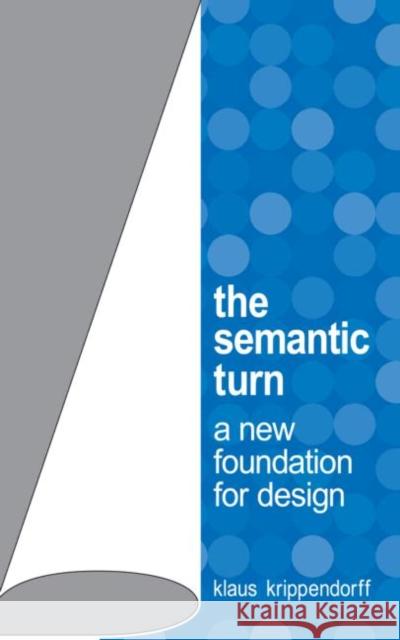
Klaus Krippendorff
The Semantic Turn: A New Foundation for Design Krippendorff, Klaus 9780415322201 CRC Press - książkaWidoczna okładka, to zdjęcie poglądowe, a rzeczywista szata graficzna może różnić się od prezentowanej.

The Semantic Turn: A New Foundation for Design

ISBN-13: 9780415322201 / Angielski / Twarda / 2005 / 368 str.

Klaus Krippendorff
cena 560,94
(netto: 534,23 VAT:  5%)

Najniższa cena z 30 dni: 554,12
Termin realizacji zamówienia:
ok. 22 dni roboczych.

Darmowa dostawa!

Responding to cultural demands for meaning, user-friendliness, and fun as well as the opportunities of the emerging information society, The Semantic Turn boldly outlines a new science for design that gives designers previously unavailable grounds on which to state their claims and validate their designs. It sets the stage by reviewing the history of semantic concerns in design, presenting their philosophical roots, examining the new social and technological challenges that professional designers are facing, and offering distinctions among contemporary artifacts that challenge designers. Written by Klaus Krippendorff, recognized designer and distinguished scholar of communication and language use, the book builds an epistemological bridge between language/communication theory and human-centered conceptions of contemporary artifacts. Clarifying how the semantic turn goes beyond product semantics and differs from other approaches to meaning, Krippendorff develops four new theories of how artifacts make sense and presents a series of meaning-sensitive design methods, illustrated by examples, and evaluative techniques that radically depart from the functionalist and technology-centered tradition in design. An indispensable guide for the future of the design profession, this book outlines not only a science for design that encourages asking and answering new kinds of questions, it also provides concepts and a vocabulary that enables designers to better partner with the more traditional disciplines of engineering, ergonomics, ecology, cognitive science, information technology, management, and marketing.


Kategorie:
Sztuka, Architektura
Kategorie BISAC:
Technology & Engineering > Industrial Health & Safety
Psychology > General
Technology & Engineering > Industrial Engineering
Wydawca:
CRC Press
Język:
Angielski
ISBN-13:
9780415322201
Rok wydania:
2005
Ilość stron:
368
Waga:
0.66 kg
Wymiary:
24.33 x 16.31 x 2.24
Oprawa:
Twarda
Wolumenów:
01
Dodatkowe informacje:
Bibliografia
Wydanie ilustrowane

“A brilliant book so superbly designed, encompassing theory and application. Klaus Krippendorff demonstrates his authority in the semantics of design with a bold inter-disciplinary approach. The book unveils a systematic design discourse, treating readers to rare critiques of established ideas and illustrative reviews of design cases. …it must be read by designers and non-designers alike.”
-- Professor Halimahtun M. Khalid, Director, Institute of Design and Ergonomics Applications, University of Malaysia
“An important contribution of philosophical discussion about design, the meaning of artifacts, and interesting topics concerning the “science of design” and design methods are offered … I recommended this book to all professionals and student involved in design and evaluation of interfaces … the author provides a foundation for a more in-depth understanding of user-centered design, especially artifacts.”
— Abas Moallem, in HCI International News, No. 15, March 2006
“… the linguistic turn in philosophy he thoughtfully outlines a convincing teachable doctrine on how to make sense of things. … This book, itself an artifact, deserves a prominent place in any design canon … also strongly recommended it to academic colleagues, students, and practitioners. … will get its genuine meaning in use, it is hoped by reaching a broad network of stakeholders …”
— Pelle Ehn, School of Arts and Communication Malmo University, Sweden, in Artifact, Vol. 1, 2006
“…a major contribution to design thinking. Klaus Krippendorff's philosophy addresses how we create and use artifacts in view of the meanings we give them. It builds a human and systematic foundation for professional design practice based on creative engagement with users and stakeholders. Krippendorff’s intellectual journey reflects the central themes in design and design research today, helping new designers think their way into the field. …”
-- Professor Ken Friedman, Norwegian School of Management and Denmark's Design School
“…a courageous outline for a concrete science for design that paradigmatically deviates from the natural sciences. It…offers designers a solid ground from which to justify their products and environments...proposes systematically human-centered design methods, and an epistemology for improving the world rather than re-searching it. …a major step into a fascinating future for all of us.”
-- Professor Emeritus Shutaro Mukai, Former Director, Department of Science of Design, Musahino Art University, Tokyo, Japan
“…takes design theory to a new level…Brilliantly building on Wittgenstein and generalizing classical accounts of affordances…This highly readable book is especially relevant to the challenges we face in designing in and for a global economy.”
-- John Seely Brown, Former Chief Scientist, Xerox Corporation & Director of its Palo Alto Research Center (PARC)
“… to formulate and describe scientifically he outlines a method that has changed noticeably in design theory since the 1980s. … encourages disciplinary discourse and creates fundamental new foundations of a science for design, which continues to suffer from the empty gossip about its inter-, trasn- and multidisciplinary nature. …”
— In Books, Form 209/2006

History and Aim
Brief History of Product Semantics
Trajectory of Artificiality
The Changing Environment of Design
Redesigning Design (Discourse)

Basic concepts of human-centered design


Predecessors
The Axiomaticity of Meaning
Sense, Meaning, and Context
Stakeholders in Design
Second-Order Understanding
Ethics in a Design Culture

Meaning of Artifacts in Use


Interfaces
Disruptions and Usability
Recognition
Explorations
Reliance
Design Principles

Meaning of Artifacts in Language


Language
Categories
Characters
Identities
Verbal Metaphors
Narratives
Culture

Meanings in the Lives of Artifacts


Life Cycles
Stakeholder Networks
Projects
Genetic Meanings
Critical Sizes of Supportive Communities
Whole Life Cycle Accounting

Meanings in an Ecology of Artifacts


Ecology
Ecology of Artifacts
Ecological Meanings
Technological Cooperatives
Mythology
Design methods, research, and a science for design
A New Science for Design
Methods for Creating Spaces of Possible Futures
Methods for Inquiring into Stakeholders’ Concepts and Motivations
Human-Centered Design Methods
Validating Semantic Claims
Advancing Design Discourse

Distantiations


Semiotics
Cognitivism
Ergonomics
Aesthetics
Functionalism
Marketing
Textualism

Roots in the Ulm School of Design?


Bill’s Functionalism
Bense’s Information Philosophy
Maldonado’s Semiotics
Chernyshevsky’s Political Economy of Aesthetics
Rittel’s Methodology
Barriers to Considerations of Meaning and Some Exceptions

REFERENCES

INDEX

Klaus Krippendorff

Krippendorff, Klaus Klaus Krippendorff (PhD in Communication, Universi... więcej >


Udostępnij

Facebook - konto krainaksiazek.pl


Opinie o Krainaksiazek.pl na Opineo.pl

Partner Mybenefit

Krainaksiazek.pl w programie rzetelna firma Krainaksiaze.pl - płatności przez paypal

Czytaj nas na:

Facebook - krainaksiazek.pl
  • książki na zamówienie
  • granty
  • książka na prezent
  • kontakt
  • pomoc
  • opinie
  • regulamin
  • polityka prywatności

Zobacz:

  • Księgarnia czeska

  • Wydawnictwo Książkowe Klimaty

1997-2026 DolnySlask.com Agencja Internetowa

© 1997-2022 krainaksiazek.pl
     
KONTAKT | REGULAMIN | POLITYKA PRYWATNOŚCI | USTAWIENIA PRYWATNOŚCI
Zobacz: Księgarnia Czeska | Wydawnictwo Książkowe Klimaty | Mapa strony | Lista autorów
KrainaKsiazek.PL - Księgarnia Internetowa

Polityka prywatnosci - link
Krainaksiazek.pl - płatnośc Przelewy24
Przechowalnia Przechowalnia






