• Wyszukiwanie zaawansowane
  • Kategorie
  • Kategorie BISAC
  • Książki na zamówienie
  • Promocje
  • Granty
  • Książka na prezent
  • Opinie
  • Pomoc
  • Załóż konto
  • Zaloguj się

3D Geoscience Modeling: Computer Techniques for Geological Characterization » książka


zaloguj się | załóż konto
Logo Krainaksiazek.pl

koszyk

konto

szukaj
topmenu
Księgarnia internetowa
Szukaj
Książki na zamówienie
Promocje
Granty
Książka na prezent
Moje konto
Pomoc
 
 
Wyszukiwanie zaawansowane
Pusty koszyk
Bezpłatna dostawa dla zamówień powyżej 20 złBezpłatna dostawa dla zamówień powyżej 20 zł

Kategorie główne

• Nauka
 [2946350]
• Literatura piękna
 [1816154]

  więcej...
• Turystyka
 [70666]
• Informatyka
 [151172]
• Komiksy
 [35576]
• Encyklopedie
 [23172]
• Dziecięca
 [611458]
• Hobby
 [135995]
• AudioBooki
 [1726]
• Literatura faktu
 [225763]
• Muzyka CD
 [378]
• Słowniki
 [2917]
• Inne
 [444280]
• Kalendarze
 [1179]
• Podręczniki
 [166508]
• Poradniki
 [469467]
• Religia
 [507199]
• Czasopisma
 [496]
• Sport
 [61352]
• Sztuka
 [242330]
• CD, DVD, Video
 [3348]
• Technologie
 [219391]
• Zdrowie
 [98638]
• Książkowe Klimaty
 [124]
• Zabawki
 [2382]
• Puzzle, gry
 [3525]
• Literatura w języku ukraińskim
 [259]
• Art. papiernicze i szkolne
 [7107]
Kategorie szczegółowe BISAC

3D Geoscience Modeling: Computer Techniques for Geological Characterization

ISBN-13: 9783642790140 / Angielski / Miękka / 2012 / 311 str.
Simon Houlding
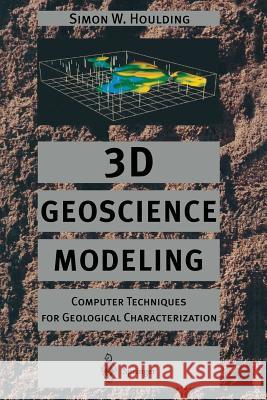
3D Geoscience Modeling: Computer Techniques for Geological Characterization Houlding, Simon 9783642790140 Springer - książkaWidoczna okładka, to zdjęcie poglądowe, a rzeczywista szata graficzna może różnić się od prezentowanej.

3D Geoscience Modeling: Computer Techniques for Geological Characterization

ISBN-13: 9783642790140 / Angielski / Miękka / 2012 / 311 str.

Simon Houlding
cena 402,53
(netto: 383,36 VAT:  5%)

Najniższa cena z 30 dni: 385,52
Termin realizacji zamówienia:
ok. 16-18 dni roboczych.

Darmowa dostawa!

This book is a result of a career spent developing and applying computer techniques for the geosciences. The need for a geoscience modeling reference became apparent during participation in several workshops and conferences on the subject in the last three years. For organizing these, and for the lively discussions that ensued and inevitably contributed to the contents, I thank Keith Turner, Brian Kelk, George Pflug and Johnathan Raper. The total number of colleagues who contributed in various ways over the preceding years to the concepts and techniques presented is beyond count. The book is dedicated to all of them. Compilation of the book would have been impossible without assistance from a number of colleagues who contributed directly. In particular, Ed Rychkun, Joe Ringwald, Dave Elliott, Tom Fisher and Richard Saccany reviewed parts of the text and contributed valuable comment. Mohan Srivastava reviewed and contributed to some of the geostatistical presentations. Mark Stoakes, Peter Dettlaff and Simon Wigzell assisted with computer processing of the many application examples. Anar Khanji and Randal Crombe assisted in preparation of the text and computer images. Klaus Lamers assisted with printing. The US Geological Survey, the British Columbia Ministry of Environment, Dave Elliott and others provided data for the application examples. My sincere thanks to all of them.


Kategorie:
Nauka
Kategorie BISAC:
Science > Earth Sciences - Geology
Science > Earth Sciences - Mineralogy
Science > Earth Sciences - Geography
Wydawca:
Springer
Język:
Angielski
ISBN-13:
9783642790140
Rok wydania:
2012
Wydanie:
Softcover Repri
Ilość stron:
311
Waga:
0.45 kg
Wymiary:
22.86 x 15.24 x 2.03
Oprawa:
Miękka
Wolumenów:
01
Dodatkowe informacje:
Wydanie ilustrowane

I. Computer Techniques for Geological Characterization.- 1 The Geological Characterization Process.- 1.1 Prediction of Geological Variables.- 1.2 Interpretation of Geological Characteristics.- 1.3 Uncertainty and Risk.- 1.4 Spatial Analysis.- 1.5 The Generic Characterization Process.- 1.6 Conventional Approaches to Characterization.- 1.7 Evolution of Computerized Approaches.- 1.8 Advantages and Limitations.- 1.9 Errors and Approximations.- 2 Complicating Factors for Computerization.- 2.1 Geological Complexity.- 2.2 Geometrical Complications.- 2.3 The Need for Interpretational Control.- 2.4 Spatial Variation Complexity.- 2.5 Information Source Variety.- 2.6 Geological Variety.- 2.7 Time Dimension.- 2.8 Measurement of Uncertainty.- 3 Features of an Integrated 3D Computer Approach.- 3.1 Overview.- 3.2 Spatial Data Management.- 3.3 Time Data Management.- 3.4 Visualization Tools.- 3.5 Statistical Analysis.- 3.6 Spatial Variability Analysis.- 3.7 Interactive Interpretation.- 3.8 Modeling Discrete Geological Volumes.- 3.9 Modeling from Geological Surfaces.- 3.10 Modeling Geological Variables.- 3.11 Geostatistical Prediction and Uncertainty.- 3.12 Spatial Analysis of Volumes.- 3.13 Advantages of Process Integration.- 3.14 Technology Interfacing.- 3.15 Process Summary.- 4 Spatial Data Types and Structures.- 4.1 Rationale for Spatial Data Management.- 4.2 Data Categories and Their Organization.- 4.3 Spatial Integration of Data Structures.- 4.4 Hole Data Structure.- 4.5 Map Data Structure.- 4.6 Volume Data Structure.- 4.7 3D Grid Data Structure.- 4.8 Data Definitions and Identities.- 4.9 Data Interfacing Considerations.- 5 Analysis of Spatial Variability.- 5.1 Objectives of Spatial Variability Analysis.- 5.2 Measurement of Spatial Variability.- 5.3 Understanding Geostatistical Semi-Variograms.- 5.4 Analysis of Geological Influences.- 5.5 Analysis of Directional Influences.- 5.6 Use of Data Transforms.- 5.7 The Effects of Spatial Trends.- 5.8 Geostatistical Prediction Models.- 5.9 Cross-Validation of Prediction Models.- 6 Geological Interpretation and Modeling.- 6.1 Interactive Geological Interpretation.- 6.2 Interpretation of Geological Volumes.- 6.3 2D and 3D Geological Sections.- 6.4 Analysis of Geological Volumes.- 6.5 Volumes of Intersection.- 6.6 Spatial Integrity in the Modeling Process.- 6.7 3D Modeling Considerations.- 7 Geological Modeling from Surfaces.- 7.1 Advantages and Disadvantages of Modeling from Surfaces.- 7.2 Representing Surfaces as Triangulated Networks.- 7.3 Structural, Stratigraphic and Topographical Surfaces.- 7.4 Manipulation of Surfaces.- 7.5 Derivation of Volumes from Surfaces.- 7.6 Modeling Stratigraphic and Structural Discontinuities.- 8 Geostatistical Prediction Techniques.- 8.1 Spatial Prediction Process.- 8.2 Implications of Spatial Discretization.- 8.3 Point Kriging to a 3D Grid.- 8.4 Sample Selection Controls.- 8.5 Management of Spatial Anisotropy.- 8.6 Volume Kriging to a 3D Grid.- 8.7 Kriging with Data Transforms.- 8.8 Kriging with Data Trends (Universal Kriging).- 8.9 Indicator Kriging and Probability Estimation.- 8.10 Alternative Prediction Techniques.- 8.11 Cross-Checking of Prediction Results.- 8.12 Common Problems in Spatial Prediction.- 8.13 Performance Review of Prediction Techniques.- 9 Spatial Analysis Techniques.- 9.1 Spatial Analysis Objectives.- 9.2 Simple Geological Volumes and Intersections.- 9.3 Volumes Defined by an Isosurface of a Variable.- 9.4 Manipulation of Spatial Variations.- 9.5 Visualization Techniques.- 9.6 Excavation Design Applications.- 10 Uncertainty, Sampling Control and Risk Assessment.- 10.1 The Implications of Geostatistical Uncertainty.- 10.2 Sampling Considerations and Optimum Sample Locations.- 10.3 Risk Assessment Based on Uncertainty.- 10.4 The Application of Probability Isosurfaces.- 10.5 Geostatistical Prediction of Geological Surfaces.- 10.6 Other Sources of Geological Uncertainty.- 10.7 Visualization of Uncertainty.- II. Applications in the Geosciences.- 11 Subsurface Soil Contamination Assessment.- 11.1 Project Overview.- 11.2 Site Investigation Records.- 11.3 Information Review and Analysis.- 11.4 Spatial Variability Analysis of Contaminant Samples.- 11.5 Representation of Soil Geology.- 11.6 Geostatistical Prediction of Contamination.- 11.7 Geostatistical Control of Sampling.- 11.8 Spatial Analysis of Contaminated Volumes.- 11.9 Remediation Risk Assessment.- 11.10 Project Summary.- 12 Hazardous Waste Site Characterization and Underground Repository Design.- 12.1 Project Overview.- 12.2 Site Geology and Source Information.- 12.3 Information Review and Evaluation.- 12.4 Representation of Geological Structure.- 12.5 Interpretation of Geology.- 12.6 Modeling Geological Uncertainty.- 12.7 Prediction of Geomechanical Properties.- 12.8 Engineering Design of the Repository.- 12.9 Project Summary.- 13 Ore Deposit Evaluation and Underground Mine Planning.- 13.1 Project Overview.- 13.2 Geology, Structure and Mineralogy of the Deposit.- 13.3 Project Information Base.- 13.4 Spatial Variability Analysis of Mineral Grade Samples.- 13.5 Geological Interpretation.- 13.6 Prediction of Mineral Grades.- 13.7 Spatial Analysis of Mineral Grades.- 13.8 Ore Excavation Design.- 13.9 Mine Development Design.- 13.10 Mining Reserve Volumetrics.- 13.11 Project Summary.- 14 Characterization and Development Planning for a Small Oil Reservoir.- 14.1 Project Overview.- 14.2 Reservoir Geology and Exploration Records.- 14.3 Preliminary Modeling of Member Sequence.- 14.4 Detailed Modeling of Reservoir Structure.- 14.5 Geostatistical Prediction of Reservoir Properties.- 14.6 Pay Zone Interpretation.- 14.7 Reservoir Evaluation.- 14.8 Risk Assessment.- 14.9 Development Planning.- 14.10 Project Summary.- 15 Geotechnical Characterization for an Underground Powerhouse Excavation.- 15.1 Project Overview and Information Sources.- 15.2 Structural Rock Joints and Faulting.- 15.3 Lithology and Rock Mass Characterization.- 15.4 Production of Analytical Sections.- 15.5 Rock Reinforcement Design.- 15.6 Project Summary.- 16 New Directions in Spatial Prediction, Modeling and Database Management.- 16.1 New Directions in Geoscience Modeling.- 16.2 Direct Geostatistical Prediction for Irregular Volumes.- 16.3 Splining Techniques for Volume Representation.- 16.4 Conditional Simulation and Stochastic Approaches to Spatial Prediction.- 16.5 Evolution of a 3D Geoscience Information System (GSIS).


Udostępnij

Facebook - konto krainaksiazek.pl


Opinie o Krainaksiazek.pl na Opineo.pl

Partner Mybenefit

Krainaksiazek.pl w programie rzetelna firma Krainaksiaze.pl - płatności przez paypal

Czytaj nas na:

Facebook - krainaksiazek.pl
  • książki na zamówienie
  • granty
  • książka na prezent
  • kontakt
  • pomoc
  • opinie
  • regulamin
  • polityka prywatności

Zobacz:

  • Księgarnia czeska

  • Wydawnictwo Książkowe Klimaty

1997-2026 DolnySlask.com Agencja Internetowa

© 1997-2022 krainaksiazek.pl
     
KONTAKT | REGULAMIN | POLITYKA PRYWATNOŚCI | USTAWIENIA PRYWATNOŚCI
Zobacz: Księgarnia Czeska | Wydawnictwo Książkowe Klimaty | Mapa strony | Lista autorów
KrainaKsiazek.PL - Księgarnia Internetowa

Polityka prywatnosci - link
Krainaksiazek.pl - płatnośc Przelewy24
Przechowalnia Przechowalnia






