Us-Pakistan Relations: Pakistan's Strategic Choices in the 1990s » książka





Us-Pakistan Relations: Pakistan's Strategic Choices in the 1990s
ISBN-13: 9781138952676 / Angielski / Twarda / 2016 / 186 str.
Us-Pakistan Relations: Pakistan's Strategic Choices in the 1990s
ISBN-13: 9781138952676 / Angielski / Twarda / 2016 / 186 str.
(netto: 838,19 VAT: 5%)
Najniższa cena z 30 dni: 705,23
ok. 16-18 dni roboczych.
Darmowa dostawa!
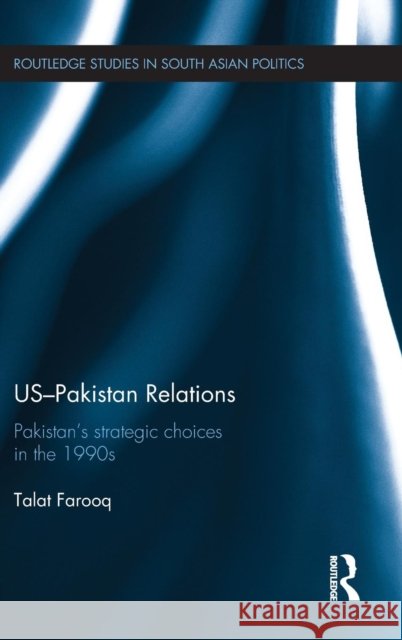
US foreign policy-making from the end of the Cold War to after 2001 is crucial to understanding the years of strong US engagement with Pakistan that would follow 9/11. This book explains Pakistan s strategic choices in the 1990s by examining the role of the United States in the shaping of Islamabad s security goals.
Drawing upon a diverse range of oral history interviews as well as available written sources, the book explains the American contribution to Pakistani security objectives during the presidency of Bill Clinton (1993-2001). The author investigates and explains the dynamics which drove Islamabad s pursuit of nuclear weapons, its support for the Taliban and its approach towards the indigenous uprising in Indian Kashmir. She argues that Clinton s foreign policy contributed to the hardening of Islamabad s security perspectives, creating space for the Pakistani military establishment to pursue its regional security goals. The book also discusses the argument that US-Pakistan relations during this period were driven by a Cold War mindset, causing a fissure between US global and Pakistan s regional security goals. The Pakistani military and civilian leadership utilized these divergent and convergent trends to protect Islamabad s India-centric strategic interests.
The book addresses a gap in the relevant literature and moves beyond the available mono-causal explanations often distorted by a mixture of intellectual obfuscation and political rhetoric. It adds a Pakistani perspective and is a valuable contribution to the study of US-Pakistan relations. "




Czytaj nas na:
KrainaKsiazek.PL - Księgarnia Internetowa


