• Wyszukiwanie zaawansowane
  • Kategorie
  • Kategorie BISAC
  • Książki na zamówienie
  • Promocje
  • Granty
  • Książka na prezent
  • Opinie
  • Pomoc
  • Załóż konto
  • Zaloguj się

Stress Response: Methods and Protocols » książka


zaloguj się | załóż konto
Logo Krainaksiazek.pl

koszyk

konto

szukaj
topmenu
Księgarnia internetowa
Szukaj
Książki na zamówienie
Promocje
Granty
Książka na prezent
Moje konto
Pomoc
 
 
Wyszukiwanie zaawansowane
Pusty koszyk
Bezpłatna dostawa dla zamówień powyżej 40 złBezpłatna dostawa dla zamówień powyżej 40 zł

Kategorie główne

• Nauka
 [3084275]
• Literatura piękna
 [1809953]

  więcej...
• Turystyka
 [52027]
• Informatyka
 [156199]
• Komiksy
 [35973]
• Encyklopedie
 [23064]
• Dziecięca
 [610142]
• Hobby
 [103153]
• AudioBooki
 [1529]
• Literatura faktu
 [194613]
• Muzyka CD
 [277]
• Słowniki
 [2941]
• Inne
 [440174]
• Kalendarze
 [453]
• Podręczniki
 [165831]
• Poradniki
 [420511]
• Religia
 [508205]
• Czasopisma
 [470]
• Sport
 [61077]
• Sztuka
 [248418]
• CD, DVD, Video
 [3355]
• Technologie
 [230839]
• Zdrowie
 [98323]
• Książkowe Klimaty
 [126]
• Zabawki
 [2511]
• Puzzle, gry
 [3464]
• Literatura w języku ukraińskim
 [272]
• Art. papiernicze i szkolne
 [6677]
Kategorie szczegółowe BISAC

Stress Response: Methods and Protocols

ISBN-13: 9780896036116 / Angielski / Twarda / 2000 / 488 str.
Stephen M. Keyse
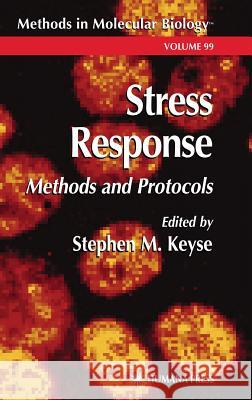
Stress Response: Methods and Protocols Keyse, Stephen M. 9780896036116 Humana Press - książkaWidoczna okładka, to zdjęcie poglądowe, a rzeczywista szata graficzna może różnić się od prezentowanej.

Stress Response: Methods and Protocols

ISBN-13: 9780896036116 / Angielski / Twarda / 2000 / 488 str.

Stephen M. Keyse
cena 534,05
(netto: 508,62 VAT:  5%)

Najniższa cena z 30 dni: 385,52
Termin realizacji zamówienia:
ok. 16-18 dni roboczych.

Darmowa dostawa!

Mammalian cells have evolved a complex multicomponent machinery that enables them to sense and respond to a wide variety of potentially toxic agents present in their environment. These stress responses are often associated with an increased cellular capacity to tolerate normally lethal levels of an insult. The realization that the mammalian stress response may be intimately linked with many human diseases, including rheumatoid arthritis, ischemia, fever, infection, and cancer, has led to an explosion of interest in this research area. Stress Response: Methods and Protocols brings together a diverse array of practical methodologies that may be employed to address various aspects of the response of mammalian cells to environmental stress. The p- tocols are carefully described by authors who have both devised and succe- fully employed them, and they represent a mixture not only of well-established techniques, but also new technologies at the leading edge of research. The areas covered include the detection and assay of stress-induced damage, the acti- tion of signal transduction pathways, stress-inducible gene expression, and stress protein function. Although no volume of this size can be comprehensive and the topics covered reflect a personal choice, it is hoped that it will prove of subst- tial interest and use to a wide range of research workers in the field.


Kategorie:
Nauka, Biologia i przyroda
Kategorie BISAC:
Science > Biologia molekularna
Medical > Medycyna
Wydawca:
Humana Press
Seria wydawnicza:
Methods in Molecular Biology
Język:
Angielski
ISBN-13:
9780896036116
Rok wydania:
2000
Wydanie:
2000
Numer serii:
000014950
Ilość stron:
488
Waga:
1.01 kg
Wymiary:
23.5 x 15.5
Oprawa:
Twarda
Wolumenów:
01
Dodatkowe informacje:
Bibliografia
Wydanie ilustrowane

"This handbook will be very helpful in this respect for everybody interested in studies on the effects of stress at the cellular level using biochemical and molecular biology methods." -Cell Biology International

Part I. Detection and Assay of Stress-Induced Damage. Identifying and Counting Protein Modifications Triggered by Nitrosative Stress, Prabodh K. Sehajpal and Harry M. Lander. Determination of Carbonyl Groups in Oxidized Proteins, Rodney L. Levine, Nancy Wehr, Joy A. Williams, Earl R. Stadtman, and Emily Shacter. Quantitation of 4-Hydroxynonenal Protein Adducts, Koji Uchida and Earl R. Stadtman. Detection of Oxidative Stress in Lymphocytes Using Dichlorodihydrofluorescein Diacetate, Cecile M. Krejsa and Gary L. Schieven. The Measurement of Protein Degradation in Response to Oxidative Stress, Thomas Reinheckel, Tilman Grune, and Kelvin J. A. Davies. Part II. The Activation of Signal Transduction by Cellular Stress. Analysis of the Role of the AMP-Activated Protein Kinase in the Response to Cellular Stress, D. Grahame Hardie, Ian P. Salt, and Stephen P. Davies. Detection and Activation of Stress-Responsive Tyrosine Kinases, Gary L. Schieven. Detection of DNA-Dependent Protein Kinase in Extracts from Human and Rodent Cells, Yamini Achari and Susan P. Lees-Miller. Expression and Assay of Recombinant ATM, Yael Ziv, Sharon Banin, Dae-Sik Lim, Christine E. Canman, Michael B. Kastan, and Yosef Shiloh. Detection and Purification of a Multiprotein Kinase Complex from Mammalian Cells: IKK Signalsome, Frank Mercurio, David B. Young, and Anthony M. Manning. Methods to Assay Stress-Activated Protein Kinases, Ana Cuenda. Monitoring the Activation of Stress-Activated Protein Kinases Using GAL4 Fusion Transactivators, Chao-Feng Zheng and Li Xu. Use of Kinase Inhibitors to Dissect Signaling Pathways, Ana Cuenda and Dario R. Alessi. The Development and Use of Phospho-Specific Antibodies to Study Protein Phosphorylation, Jeremy P. Blaydes, Borek Vojtesek, Graham B. Bloomberg, and Ted R. Hupp. Peptide Assay of Protein Kinases and Use of Variant Peptides to Determine Recognition Motifs, D. Grahame Hardie. Part III. The Analysis of Stress-Induced Gene Expression. Assaying NF-kB and AP-1 DNA-Binding and Transcriptional Activity, Judith M. Mueller and Heike L. Pahl. Analysis of the Mammalian Heat Shock Response: Inducible Gene Expression and Heat Shock Factor Activity, Anu Mathew, Yanhong Shi, Caroline Jolly, and Richard I. Morimoto. Approaches to Define the Involvement of Reactive Oxygen Species and Iron in Ultraviolet-A Inducible Gene Expression, Charareh Pourzand, Olivier Reelfs, and Rex M. Tyrrell. The Human Immunodeficiency Virus LTR-Promoter Region as a Reporter of Stress-Induced Gene Expression, Michael W. Bate, Sushma R. Jassal, and David W. Brighty. SAGE: The Serial Analysis of Gene Expression, Jill Powell. Analysis of Differential Gene Expression Using the SABRE Enrichment Protocol, Daniel J. Lavery, Phillippe Fonjallaz, Fabienne Fleury-Olela, and Ueli Schibler. UVB-Regulated Gene Expression in Human Keratinocytes: Analysis by Differential Display, Harry Frank Abts, Thomas Welss, Kai Breuhahn, and Thomas Ruzicka. Part IV. Analysis of Stress Protein Function. Heme Oxygenase Activity: Current Methods and Applications, Stefan W. Ryter, Egil Kvam, and Rex M. Tyrrell. Analysis of Molecular Chaperone Activities Using In Vitro and In Vivo Approaches, Brian C. Freeman, Annamieke Michels, Jaewhan Song, Harm H. Kampinga, and Richard I. Morimoto. Analysis of Chaperone Properties of Small Hsp's, Monika Ehrnsperger, Matthias Gaestel, and Johannes Buchner. Analysis of Small Hsp Phosphorylation, Rainer Benndorf, Katrin Engel, and Matthias Gaestel. Analysis of Multisite Phosphorylation of the p53 Tumor-Suppressor Protein by Tryptic Phosphopeptide Mapping, David W. Meek and Diane M. Milne. The Development of Physiological Models to Study Stress Protein Responses, Ted R. Hupp. Index.

In is now understood that the response of mammalian cells to a wide variety of potentially toxic agents may be intimately linked with many human diseases, including rheumatoid arthritis, ischemia, fever, infection, and cancer. In Stress Response: Methods and Protocols, Stephen Keyse has assembled a diverse collection of readily reproducible methods devoted to the study of these varied and powerful responses. Written by leading researchers expert in the techniques they describe, these detailed methods cover the detection and assay of stress-induced damage, the activation of a wide range of signal transduction pathways by cellular stress, stress-induced gene expression, and stress protein function. To ensure experimental success, step-by-step guidance is provided for each method, along with details of reagents, equipment, and other requirements. The methods include both well-established techniques and new technologies at the leading edge of research.
Wide ranging and highly practical, Stress Response: Methods and Protocols provides a gold-standard bench manual for today's basic and clinical scientists working to understand how cells and tissues respond during physiological stress and in human disease


Udostępnij

Facebook - konto krainaksiazek.pl


Opinie o Krainaksiazek.pl na Opineo.pl

Partner Mybenefit

Krainaksiazek.pl w programie rzetelna firma Krainaksiaze.pl - płatności przez paypal

Czytaj nas na:

Facebook - krainaksiazek.pl
  • książki na zamówienie
  • granty
  • książka na prezent
  • kontakt
  • pomoc
  • opinie
  • regulamin
  • polityka prywatności

Zobacz:

  • Księgarnia czeska

  • Wydawnictwo Książkowe Klimaty

1997-2026 DolnySlask.com Agencja Internetowa

© 1997-2022 krainaksiazek.pl
     
KONTAKT | REGULAMIN | POLITYKA PRYWATNOŚCI | USTAWIENIA PRYWATNOŚCI
Zobacz: Księgarnia Czeska | Wydawnictwo Książkowe Klimaty | Mapa strony | Lista autorów
KrainaKsiazek.PL - Księgarnia Internetowa

Polityka prywatnosci - link
Krainaksiazek.pl - płatnośc Przelewy24
Przechowalnia Przechowalnia





