• Wyszukiwanie zaawansowane
  • Kategorie
  • Kategorie BISAC
  • Książki na zamówienie
  • Promocje
  • Granty
  • Książka na prezent
  • Opinie
  • Pomoc
  • Załóż konto
  • Zaloguj się

simulation-based engineering of complex systems » książka


zaloguj się | załóż konto
Logo Krainaksiazek.pl

koszyk

konto

szukaj
topmenu
Księgarnia internetowa
Szukaj
Książki na zamówienie
Promocje
Granty
Książka na prezent
Moje konto
Pomoc
 
 
Wyszukiwanie zaawansowane
Pusty koszyk
Bezpłatna dostawa dla zamówień powyżej 20 złBezpłatna dostawa dla zamówień powyżej 20 zł

Kategorie główne

• Nauka
 [2946600]
• Literatura piękna
 [1856966]

  więcej...
• Turystyka
 [72221]
• Informatyka
 [151456]
• Komiksy
 [35826]
• Encyklopedie
 [23190]
• Dziecięca
 [619653]
• Hobby
 [140543]
• AudioBooki
 [1577]
• Literatura faktu
 [228355]
• Muzyka CD
 [410]
• Słowniki
 [2874]
• Inne
 [445822]
• Kalendarze
 [1744]
• Podręczniki
 [167141]
• Poradniki
 [482898]
• Religia
 [510455]
• Czasopisma
 [526]
• Sport
 [61590]
• Sztuka
 [243598]
• CD, DVD, Video
 [3423]
• Technologie
 [219201]
• Zdrowie
 [101638]
• Książkowe Klimaty
 [124]
• Zabawki
 [2473]
• Puzzle, gry
 [3898]
• Literatura w języku ukraińskim
 [254]
• Art. papiernicze i szkolne
 [8170]
Kategorie szczegółowe BISAC

simulation-based engineering of complex systems

ISBN-13: 9780470401293 / Angielski / Twarda / 2009 / 536 str.
John R. Clymer
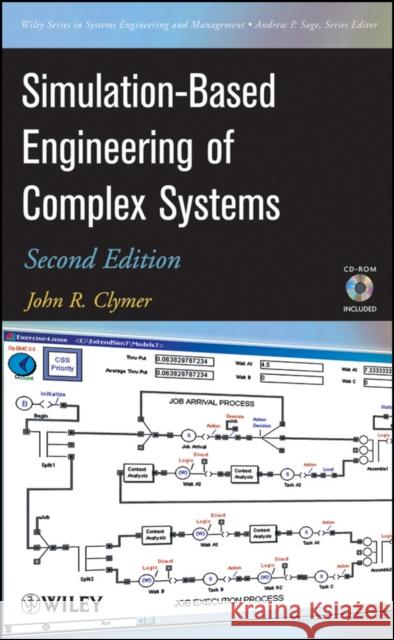
simulation-based engineering of complex systems  Clymer, John R. 9780470401293 Wiley-Interscience - książkaWidoczna okładka, to zdjęcie poglądowe, a rzeczywista szata graficzna może różnić się od prezentowanej.

simulation-based engineering of complex systems

ISBN-13: 9780470401293 / Angielski / Twarda / 2009 / 536 str.

John R. Clymer
cena 742,73 zł
(netto: 707,36 VAT:  5%)

Najniższa cena z 30 dni: 736,64 zł
Termin realizacji zamówienia:
ok. 30 dni roboczych
Bez gwarancji dostawy przed świętami

Darmowa dostawa!

A hands-on approach to understanding, designing, analyzing, and evaluating complex systems During the last few years, Simulation-Based Systems Engineering (SBSE) has become an essential tool for the design and evaluation of complex systems. This is the first book to cover the basic principles of complex systems through the use of hands-on experimentation using an icon-based simulation tool. Utilizing the accompanying software tool ExtendSim, which works with the OpEMCSS library, readers are invited to engage in simulation-based experiments that demonstrate the principles of complex systems with an emphasis on design, analysis, and evaluation. A number of real-world examples are included to demonstrate how to model complex systems across a range of engineering, business, societal, economic, and scientific disciplines. Beginning with an introduction to SBSE, the book covers:

  • Simulation concepts and building blocks
  • Systems design and model development
  • Markov model development
  • Reliability processes
  • Queuing theory in SBSE
  • Rule-based learning and adaptation
  • Agent motion and spatial interactions
  • Multi-agent system of systems
Assuming only a very basic background in problem-solving ability, this book is ideal as a textbook for students (a homework solution manual is also available) and as a reference book for practitioners in industry.

Kategorie:
Technologie
Kategorie BISAC:
Technology & Engineering > Engineering (General)
Technology & Engineering > Electronics - General
Wydawca:
Wiley-Interscience
Seria wydawnicza:
Wiley Series in Systems Engineering and Management
Język:
Angielski
ISBN-13:
9780470401293
Rok wydania:
2009
Numer serii:
000232719
Ilość stron:
536
Waga:
0.83 kg
Wymiary:
23.62 x 16.26 x 3.3
Oprawa:
Twarda
Wolumenów:
01
Dodatkowe informacje:
Bibliografia

"Simulation–Based Engineering of Complex Systems provides a methodology and a tool to gain understanding on complex systems through simulation based engineering. The software tool (ExtendSimTM) which is provided as a CD works with the OpEMCSS library and gives the readers an opportunity of experimentation." ( Journal of Artificial Societies and Social Simulation, July 2010)

Preface.

1. Introduction to Simulation–Based Systems Engineering.

1.1 Definition of Complex Systems.

1.2 Using Simulation to Understand Complex Systems.

1.3 Bringing Complex Systems into Being.

1.4 Summary.

1.5 Homework Problems.

2. Simulation Concepts and Building Blocks.

2.1 Statistical Aspects of Simulation.

2.2 OpEM Graphical Modeling Language.

2.3 How OpEM Parallel Process Simulations Work.

2.4 OpEMCSS Simulation of Context–Sensitive Systems.

2.5 An OpEM Example of Preemptive Scheduling.

2.6 Summary.

2.7 Homework.

2.8 References.

3. Systems Design and Model Development.

3.1 Inventory System.

3.2 Part Production System.

3.3 Seaport System.

3.4 Advanced Features of OpEMCSS.

3.5 Summary.

3.6 Homework.

3.7 References.

4. Markov Model Development.

4.1 Discrete–Time Markov Chains.

4.2 Continuous–Time Markov Processes.

4.3 Semi–Markov Flow Graphs.

4.4 System Design and Evaluation Using Markov Models.

4.5 Homework.

4.6 References.

5. Reliability Processes.

5.1 Definitions.

5.2 Reliability of Non–Maintained Module Groups.

5.3 Availability of Maintained Module Groups.

5.4 Dependence of System Performance on Reliability.

5.5 Summary.

5.6 Homework.

5.7 References.

6. Queuing Theory in Simulation–Based Systems Engineering.

6.1 Single–Queue, Single Server Process.

6.2 Single–Queue, Two–Server Process.

6.3 Comparison of Simulation, Markov Process, and Queuing Theory Models.

6.4 Homework.

6.5 Reference.

7. Rule–Based Learning and Adaptation.

7.1 Classifier Systems.

7.2 Induction of Decision Making Rules.

7.3 Supervisory Rule Learning.

7.4 Summary.

7.5 Conclusions.

7.6 References.

8. Agent Motion and Spatial Interactions.

8.1 Discrete Event Model of Continuous motion.

8.2 Agent Motion and Spatial Interaction Blocks.

8.3 World Model.

8.4 Sonar Array System.

8.5 Summary.

8.6 Reference.

9. Multi–Agent System of Systems (SOS).

9.1 Agents and Agent Interactions.

9.2 Elevator System.

9.3 Distributed, Vehicle Traffic Light Control System.

9.4 Communication Blocks for Multi–Agent Systems.

9.5 Summary.

9.6 References.

Appendix A – OpEMCSS User s Manual.

A.1 Minimum Requirements for Successful CSS Modeling Languages.

A.2 Modeling Languages Survey.

A.2.1 Petri Nets.

A.2.2 IDEF0 Diagrams.

A.2.3 ExtendSim Queuing Models.

A.2.4 Modeling Languages Survey Summary.

A.3 Operational Evaluation Modeling (OpEM) Historical Overview.

A.4 OpEMCSS Familiarization Exercises.

A.4.1 How to Set Up ExtendSim LT–RunTime.

A.4.2 ExtendSim Environment Overview.

A.4.3 Block Familiarization Exercises.

A.5 Overview of Context–Sensitive Event Action Blocks.

A.5.1 Message Event Action block.

A.5.2 Context–Sensitive Event Action block.

A.5.3 Event Action block.

A.6 Summary.

A.7 References.

Appendix B Overview of OpEMCSS Library Blocks.

B.1 Definition of OPEMCSS Block Categories.

B.2 Description of OpEMCSS Blocks by Category.

B.2.1 Category 1.

B.2.2 Category 2.

B.2.3 Category 3.

B.2.4 Category 4.

B.2.5 Category 5.

B.2.6 Category 6.

B.2.7 Category 7.

B.2.8 Category 8.

B.2.9 Category 9.

B.3 Summary of OpEMCSS Block Categories.

Appendix C – Programming OpEMCSS Special Blocks.

C.1 Special Event Action Block Dialogs.

C.2 Execute Event Action Procedure.

C.3 Summary.

John R. Clymer, PhD, is a Professor at California State University at Fullerton.

A hands–on approach to understanding, designing, analyzing, and evaluating complex systems

During the last few years, Simulation–Based Systems Engineering (SBSE) has become an essential tool for the design and evaluation of complex systems. This is the first book to cover the basic principles of complex systems through the use of hands–on experimentation using an icon–based simulation tool.

Utilizing the accompanying software tool ExtendSim, which works with the OpEMCSS library, readers are invited to engage in simulation–based

experiments that demonstrate the principles of complex systems with an

emphasis on design, analysis, and evaluation. A number of real–world examples are included to demonstrate how to model complex systems across a range of engineering, business, societal, economic, and scientific disciplines.

Beginning with an introduction to SBSE, the book covers:

  • Simulation concepts and building blocks

  • Systems design and model development

  • Markov model development

  • Reliability processes

  • Queuing theory in SBSE

  • Rule–based learning and adaptation

  • Agent motion and spatial interactions

  • Multi–agent system of systems

Assuming only a very basic background in problem–solving ability, this book is ideal as a textbook for students (a homework solution manual is also available) and as a reference book for practitioners in industry.


Udostępnij

Facebook - konto krainaksiazek.pl


Opinie o Krainaksiazek.pl na Opineo.pl

Partner Mybenefit

Krainaksiazek.pl w programie rzetelna firma Krainaksiaze.pl - płatności przez paypal

Czytaj nas na:

Facebook - krainaksiazek.pl
  • książki na zamówienie
  • granty
  • książka na prezent
  • kontakt
  • pomoc
  • opinie
  • regulamin
  • polityka prywatności

Zobacz:

  • Księgarnia czeska

  • Wydawnictwo Książkowe Klimaty

1997-2025 DolnySlask.com Agencja Internetowa

© 1997-2022 krainaksiazek.pl
     
KONTAKT | REGULAMIN | POLITYKA PRYWATNOŚCI | USTAWIENIA PRYWATNOŚCI
Zobacz: Księgarnia Czeska | Wydawnictwo Książkowe Klimaty | Mapa strony | Lista autorów
KrainaKsiazek.PL - Księgarnia Internetowa

Polityka prywatnosci - link
Krainaksiazek.pl - płatnośc Przelewy24
Przechowalnia Przechowalnia







