Sex Differences in Heart Disease » książka





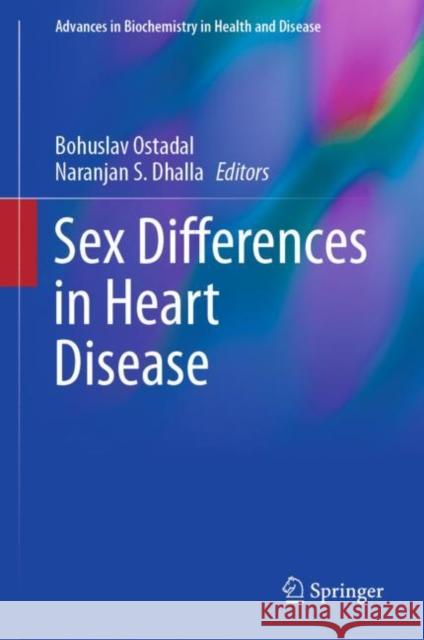
Sex Differences in Heart Disease
ISBN-13: 9783030586768 / Angielski / Twarda / 2020 / 284 str.
Sex Differences in Heart Disease
ISBN-13: 9783030586768 / Angielski / Twarda / 2020 / 284 str.
(netto: 635,00 VAT: 5%)
Najniższa cena z 30 dni: 616,85
ok. 16-18 dni roboczych.
Darmowa dostawa!
A. Experimental aspects
1. The role of sex in cardiac function and disease; Czubryt M.P.
2. Sex based differences in cardiac ischemic injury and reperfusion; Ostadal B.
3. Sex differences in myocardial infarct size; Johnson M.S.
4. Sex differences in the susceptibility to ischemic injury – the role of calcium loading and adrenergic stimulation; Gross H.R.
5. Sex and obesity and myocardial tolerance to ischemia; Clark C.
6. Effect of female sex on rat ventricular myocytes exposed to stimulated ischemia; Howlet S.E.
7. Cardioprotection in females; Murphy E.
8. Sex differences in Cardioprotection ischemia reperfusion injury; Bae S.
9. Sex and ischemic preconditioning; Turcato S.
10. Postconditioning and female heart; Crisostomo P.R.
11. Prenatal hypoxia and sex-dependent increase in heart susceptibility in adults; Xue Q.
B. Clinical aspects
1. Sex and cardiovascular system; Leinwand L.A.
2. Sex differences in coronary heart disease; Maas A.H.
3. Sex differences in the management of non-ST-elevation acute coronary syndrome; Viklan S.
4. Sex specific aspects of coronary heart disease risk factors; Bassuk S.S.
5. Sex differences in patients with ischemic heart failure undergoing surgical treatment; Pina I.L.
6. Woman and the management of acute coronary syndrome; Ostadal P.
7. Sex differences and heart hypertrophy and failure; Regitz-Zagrosek V
8. Sex differences among patients with acute coronary syndrome undergoing PTCA; Akhter N.
9. Sex differences and atherosclerosis; Mehta J.L.
C. Effect of hormones
1. Estrogen and cardiovascular system; Knowlton A.A.
2. Estrogen signaling and cardiovascular disease; Murphy E.
3. A novel estrogen receptor GPER and its role in the protection against ischemia/reperfusion injury; Bopassa J.C.
4. Sexual hormones: effects on mitochondrial activity after ischemia/reperfusion injury; Pavon N.
5. Progesterone and ischemia/reperfusion injury; Dhote V.V.
6. Testosteron and myocardial infarction; Cavasin M.A.
7. Postmenopausal hormone therapy: risks and benefits; Rozenberg S.
D. The role of Mitochondria
1. Molecular and cellular basis of cardiovascular sex differences; Mendelsohn M.E.
2. Mitochondria – a target for sex differences in cardiac pathology; Ventura-Clapier R.
3. Sex differences in the sensitivity of cardiac mitochondrial permeability transition pore to calcium load; Drahota Z.
4. Sex differences in mitochondrial biogenesis; Zawada I.
5. Sexual dimorphism in the expression of mitochondria-related genes in rat heart; Vijay V.
6. Sex differences in mitochondrial antioxidant gene expression; Borras C.
7. Sex differences in the regulation of mitochondrial subpopulations; Ribeiro jr R.F.
8. Sex specificities in Ca handling in cardiac mitochondria; Chweih H.
9. The influence of exercise and sex on mitochondrial metabolism and ultrastructure; Tomopolsky M.A.
10. Sex differences in the phosphorylation of mitochondrial proteins – effect on cardioprotection; Lagranha C.I.
11. Sex – specific proteomic alterations in mitochondrial pathways; Yan L.
Cardiovascular diseases are the leading cause of mortality in men and women. Unfortunately, women have traditionally been excluded from clinical trials, and female animals have been used less or sex was not reported in basic research studies. Until recently, consideration of both sexes was not required in clinical and preclinical studies focusing on cardiovascular diseases. However, the number of clinical and experimental papers dealing with sex differences and heart disease significantly increases during the last years. This trend is obviously the result of at least two facts: the number of examples of different behavior of the male and female heart under physiological and pathological conditions is steadily increasing and there were controversial reports on the beneficial and adverse effect of hormonal replacement therapy. Detailed molecular and cellular mechanisms of these differences are still unknown but one is clear already today: sex differences are so important that they should be considered by the selection of optimum diagnostic and therapeutic procedures in clinical practice.




Czytaj nas na:
1997-2026 DolnySlask.com Agencja Internetowa
KrainaKsiazek.PL - Księgarnia Internetowa


