Termin realizacji zamówienia: ok. 16-18 dni roboczych.
Darmowa dostawa!
Widoczna okładka, to zdjęcie poglądowe, a rzeczywista szata graficzna może różnić się od prezentowanej. Nie gwarantujemy zgodności okładki z prezentowanym zdjęciem.
1. Introduction .- 2. Social memory on a historical scale: Configuring adaptation to cyclic disasters, 1500–1900 .- 3. Colonial trans-frontier grazing control: Responses to political and climatic shocks, 1908–1962 .- 4. Collapse and transformation of pastoralism: Pathways of land-use change, 1950–2000s .- 5. The individual in drought livestock management strategies: Mobility as a proxy for pastoral resilience, 1983–2011 .- 6. Impacts of decadal droughts on cattle population: Tracking household wealth, 1983–2011 .- 7. Resilience of social capital networks: Collapse and transformation, 1991–2012 .- 8. ‘If shared, an ant makes two bites’: Women’s maaro social capital networks .- 9. Neighborhood food security social networks: Three case studies, 1986– 1996.
Gufu Oba is Professor at the Faculty of Landscape and Society (LANDSAM) in the Norwegian University of Life Sciences.
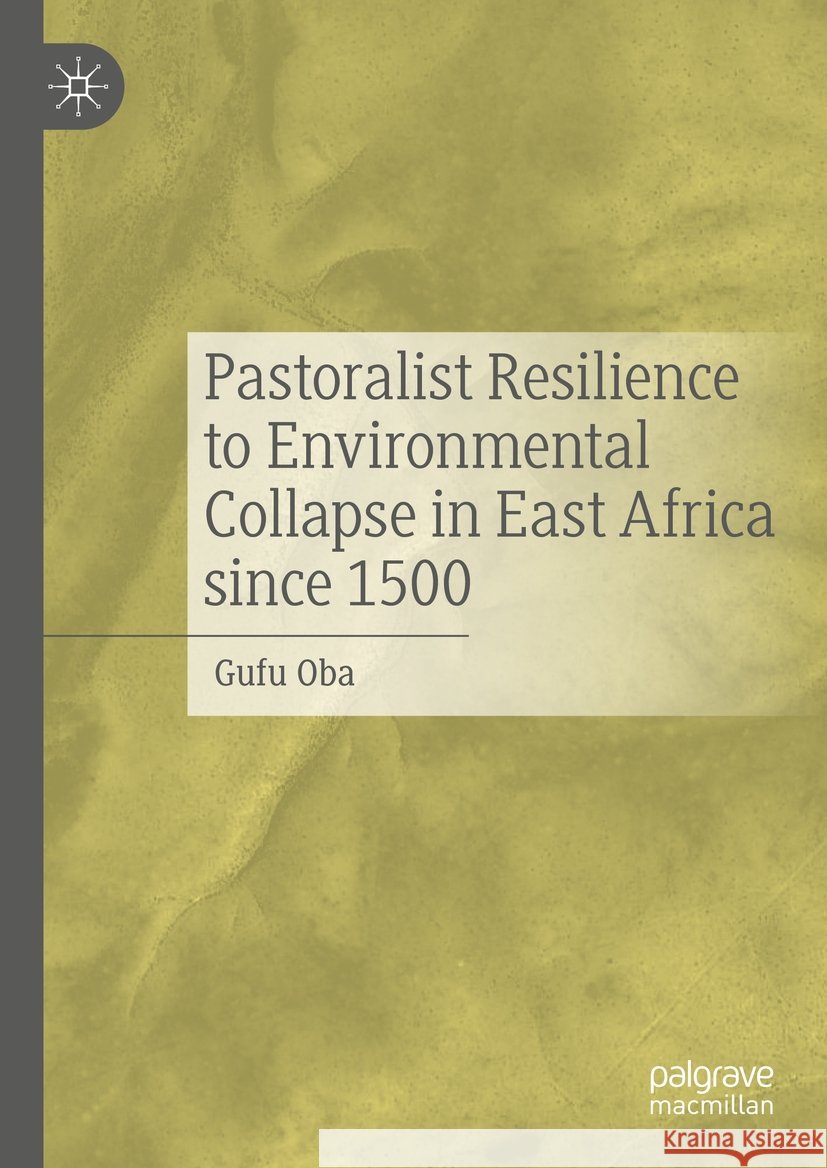
This book explores pastoralist/ farmers' approaches to environmental disaster management in East Africa, charting their responses and adaptations to famine, pandemics, natural disasters, and historical events. Using a dynamic adaptive cycle theoretical framework, it uses social memory to reconstruct an 'event history calendar', thus combining social memory and written historical records to reconstruct the adaptive strategies of pastoralists. It explores the climate history of the southern Ethiopian and northern Kenyan frontier, considering, in particular, the impact of the colonial period and independence thereafter, providing a significant contribution to debates in African environmental history.
Gufu Oba is Professor at the Faculty of Landscape and Society (LANDSAM) in the Norwegian University of Life Sciences.