• Wyszukiwanie zaawansowane
  • Kategorie
  • Kategorie BISAC
  • Książki na zamówienie
  • Promocje
  • Granty
  • Książka na prezent
  • Opinie
  • Pomoc
  • Załóż konto
  • Zaloguj się

meiosis, volume 2: cytological methods » książka


zaloguj się | załóż konto
Logo Krainaksiazek.pl

koszyk

konto

szukaj
topmenu
Księgarnia internetowa
Szukaj
Książki na zamówienie
Promocje
Granty
Książka na prezent
Moje konto
Pomoc
 
 
Wyszukiwanie zaawansowane
Pusty koszyk
Bezpłatna dostawa dla zamówień powyżej 20 złBezpłatna dostawa dla zamówień powyżej 20 zł

Kategorie główne

• Nauka
 [2950560]
• Literatura piękna
 [1849509]

  więcej...
• Turystyka
 [71097]
• Informatyka
 [151150]
• Komiksy
 [35848]
• Encyklopedie
 [23178]
• Dziecięca
 [617388]
• Hobby
 [139064]
• AudioBooki
 [1657]
• Literatura faktu
 [228597]
• Muzyka CD
 [383]
• Słowniki
 [2855]
• Inne
 [445295]
• Kalendarze
 [1464]
• Podręczniki
 [167547]
• Poradniki
 [480102]
• Religia
 [510749]
• Czasopisma
 [516]
• Sport
 [61293]
• Sztuka
 [243352]
• CD, DVD, Video
 [3414]
• Technologie
 [219456]
• Zdrowie
 [101002]
• Książkowe Klimaty
 [124]
• Zabawki
 [2311]
• Puzzle, gry
 [3459]
• Literatura w języku ukraińskim
 [254]
• Art. papiernicze i szkolne
 [8079]
Kategorie szczegółowe BISAC

meiosis, volume 2: cytological methods

ISBN-13: 9781607611028 / Angielski / Mixed media product / 2009 / 456 str.
Scott Keeney
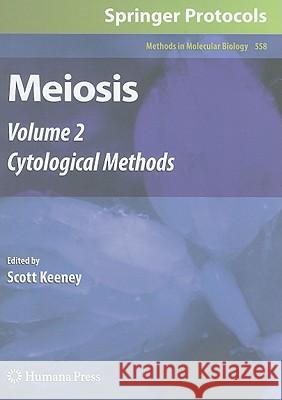
meiosis, volume 2: cytological methods  Keeney, Scott 9781607611028 Humana Press - książkaWidoczna okładka, to zdjęcie poglądowe, a rzeczywista szata graficzna może różnić się od prezentowanej.

meiosis, volume 2: cytological methods

ISBN-13: 9781607611028 / Angielski / Mixed media product / 2009 / 456 str.

Scott Keeney
cena 402,53
(netto: 383,36 VAT:  5%)

Najniższa cena z 30 dni: 385,52
Termin realizacji zamówienia:
ok. 22 dni roboczych
Dostawa w 2026 r.

Darmowa dostawa!

Each generation in a sexually reproducing organism such as a fly or a mouse passes through the bottleneck of meiosis, which is the specialized cell division that gives rise to haploid reproductive cells (sperm, eggs, spores, etc. ). The principal function of meiosis is to reduce the genome complement by half, which is accomplished through sequential execution of one round of DNA replication followed by two rounds of chromosome segregation. Within the extended prophase between DNA replication and the first meiotic division in most organisms, homologous maternal and paternal chromosomes pair with one another and undergo homologous recombination, which establishes physical connections that link the homologous chromosomes until the time they are separated at anaphase I. Recombination also serves to increase genetic diversity from one generation to the next by breaking up linkage groups. The unique chromosome dynamics of meiosis have fascinated scientists for well over a century, but in recent years there has been an explosion of new information about how meiotic chromosomes pair, recombine, and are segregated. Progress has been driven by advances in three main areas: (1) genetic identification of meiosis-defective mutants and cloning of the genes involved; (2) development of direct physical assays for DNA intermediates and products of recombination; and (3) increasingly sophisticated cy- logical methods that describe chromosome behaviors and the spatial and temporal patterns by which specific proteins associate with meiotic chromosomes.


Kategorie:
Nauka, Biologia i przyroda
Kategorie BISAC:
Science > Cytologia
Science > Biologia molekularna
Science > Research & Methodology
Wydawca:
Humana Press
Seria wydawnicza:
Methods in Molecular Biology
Język:
Angielski
ISBN-13:
9781607611028
Rok wydania:
2009
Wydanie:
2009
Numer serii:
000379417
Ilość stron:
456
Wymiary:
26.0 x 19.3
Oprawa:
Mixed media product
Wolumenów:
01
Dodatkowe informacje:
Wydanie ilustrowane

Part I. Cytological Analysis of Meiotic Chromosomes in Fungi Chromosome Spreading and Immunofluorescence Methods in Saccharomyces cerevisiae Beth Rockmill Analysis of Schizosaccharomyces pombe Meiosis by Nuclear Spreading Josef Loidl and Alexander Lorenz Assaying Chromosome Pairing by FISH Analysis of Spread Saccharomyces cerevisiae Nuclei Beth M. Weiner and Nancy Kleckner Live-Cell Fluorescence Imaging of Meiotic Chromosome Dynamics in Schizosaccharomyces pombe Haruhiko Asakawa and Yasushi Hiraoka Time-Lapse Fluorescence Microscopy of Saccharomyces cerevisiae in Meiosis Michael E. Dresser Real-Time Imaging of Meiotic Chromosomes in Saccharomyces cerevisiae Romain Koszul, Sei Kameoka, and Beth M. Weiner Observing Meiosis in Filamentous Fungi: Sordaria and Neurospora Denise Zickler Meiotic Cytogenetics in Coprinus cinereus Miriam E. Zolan and Patricia J. Pukkila Part II. Cytological Analysis of Meiotic Chromosomes in Plants and Small Animals Cytological Analysis of Arabidopsis thaliana Meiotic Chromosomes Susan J. Armstrong, Eugenio Sanchez-Moran, and F. Chris H. Franklin Electron Microscopic Immunogold Localization of Recombination-Related Proteins in Spreads of Synaptonemal Complexes From Tomato Microsporocytes Steven M. Stack and Lorinda K. Anderson Cytological Analysis of Meiosis in Caenorhabditis elegans Carolyn M. Phillips, Kent L. McDonald, and Abby F. Dernburg Cytological Analysis of Meiosis in Fixed Drosophila Ovaries Kim S. McKim, Eric F. Joyce, and Janet K. Jang Analysis of Chromosome Dynamics and Chromosomal Proteins in Drosophila Spermatoctyes Sharon E. Thomas and Bruce D. McKee Methods for Meiotic Chromosome Preparation, Immunofluorescence, and Fluorescence in situ Hybridization in Daphnia pulex Dai Tsuchiya, Brian D. Eads, and Miriam E. Zolan Immunofluorescent Microscopic Study of Meiosis in Zebrafish Nazafarin Kochakpour Part III. Cytological and Histological Analysis of Mammalian Germ Cells and Meiotic Chromosomes Staging of Mouse Seminiferous Tubule Cross-Sections Emad A. Ahmed and Dirk G. de Rooij Isolation and Short-Term Culture of Mouse Spermatocytes for Analysis of Meiosis Sophie La Salle, Fengyun Sun, and Mary Ann Handel Isolation and Analyses of Enriched Populations of Male Mouse Germ Cells by Sedimentation Velocity: The Centrifugal Elutriation Marco Barchi, Raffaele Geremia, Roberto Magliozzi, and Enrica Bianchi Electron Microscopy of Mammalian Chromosomes Peter Moens Analyzing Mammalian Female Meiosis Martha Susiarjo, Carmen Rubio, and Patricia Hunt Cytological Analysis of Interference in Mouse Meiosis Esther de Boer, Franck G. P. Lhuissier, and Christa Heyting Analysis of Telomere Dynamics in Mouse Spermatogenesis Harry Scherthan Immunofluorescence Analysis of Human Spermatocytes Evelyn Ko and Renée H. Martin Cytological Techniques to Study Human Female Meiotic Prophase Ignasi Roig and Montserrat Garcia-Caldés Using RNA FISH to Study Gene Expression During Mammalian Meiosis Shantha K. Mahadevaiah, Yael Costa, and James M.A. Turner

The unique chromosome dynamics of meiosis have fascinated scientists for well over a century, but in recent years there has been a proliferation of new data concerning the pairing, recombination, and segregation of chromosomes. In Meiosis, expert researchers explore recent advances in three main areas: quantitative genetic methods for analysis of homologous recombination and chromosome pairing, development of direct physical assays for DNA intermediates and products of recombination, and cytological methods for characterizing chromosome behaviors and the patterns by which specific proteins associate with meiotic chromosomes. Meiosis: Volume 2, Cytological Methods, details methods for preparing and examining meiotic tissues, cells, and chromosomes by electron microscopy, indirect immunofluorescence, fluorescent in situ hybridization, and live-cell imaging. The methods in this volume are grouped for convenience by general types of organisms: fungi, plants and small animals (mostly invertebrates), and mammals. Composed in the highly successful Methods in Molecular Biology(tm) series format, each chapter contains a brief introduction, step-by-step methods, a list of necessary materials, and a Notes section which shares tips on troubleshooting and avoiding known pitfalls.

Comprehensive and cutting-edge, Meiosis: Volume 2, Cytological Methods is an essential guidebook, providing up-to-date and critical new protocols for the study of meiotic chromosome dynamics.


Udostępnij

Facebook - konto krainaksiazek.pl


Opinie o Krainaksiazek.pl na Opineo.pl

Partner Mybenefit

Krainaksiazek.pl w programie rzetelna firma Krainaksiaze.pl - płatności przez paypal

Czytaj nas na:

Facebook - krainaksiazek.pl
  • książki na zamówienie
  • granty
  • książka na prezent
  • kontakt
  • pomoc
  • opinie
  • regulamin
  • polityka prywatności

Zobacz:

  • Księgarnia czeska

  • Wydawnictwo Książkowe Klimaty

1997-2025 DolnySlask.com Agencja Internetowa

© 1997-2022 krainaksiazek.pl
     
KONTAKT | REGULAMIN | POLITYKA PRYWATNOŚCI | USTAWIENIA PRYWATNOŚCI
Zobacz: Księgarnia Czeska | Wydawnictwo Książkowe Klimaty | Mapa strony | Lista autorów
KrainaKsiazek.PL - Księgarnia Internetowa

Polityka prywatnosci - link
Krainaksiazek.pl - płatnośc Przelewy24
Przechowalnia Przechowalnia




