(mehr-)Sprachigkeit Und Lingualismus: Die Diskursive Konstruktion Von Sprache Im Kontext Nationaler Und Supranationaler Sprachenpolitik Am Beispiel Os » książka





(mehr-)Sprachigkeit Und Lingualismus: Die Diskursive Konstruktion Von Sprache Im Kontext Nationaler Und Supranationaler Sprachenpolitik Am Beispiel Os
ISBN-13: 9783847101635 / Niemiecki / Twarda / 2013 / 417 str.
(mehr-)Sprachigkeit Und Lingualismus: Die Diskursive Konstruktion Von Sprache Im Kontext Nationaler Und Supranationaler Sprachenpolitik Am Beispiel Os
ISBN-13: 9783847101635 / Niemiecki / Twarda / 2013 / 417 str.
(netto: 352,03 VAT: 5%)
Najniższa cena z 30 dni: 365,85
ok. 30 dni roboczych
Bez gwarancji dostawy przed świętami
Darmowa dostawa!
(Mehr )Sprachigkeit: ein widersprüchlicher Diskurs zwischen Österreich und der Europäischen Union
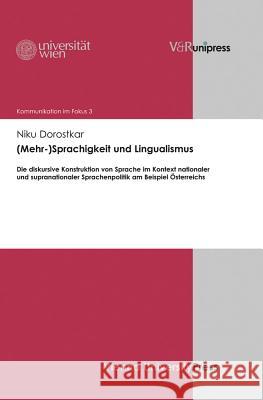
"Mehrsprachigkeit" ist zu einem zentralen Schlagwort auch außerhalb des akademischen Diskurses avanciert, vor allem auf der Ebene supranationaler EU-Politik. So trat etwa 2007 erstmals ein EU-Kommissar mit eigenem Portfolio für Mehrsprachigkeit sein Amt an. Aber kommen die sprachenpolitischen Kommunikationsbemühungen der EU bei ihren Adressaten, den nationalen Mitgliedsstaaten auch wirklich an?§In einer kritisch-diskursanalytischen Fallstudie wird untersucht, wie und in welchem Ausmaß die diskursiv betriebene Mehrsprachigkeitspolitik der EU in Österreich rezipiert wird. Darüber hinaus wird der Frage nachgegangen, wie Sprache im Sinn von Sprachigkeit in der Politik, den Medien und der Bevölkerung Österreichs diskursiv konstruiert wird. Hierzu werden Interviews mit Politikern, Zeitungsartikel und Gruppendiskussionen mit BürgerInnen nach dem diskurshistorischen Ansatz analysiert, wobei das Hauptaugenmerk auf sprachbezogenen Nominations-, Prädikations- und Argumentationsstrategien liegt.Multilingualism has become one of the pivotal catchwords in a discourse which for several years has been spreading not only in the field of academics, but also in the public and private sphere, especially at the supranational European level. While the EU s language political communication efforts are aimed at the national level, the member states often seem to follow language political principles that differ significantly from those of the EU.§With this perspective in mind and focussing on an Austrian case study, the present book investigates how and to what degree the EU s discursively conducted multilingualism policy is perceived at the Austrian national level. Furthermore, it pursues the questions of how language (in the sense of Sprachigkeit or languageness ) is constructed discursively in politics, the media and among citizens in Austria. For this purpose, interviews with politicians, print media articles and focus group discussions are analysed following the discourse-historical approach with a focus on language-related nomination, predication and argumentation strategies.




Czytaj nas na:
KrainaKsiazek.PL - Księgarnia Internetowa


