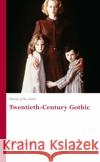
Continuing the University of Wales Press s acclaimed series of explorations of the Gothic and its legacy, "Twentieth-Century Gothic" focuses on the continuing presence of the gothic in the long twentieth century, from "The Turn of the Screw" to Sarah Waters s "The Little Stranger," with looks along the way at the work of Clive Barker, Angela Carter, Conan Doyle, Rudyard Kipling, and more. Addressing the question of why we are fascinated by ghosts, demons, and monsters of all sorts, despite the professed rationality of our society, Armitt shows how such stories of these supernatural...
Continuing the University of Wales Press s acclaimed series of explorations of the Gothic and its legacy, "Twentieth-Century Gothic" focuses on the...
"Gothic Contemporaries "is the first study to align twenty-first-century fiction with a revised understanding of the Gothic. Through close readings of several twenty-first-century novels including "The Story of Lucy Gault "by William Trevor, "The Sea "by John Banville, "The Gathering "by Anne Enright, and others and drawing ideas from Jacques Derrida s later works, Joanne Watkiss demonstrates how contemporary fiction reworks the traditional ghost stories of the past. Among the numerous themes Watkins explores are the links between memory and haunting; the architectural function of...
"Gothic Contemporaries "is the first study to align twenty-first-century fiction with a revised understanding of the Gothic. Through close readings...
Ever since horror became wildly popular in the 1970s, journalists have warned against the dangers of increasingly explicit forms of violent entertainment. Xavier Aldana Reyes takes a different stance in "Body Gothic," celebrating the transgressive qualities of this genre. Reyes considers relevant popular literary and filmic movements of the past three decades and reads them as updates in a long gothic tradition that goes back to the eighteenth century. "Body Gothic" contains case studies of key texts in splatterpunk, body horror, the new avant-pulp, the slaughterhouse novel, torture porn, and...
Ever since horror became wildly popular in the 1970s, journalists have warned against the dangers of increasingly explicit forms of violent entertainm...
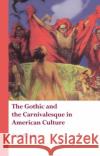
Writers on gothic literature and art traditionally assume the genre explores genuine historical crises and traumas yet this does not account for the fact that the gothic is often a source of wicked delight as much as horror, causing audiences to laugh as often as they shriek. "The Gothic and Carnivalesque in American Culture" offers a different account of the gothic, one that focuses on the carnivalesque in American gothic works from the nineteenth to the twentieth century. Along the way, the author discusses festivals in the works of Poe, Hawthorne and Irving; the celebrations of wickedness...
Writers on gothic literature and art traditionally assume the genre explores genuine historical crises and traumas yet this does not account for the f...