Although Italo Calvino (1923-1985) is one of the most widely read and translated Italian novelists of the century, a comprehensive analytical work in English of his writings has been unavailable until now. In this new study Angela Jeannet offers a rich and vibrant critical portrait that integrates Calvino the creative writer with Calvino the critical thinker, two roles that the novelist himself saw as intimately connected. "Under the Radiant Sun and the Crescent Moon" examines the cultural and literary matrix of Calvino's complex fictional universe, focusing on his passion for storytelling...
Although Italo Calvino (1923-1985) is one of the most widely read and translated Italian novelists of the century, a comprehensive analytical work ...
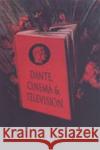
The Divine Comedy of Dante Alighieri (1265-1321) is one of the seminal works of western literature. Its impact on modern culture has been enormous, nourishing a plethora of twentieth century authors from Joyce and Borges to Kenzaburo Oe. Although Dante's influence in the literary sphere is well documented, very little has been written on his equally determining role in the evolution of the visual media unique to our times, namely, cinema and television. Dante, Cinema, and Television corrects this oversight.
The essays, from a broad range of disciplines, cover the...
The Divine Comedy of Dante Alighieri (1265-1321) is one of the seminal works of western literature. Its impact on modern culture has been en...
Looking at five of Italo Calvino's often neglected early novels: The Young People of Po, The Cloven Viscount, The Baron in the Trees, The Non-Existent Knight, and The Watcher, Eugenio Bolongaro argues that these works, written between 1948 and 1963, contain a sustained meditation on the role of the intellectual and on the irreducible ethical and political dimension of literature. This meditation provides an insight into a crucial moment in Calvino's development as a writer, and allows Bolongaro to lay the groundwork for a more 'political' reading of...
Looking at five of Italo Calvino's often neglected early novels: The Young People of Po, The Cloven Viscount, The Baron in the Tr...
Focusing on both ritual and mass-visual representations of history in 1920s and 1930s Italy, The Historic Imaginary unveils how Italian Fascism sought to institutionalize a modernist culture of history. The study takes a new historicist and microhistorical approach to cultural-intellectual history, integrating theoretical tools of analysis acquired from visual-cultural studies, art history, linguistics, and reception theory in a sophisticated examination of visual modes of historical representation - from commemorations to monuments to exhibitions and mass-media - spanning the...
Focusing on both ritual and mass-visual representations of history in 1920s and 1930s Italy, The Historic Imaginary unveils how Italian Fasc...
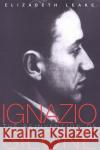
In 1996, Ignazio Silone, one of the most beloved folk heroes of the Italian Left, a novelist and a high-ranking Communist Party member, was unmasked as a secret supporter of the Fascist movement. The discovery sparked a highly emotional response among scholars and the press in Italy and beyond, with reactions ranging from debate to disbelief.
Elizabeth Leake's fascinating study provides a new analysis of Silone's fiction based on the discovery of his double life. Drawing on a psychoanalytic approach, the author re-reads Silone's novels in the light of his inevitable struggle with his...
In 1996, Ignazio Silone, one of the most beloved folk heroes of the Italian Left, a novelist and a high-ranking Communist Party member, was unmaske...
From Fascism to Democracy tells the story of the birth of the post-war Italian political system through the lens of a single event: the Italian national election of 1948, the first parliamentary election of the Republican era. Robert A. Ventresca offers the first comprehensive analysis of this central topic of contemporary Italian and European history. Bringing together the broad political and diplomatic narrative of 1948 with the social and psychological dimensions that determined how ordinary Italians experienced the election campaign, this book is about much more than just a...
From Fascism to Democracy tells the story of the birth of the post-war Italian political system through the lens of a single event: the Ital...
While Umberto Eco's intellectual itinerary was marked by his early studies of post-Crocean aesthetics and his spectacular concentration on linguistics, information theory, structuralism, semiotics, cognitive science, and media studies, what constitutes the peculiarity of his critical and fiction writing is the tension between a typically medieval search for a code and the hermeneutic representative of deconstructive tendencies. This tension between cosmos and chaos, order and disorder, is reflected in the word chaosmos.
In this brilliant assessment of the...
While Umberto Eco's intellectual itinerary was marked by his early studies of post-Crocean aesthetics and his spectacular concentration on linguist...
Pietro Aretino's literary influence was felt throughout most of Europe during the sixteenth-century, yet English-language criticism of this writer's work and persona has hitherto been sparse. Raymond B. Waddington's study redresses this oversight, drawing together literary and visual arts criticism in its examination of Aretino's carefully cultivated scandalous persona - a persona created through his writings, his behaviour and through a wide variety of visual arts and crafts.
In the Renaissance, it was believed that satire originated from satyrs. The satirist Aretino promoted...
Pietro Aretino's literary influence was felt throughout most of Europe during the sixteenth-century, yet English-language criticism of this writer'...
Their provocative manifestos and outrageous performances earned the Italian Futurists international fame but, surprisingly, very little recognition outside of Italy for their actual achievements. The few English and American critics who have studied the movement in any depth have focused on the first phase, which spanned the years 1909-15 and was centred in Milan, Rome, and Florence. By contrast, the second phase covered a much longer period and represented a pan-Italian phenomenon. Despite the wealth of material available about this later part of the movement, there has been little...
Their provocative manifestos and outrageous performances earned the Italian Futurists international fame but, surprisingly, very little recognition...
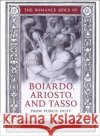
In The Romance Epics of Boiardo, Ariosto, and Tasso, Jo Ann Cavallo attempts a new interpretation of the history of the renaissance romance epic in northern Italy, focusing on the period's three major chivalric poets. Cavallo challenges previous critical assumptions about the trajectory of the romance genre, especially regarding questions of creative imitation, allegory, ideology, and political engagement.
In tracing the development of the romance epic against the historical context of the Ferrarese court and the Italian peninsula, Cavallo moves from a politically engaged...
In The Romance Epics of Boiardo, Ariosto, and Tasso, Jo Ann Cavallo attempts a new interpretation of the history of the renaissance romance ...