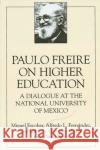
Dedicated to a transformation of education so that it becomes an instrument of liberation rather than oppression, Freire discusses in unprecedented depth the implications and consequences of his pedagogical theory concerning three main problems faced by contemporary higher education: power and education, curriculum and social reality, and the role of intellectuals. This "dialogue" with Freire enlarges the body of knowledge regarding his thinking about educational emancipation and the role of higher education in encouraging self reliance.
Dedicated to a transformation of education so that it becomes an instrument of liberation rather than oppression, Freire discusses in unprecedented de...
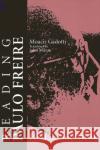
This book was written as Paulo Freire himself would have done it, using a method of learning through victories and defeats in the same way one learns in life. The author follows a chronological line in which life and work are naturally mixed. In many cases, he lets Paulo Freire's work speak for itself.
This book was written as Paulo Freire himself would have done it, using a method of learning through victories and defeats in the same way one learns ...
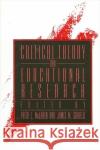
The contributors to this anthology bring North American research traditions into conversation with the latest advances in French, German, British, and Latin American schools of social thought. Challenging the very precepts of many empirical and analytical approaches to understanding educational phenomena, this collection of essays is indispensable for educators wishing to understand present philosophical debates. The future of educational research in the United States will largely depend on how teachers and researchers deal with the urgent issues raised in this timely and iconoclastic...
The contributors to this anthology bring North American research traditions into conversation with the latest advances in French, German, British, and...