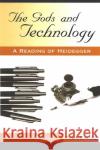
The Gods and Technology is a careful and original reading of the principal statement of Martin Heidegger's philosophy of technology, the essay Die Frage nach der Technik ("The question concerning technology"). That essay is a rich one, and Richard Rojcewicz's goal is to mine it for the treasures only a close reading of the original German text can bring out. Rojcewicz shows how the issue of technology is situated at the very heart of Heidegger's philosophical enterprise; especially for the late Heidegger, the philosophy of technology is a philosophy of Being, or of the gods. For...
The Gods and Technology is a careful and original reading of the principal statement of Martin Heidegger's philosophy of technology, the essay Die Fra...
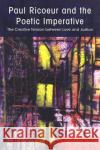
This book addresses the thought of Paul Ricoeur (1913-2005), paying particular attention to the creative tension between love and justice as principle themes in his work. Dealing with these issues chiefly in his writings on religion, Ricoeur explored the tension between the biblical ideals of the golden rule--the religious formulation of a principle of justice--and the love command. Author W. David Hall shows how these ideals continually speak to each other in Ricoeur's work, how they operate creatively on each other, and how each serves as a corrective to the perversions of the other. Hall...
This book addresses the thought of Paul Ricoeur (1913-2005), paying particular attention to the creative tension between love and justice as principle...
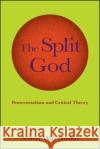
What if our world were considered a gift? Extending postmodern gift theory to ecological and ecotheological concerns, Mark Manolopoulos explores how "creation"--the what-is--can be seen as a gift. Creation, when viewed in a radically egalitarian way, is the matrix of all material things--human, otherwise-than-human, or humanly manufactured. Utilizing and critiquing the work of Jacques Derrida and Jean-Luc Marion, Manolopoulos argues that the gift is an irresolvable paradox marked by the contradictory elements of excess (gratuity, linearity) and exchange (gratitude, return). Philosophical and...
What if our world were considered a gift? Extending postmodern gift theory to ecological and ecotheological concerns, Mark Manolopoulos explores how "...
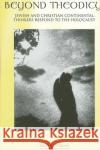
Beyond Theodicy analyzes the rising tide of objections to explanations and justifications for why God permits evil and suffering in the world. In response to the Holocaust, striking parallels have emerged between major Jewish and Christian thinkers centering on practical faith approaches that offer meaning within suffering. Author Sarah K. Pinnock focuses on Jewish thinkers Martin Buber and Ernst Bloch and Christian thinkers Gabriel Marcel and Johann Baptist Metz to present two diverse rejections of theodicy, one existential, represented by Buber and Marcel, and one political, represented by...
Beyond Theodicy analyzes the rising tide of objections to explanations and justifications for why God permits evil and suffering in the world. In resp...
What is to be done at the end of metaphysics? Joeri Schrijvers's contemporary philosophy of religion takes up this question, originally posed by Reiner Schurmann and central to continental philosophy. The book navigates the work of thinkers who have addressed such metaphysical concerns, including Martin Heidegger, Emmanuel Levinas, Jean-Luc Nancy, Jean-Luc Marion, Peter Sloterdijk, Ludwig Binswanger, Jacques Derrida, and more recently John D. Caputo, Mary-Jane Rubenstein, and Martin Hagglund. Notably, Schrijvers engages both those who would deconstruct Christianity and those who remain within...
What is to be done at the end of metaphysics? Joeri Schrijvers's contemporary philosophy of religion takes up this question, originally posed by Reine...
What is to be done at the end of metaphysics? Joeri Schrijvers's contemporary philosophy of religion takes up this question, originally posed by Reiner Schurmann and central to continental philosophy. The book navigates the work of thinkers who have addressed such metaphysical concerns, including Martin Heidegger, Emmanuel Levinas, Jean-Luc Nancy, Jean-Luc Marion, Peter Sloterdijk, Ludwig Binswanger, Jacques Derrida, and more recently John D. Caputo, Mary-Jane Rubenstein, and Martin Hagglund. Notably, Schrijvers engages both those who would deconstruct Christianity and those who remain within...
What is to be done at the end of metaphysics? Joeri Schrijvers's contemporary philosophy of religion takes up this question, originally posed by Reine...