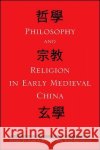
Exploring a time of profound change, this book details the intellectual ferment after the fall of the Han dynasty. Questions about "heaven" and the affairs of the world that had seemed resolved by Han Confucianism resurfaced and demanded reconsideration. New currents in philosophy, religion, and intellectual life emerged to leave an indelible mark on the subsequent development of Chinese thought and culture. This period saw the rise of xuanxue ("dark learning" or "learning of the mysterious Dao"), the establishment of religious Daoism, and the rise of Buddhism. In examining the key...
Exploring a time of profound change, this book details the intellectual ferment after the fall of the Han dynasty. Questions about "heaven" and the af...
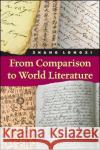
The study of world literature is on the rise. Until recently, the term "world literature" was a misnomer in comparative literature scholarship, which typically focused on Western literature in European languages. In an increasingly globalized era, this is beginning to change. In this collection of essays, Zhang Longxi discusses how we can transcend Eurocentrism or any other ethnocentrism and revisit the concept of world literature from a truly global perspective. Zhang considers literary works and critical insights from Chinese and other non-Western traditions, drawing on scholarship from a...
The study of world literature is on the rise. Until recently, the term "world literature" was a misnomer in comparative literature scholarship, which ...
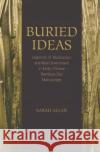
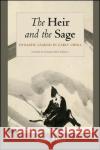
The discovery of previously unknown philosophical texts from the Axial Age is revolutionizing our understanding of Chinese intellectual history. Buried Ideas presents and discusses four texts found on brush-written slips of bamboo and their seemingly unprecedented political philosophy. Written in the regional script of Chu during the Warring States period (475-221 BCE), all of the works discuss Yao's abdication to Shun and are related to but differ significantly from the core texts of the classical period, such as the Mencius and Zhuangzi. Notably, these works evince an...
The discovery of previously unknown philosophical texts from the Axial Age is revolutionizing our understanding of Chinese intellectual history. Bu...
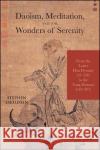
Stephen Eskildsen offers an overview of Daoist religious texts from the Latter Han (25-220) through Tang (618-907) periods, exploring passive meditation methods and their anticipated effects. These methods entailed observing the processes that unfold spontaneously within mind and body, rather than actively manipulating them by means common in medieval Daoist religion such as visualization, invocations, and the swallowing of breath or saliva. Through the resulting deep serenity, it was claimed, one could attain profound insights, experience visions, feel surges of vital force, overcome thirst...
Stephen Eskildsen offers an overview of Daoist religious texts from the Latter Han (25-220) through Tang (618-907) periods, exploring passive meditati...
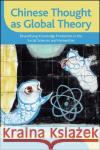
With a particular focus on Chinese thought, this volume explores how, and under what conditions, so-called "non-Western" traditions of thought can structure generally applicable social and political theory. Reversing the usual comparison between "local" Chinese application and "universal" theory, the work demonstrates how Chinese experiences and ideas offer systematic insight into shared social and political dilemmas. Contributors discuss how medieval Chinese understandings of causal heterogeneity can relieve impasses within contemporary historiography, how current economic and social...
With a particular focus on Chinese thought, this volume explores how, and under what conditions, so-called "non-Western" traditions of thought can str...
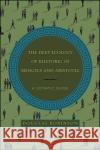
Mencius (385-303/302 BCE) and Aristotle (384-322 BCE) were contemporaries, but are often understood to represent opposite ends of the philosophical spectrum. Mencius is associated with the ecological, emergent, flowing, and connected; Artistotle with the rational, static, abstract, and binary. Douglas Robinson argues that in their conceptions of rhetoric, at least, Mencius and Aristotle are much more similar than different: both are powerfully socio-ecological, espousing and exploring collectivist thinking about the circulation of energy and social value through groups. The agent performing...
Mencius (385-303/302 BCE) and Aristotle (384-322 BCE) were contemporaries, but are often understood to represent opposite ends of the philosophical sp...
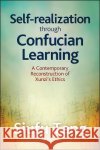
Self-Realization through Confucian Learning reconstructs Confucian thinker Xunzi's moral philosophy in response to the modern focus on self-realization. Xunzi (born around 310 BCE) claims that human xing ("nature" or "native conditions") is without an ethical framework and has a tendency to dominate, leading to bad judgments and bad behavior. Confucian ritual propriety (li) is needed to transform these human native conditions. Through li, people become self-directing: in control of feelings and desires and in command of their own lives. Siufu Tang explicates...
Self-Realization through Confucian Learning reconstructs Confucian thinker Xunzi's moral philosophy in response to the modern focus on self-rea...
This book presents a comprehensive analysis of the accounts of change of rule in Chinese texts from 600 to 100 BC, including the core philosophical works of the Chinese tradition attributed to Confucius, Mozi, Mencius, Xunzi, Hanfeizi, and Zhuangzi. Drawing from the early structuralism of Claude Levi-Strauss, Sarah Allan demonstrates that similar motifs repeat in every period, and argues that they serve, like myth, to mediate the inherent social conflict between kinship relations and that of the larger community. This conflict is embodied in the idea of a dynastic cycle, founded by a virtuous...
This book presents a comprehensive analysis of the accounts of change of rule in Chinese texts from 600 to 100 BC, including the core philosophical wo...
This volume brings together fourteen essays that explore the role of hiddenness--as both an object and a mode of representation--in the history of cultural production in China from the Warring States Period (403-221 BCE) to the end of the Qing Dynasty (1911) and beyond. The rhetorical use of various forms of hiddenness makes its appearance in literary, political, philosophical, and religious writings, as well as in the visual arts. Working in fields as disparate as traditional Chinese literature, religion, philosophy, history, medicine, and art, the contributors attempt to characterize one of...
This volume brings together fourteen essays that explore the role of hiddenness--as both an object and a mode of representation--in the history of cul...
The Analects of Confucius is arguably the single most influential work of China's cultural heritage. In this new English translation, Peimin Ni accomplishes the rare feat of simultaneously providing a faithful translation of the text, offering his own reading based on gongfu (practice) perspective, and presenting major alternative readings to help the reader understand how diverse interpretations and controversies arise. In addition to the inclusion of the original Chinese text, Ni adds a comprehensive introduction, a discussion of key terms, annotations, and extensive...
The Analects of Confucius is arguably the single most influential work of China's cultural heritage. In this new English translation, Peimin Ni...