"Federal Law and Southern Order," first published in 1987, examines the factors behind the federal government's long delay in responding to racial violence during the 1950s and 1960s. The book also reveals that it was apprehension of a militant minority of white racists that ultimately spurred acquiescent state and local officials in the South to protect blacks and others involved in civil rights activities. By tracing patterns of violent racial crimes and probing the federal government's persistent failure to punish those who committed the crimes, Michal R. Belknap tells how and why...
"Federal Law and Southern Order," first published in 1987, examines the factors behind the federal government's long delay in responding to racial ...
Much of the current reassessment of race, culture, and criminal justice in the nineteenth-century South has been based on intensive community studies. Drawing on previously untapped sources, the nine original papers collected here represent some of the best new work on how racial justice can be shaped by the particulars of time and place.
Although each essay is anchored in the local, several important larger themes emerge across the volume--such as the importance of personality and place, the movement of former slaves from the capriciousness of "plantation justice" to the (theoretically)...
Much of the current reassessment of race, culture, and criminal justice in the nineteenth-century South has been based on intensive community studi...
Perceptive writings and opinions of a powerful figure in twentieth-century civil rights legislation Federal Judge Frank M. Johnson of Alabama decided many of the most important civil rights and liberties cases in twentieth-century American history. During the 1950s and sixties, his decisions supported Martin Luther King Jr. and other civil rights fighters in their struggles for justice and equality. Johnson extended the Constitutional defense of individual rights for women, students, prisoners, mental health patients, poor criminal defendants, and voters during his active judicial career,...
Perceptive writings and opinions of a powerful figure in twentieth-century civil rights legislation Federal Judge Frank M. Johnson of Alabama decided ...
This is the first book-length study of a federal district court to analyze the revolutionary changes in its mission, structure, policies, and procedures over the past four decades. As Steven Harmon Wilson chronicles the court's attempts to keep pace with an expanding, diversifying caseload, he situates those efforts within the social, cultural, and political expectations that have prompted the increase in judicial seats from four in 1955 to the current nineteen.
Federal judges have progressed from being simply referees of legal disputes to managers of expanding courts, dockets, and...
This is the first book-length study of a federal district court to analyze the revolutionary changes in its mission, structure, policies, and proce...
The Supreme Court's 1857 Dred Scott decision denied citizenship to African Americans and enabled slavery's westward expansion. It has long stood as a grievous instance of justice perverted by sectional politics. Austin Allen finds that the outcome of Dred Scott hinged not on a single issue slavery but on a web of assumptions, agendas, and commitments held collectively and individually by Chief Justice Roger B. Taney and his colleagues.
Allen carefully tracks arguments made by Taney Court justices in more than 1,600 reported cases in the two decades prior to Dred Scott and in its...
The Supreme Court's 1857 Dred Scott decision denied citizenship to African Americans and enabled slavery's westward expansion. It has long stood as...
This groundbreaking study of the law and culture of slavery in the antebellum Deep South takes readers into local courtrooms where people settled their civil disputes over property. Buyers sued sellers for breach of warranty when they considered slaves to be physically or morally defective; owners sued supervisors who whipped or neglected slaves under their care.
How, asks Ariela J. Gross, did communities reconcile the dilemmas such trials raised concerning the character of slaves and masters? Although slaves could not testify in court, their character was unavoidably at issue--and so their...
This groundbreaking study of the law and culture of slavery in the antebellum Deep South takes readers into local courtrooms where people settled thei...
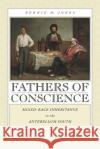
"Fathers of Conscience" examines high-court decisions in the antebellum South that involved wills in which white male planters bequeathed property, freedom, or both to women of color and their mixed-race children. These men, whose wills were contested by their white relatives, had used trusts and estates law to give their slave partners and children official recognition and thus circumvent the law of slavery. The will contests that followed determined whether that elevated status would be approved or denied by courts of law.
Bernie D. Jones argues that these will contests indicated a...
"Fathers of Conscience" examines high-court decisions in the antebellum South that involved wills in which white male planters bequeathed property,...
This study is the first to show how state courts enabled the mass expulsion of Native Americans from their southern homelands in the 1830s. Our understanding of that infamous period, argues Tim Alan Garrison, is too often molded around the towering personalities of the Indian removal debate, including President Andrew Jackson, Cherokee leader John Ross, and United States Supreme Court Justice John Marshall. This common view minimizes the impact on Indian sovereignty of some little-known legal cases at the state level.
Because the federal government upheld Native American self-dominion,...
This study is the first to show how state courts enabled the mass expulsion of Native Americans from their southern homelands in the 1830s. Our und...
In 1906 a white lawyer named Dabney Marshall argued a case before the Mississippi Supreme Court demanding the racial integration of juries. He carried out a plan devised by Mississippi's foremost black lawyer of the time: Willis Mollison. Against staggering odds, and with the help of a friendly newspaper editor, he won. How Marshall and his allies were able to force the court to overturn state law and precedent, if only for a brief period, at the behest of the U.S. Supreme Court is the subject of "Jury Discrimination," a book that explores the impact of the Civil War and Reconstruction on...
In 1906 a white lawyer named Dabney Marshall argued a case before the Mississippi Supreme Court demanding the racial integration of juries. He carr...