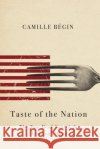
During the Depression, the Federal Writers' Project (FWP) dispatched scribes to sample the fare at group eating events like church dinners, political barbecues, and clambakes. Its America Eats project sought nothing less than to sample, and report upon, the tremendous range of foods eaten across the United States. Camille Begin shapes a cultural and sensory history of New Deal-era eating from the FWP archives. From -ravioli, the diminutive derbies of pastries, the crowns stuffed with a well-seasoned paste- to barbeque seasoning that integrated -salt, black pepper, dried red chili...
During the Depression, the Federal Writers' Project (FWP) dispatched scribes to sample the fare at group eating events like church dinners, political ...
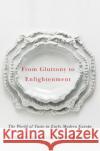
Scorned since antiquity as low and animal, the sense of taste is celebrated today as an ally of joy, a source of adventure, and an arena for pursuing sophistication. The French exalted taste as an entrA(c)e to ecstasy, and revolutionized their cuisine and language to express this new way of engaging with the world. Viktoria von Hoffmann explores four kinds of early modern texts--culinary, medical, religious, and philosophical--to follow taste's ascent from the sinful to the beautiful. Combining food studies and sensory history, she takes readers on an odyssey that redefined a fundamental...
Scorned since antiquity as low and animal, the sense of taste is celebrated today as an ally of joy, a source of adventure, and an arena for pursuing ...
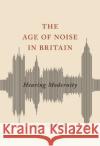
Sound transformed British life in the "age of noise" between 1914 and 1945. The sonic maelstrom of mechanized society bred anger and anxiety and even led observers to forecast the end of civilization. The noise was, as James G. Mansell shows, modernity itself, expressed in aural form, with immense implications for the construction of the self. Tracing the ideas, feelings, and representations prompted by life in early twentieth century Britain, Mansell examines how and why sound shaped the self. He works at the crux of cultural and intellectual history, analyzing the meanings that were...
Sound transformed British life in the "age of noise" between 1914 and 1945. The sonic maelstrom of mechanized society bred anger and anxiety and even ...
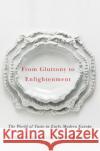
Scorned since antiquity as low and animal, the sense of taste is celebrated today as an ally of joy, a source of adventure, and an arena for pursuing sophistication. The French exalted taste as an entrA(c)e to ecstasy, and revolutionized their cuisine and language to express this new way of engaging with the world. Viktoria von Hoffmann explores four kinds of early modern texts--culinary, medical, religious, and philosophical--to follow taste's ascent from the sinful to the beautiful. Combining food studies and sensory history, she takes readers on an odyssey that redefined a fundamental...
Scorned since antiquity as low and animal, the sense of taste is celebrated today as an ally of joy, a source of adventure, and an arena for pursuing ...
Sound transformed British life in the "age of noise" between 1914 and 1945. The sonic maelstrom of mechanized society bred anger and anxiety and even led observers to forecast the end of civilization. The noise was, as James G. Mansell shows, modernity itself, expressed in aural form, with immense implications for the construction of the self. Tracing the ideas, feelings, and representations prompted by life in early twentieth century Britain, Mansell examines how and why sound shaped the self. He works at the crux of cultural and intellectual history, analyzing the meanings that were...
Sound transformed British life in the "age of noise" between 1914 and 1945. The sonic maelstrom of mechanized society bred anger and anxiety and even ...