What does it mean to read one nation's literature in another language? The considerable popularity of Russian literature in the English-speaking world rests almost entirely upon translations. In The Translator and the Text, Rachel May analyzes Russian literature in English translation, seeing it less as a substitute for the original works than as a subset of English literature, with its own cultural, stylistic, and narrative traditions.
What does it mean to read one nation's literature in another language? The considerable popularity of Russian literature in the English-speaking world...
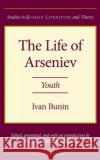
Ivan Bunin was the first Russian writer of the twentieth century to be award the Nobel Prize in literature. Like many other Russian writers, he emigrated after the Revolution and never returned to his homeland; The Life of Arseniev is the major work of his emigre period. In ways similar to Nabokov's Speak, Memory, Bunin's novel powerfully evokes the atmosphere of Russia in the decades before the Revolution and illuminates those Russian literary and cultural traditions eradicated in the Soviet era. This first full English-language edition updates earlier translations, taking...
Ivan Bunin was the first Russian writer of the twentieth century to be award the Nobel Prize in literature. Like many other Russian writers, he emigra...
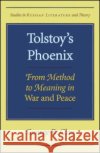
By examining Tolstoy's techniques and analyzing the structure of War and Peace, essayist George R. Clay offers a fresh perspective and jargon-free analysis of one of the world's greatest novels. Beginning with Tolstoy's strategies, devices, and structural elements, Clay moves beyond previous approaches and reveals the novel's larger thematic concerns, showing how all the pieces fit into an overall pattern that he calls the phoenix design.
By examining Tolstoy's techniques and analyzing the structure of War and Peace, essayist George R. Clay offers a fresh perspective and jargon-free ana...
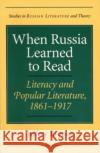
Late Imperial Russia's revolution in literacy touched nearly every aspect of daily life and culture, from social mobility and national identity to the sensibilities and projects of the country's greatest writers. Within a few decades, a ragtag assembly of semi-educated authors, publishers and distributors supplanted an oral tradition of songs and folktales with a language of popular imagination suitable for millions of new readers of common origins eager for entertainment and information. This title tells the story of this profound transformation of culture, custom and belief.
Late Imperial Russia's revolution in literacy touched nearly every aspect of daily life and culture, from social mobility and national identity to the...
A wide-ranging consideration of the nature and significance of Pushkin's African heritage Roughly in the year 1705, a young African boy, acquired from the seraglio of the Turkish sultan, was transported to Russia as a gift to Peter the Great. This child, later known as Abram Petrovich Gannibal, was to become Peter's godson and to live to a ripe old age, having attained the rank of general and the status of Russian nobility. More important, he was to become the great-grandfather of Russia's greatest national poet, Alexander Pushkin. It is the contention of the editors of this book, borne...
A wide-ranging consideration of the nature and significance of Pushkin's African heritage Roughly in the year 1705, a young African boy, acquired ...