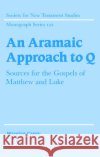
Maurice Casey reconstructs sources of Q: material found in the Gospels of Matthew and Luke (and not in the Gospel of Mark). He replaces the conventional model of Q as a single Greek document with something more complex. This reconstruction and interpretation of the Aramaic sources raises the credibility level of deeds attributed to Jesus in earliest recorded sources.
Maurice Casey reconstructs sources of Q: material found in the Gospels of Matthew and Luke (and not in the Gospel of Mark). He replaces the convention...
Alexandru Neagoe examines Luke's writings as an apologetic work, by focusing on the parts of Luke's story where the apologetic overtones seem most prominent--the trial narratives. In analyzing the trials of all major Lukan characters--Jesus, Peter, Stephen, and Paul, Neagoe argues that the narratives are best understood when viewed as part of Luke's apologia pro evangelio, a purpose which is in keeping with the author's declared aim to give his readers "assurance" about the "matters" in which they had been instructed (Luke 1:4).
Alexandru Neagoe examines Luke's writings as an apologetic work, by focusing on the parts of Luke's story where the apologetic overtones seem most pro...
This study is an examination of the influence of angelology on the Christology of the Apocalypse of John. In the Apocalypse, Jesus appears in glorious form reminiscent of angels in Jewish and Christian literature. Dr. Carrell asks what significance this has for the Christology of the Apocalypse. He concludes that, although he has the form and function of an angel, Jesus is clearly portrayed as divine, and that through this portrayal, the Apocalypse both upholds monotheism while providing a means for Jesus to be presented in visible, glorious form to his Church.
This study is an examination of the influence of angelology on the Christology of the Apocalypse of John. In the Apocalypse, Jesus appears in glorious...
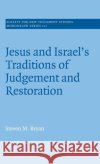
This book examines the eschatology of Jesus by evaluating his appropriation of sacred traditions related to Israel's restoration and addresses the way in which Jesus' future expectations impinged upon his understanding of Jewish society. It breaks new ground by considering Jesus' expectations regarding key constitutional features of the eschaton--the shape of the people of God, purity, Land and Temple. Bryan demonstrates that Jesus' anticipation of coming national judgement led him to use Israel's sacred traditions in ways that differed significantly from their use by his contemporaries.
This book examines the eschatology of Jesus by evaluating his appropriation of sacred traditions related to Israel's restoration and addresses the way...
James McGrath offers a convincing explanation of how and why John arrived at a christological portrait of Jesus that is so different from that of other New Testament authors, and yet at the same time clearly has its roots in earlier tradition. McGrath suggests that as the author of the Fourth Gospel sought to defend his beliefs about Jesus against the objections brought by opponents, he developed and drew out further implications from the beliefs he inherited. The book studies this process using insights from the field of sociology.
James McGrath offers a convincing explanation of how and why John arrived at a christological portrait of Jesus that is so different from that of othe...
This book offers a clear, thoughtful portrait of early Christian understandings of leadership by studying Paul's speech at Miletus (Acts 20.18b-35). Dr. Walton compares the picture found there with Luke's presentation of Jesus' model of leadership and Paul's self-portrait in 1 Thessalonians. It will assist scholars in considering Luke's portrait of Paul in Acts by providing helpful criteria for identifying parallel ideas, as well as by showing that Luke and Paul are very close in their understanding of how Christian leaders are to lead.
This book offers a clear, thoughtful portrait of early Christian understandings of leadership by studying Paul's speech at Miletus (Acts 20.18b-35). D...
This study discusses the relationship between the epistles of Paul and classical rhetoric by focusing on recent studies of Galatians. The argument, built on a close reading of handbook evidence, receives support from a survey of the Church Fathers' discussions of the nature of New Testament Greek. Philip Kern concludes that Paul did not write according to the conventions of oratory and that therefore the ancient handbooks can contribute little to the interpretation of his epistles.
This study discusses the relationship between the epistles of Paul and classical rhetoric by focusing on recent studies of Galatians. The argument, bu...
James M. Scott focuses on a particular Old Testament pseudepigraphon--The Book of Jubilees. The book takes an interdisciplinary approach based on detailed analysis of primary sources, much of which is seldom considered by New Testament scholars, and explores the neglected topic of ancient geographical conceptions. By studying geographical aspects of the work, Dr. Scott is able to relate Jubilees to both Old and New Testament traditions, bringing important new insights into Christian concepts of annunciation.
James M. Scott focuses on a particular Old Testament pseudepigraphon--The Book of Jubilees. The book takes an interdisciplinary approach based on deta...
From the very beginning, following the Christian way commonly generated tensions within families. Insiders and outsiders alike bear witness to the threat to household and family ties posed by a transfer of the believer's primary allegiance to Jesus. This study shows that the demand to subordinate family ties in response to the call of Jesus is quite intelligible in the context of beliefs and practices both in Judaism and in Greco-Roman philosophy of the first century. Such background is related to the Gospels of Mark and Matthew.
From the very beginning, following the Christian way commonly generated tensions within families. Insiders and outsiders alike bear witness to the thr...
This book goes behind the Greek text of the Gospel of Mark and reconstructs some of its sources in the original Aramaic, the language that Jesus spoke. This work has been made possible by the publication of all the Aramaic Dead Sea Scrolls, which provide a basis of Jewish Aramaic for the right period. By reconstructing Aramaic sources and interpreting them in their original context, this book raises the level of proof that Jesus said and did some of the things attributed to him in our earliest sources.
This book goes behind the Greek text of the Gospel of Mark and reconstructs some of its sources in the original Aramaic, the language that Jesus spoke...