There is a steady and growing scholarly, as well as popular interest in Hindu religion - especially devotional (bhakti) traditions as forms of spiritual practice and expressions of divine embodiment. Associated with this is the attention to sacred images and their worship.
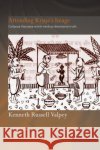
Attending Krishna's Image extends the discussion on Indian images and their worship, bringing historical and comparative dimensions and considering Krishna worship in the context of modernity, both in India and the West. It focuses on one specific worship tradition, the Chaitanya Vaishnava...
There is a steady and growing scholarly, as well as popular interest in Hindu religion - especially devotional (bhakti) traditions as form...
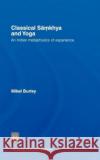
Samkhya and Yoga are two of the oldest and most influential systems of classical Indian philosophy. This book provides a thorough analysis of the systems in order to fully understand Indian philosophy. Placing particular emphasis on the metaphysical schema which underlies both concepts, the author adeptly develops a new interpretation of the standard views on Samkhya and Yoga.
Drawing upon existing sources and using insights from both Eastern and Western philosophy and religious practice, this comprehensive interpretation is respectful to the underlying spiritual purpose of the...
Samkhya and Yoga are two of the oldest and most influential systems of classical Indian philosophy. This book provides a thorough analysis of the s...
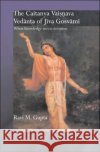
The Chaitanya Vaishnava tradition is famous for its depth of devotion to Krishna, the blue-hued Deity. Chaitanya Vaishnavas are known for having refined the practice and aesthetics of devotion into a sophisticated science. This imposing devotional edifice was constructed upon a solid foundation of philosophical argument and understanding. In this book, Ravi Gupta sheds new light on the contribution of Chaitanya Vaishnavism to the realm of Indian philosophy. He explores the hermeneutical tools employed, the historical resources harnessed, the structure of the arguments made, and the relative...
The Chaitanya Vaishnava tradition is famous for its depth of devotion to Krishna, the blue-hued Deity. Chaitanya Vaishnavas are known for having refin...
The R m yana of V lm ki is considered by many contemporary Hindus to be a foundational religious text. But this understanding is in part the result of a transformation of the epic s receptive history, a hermeneutic project which challenged one characterization of the genre of the text, as a work of literary culture, and replaced it with another, as a work of remembered tradition.
This book examines R m yana commentaries, poetic retellings, and praise-poems produced by intellectuals within the r vaisnava order of South India from 1250 to 1600 and shows how these intellectuals...
The R m yana of V lm ki is considered by many contemporary Hindus to be a foundational religious text. But this understanding is in part the result...
This text examines why and how Gandhi and his ideas continue to matter. It captures what it is that makes him challenge, puzzle, and exasperate, to discover how he continues to be relevant, even contemporary, and to define what saves him from simply fading into oblivion.
This text examines why and how Gandhi and his ideas continue to matter. It captures what it is that makes him challenge, puzzle, and exasperate, to di...
Salvific space is one of the central ideas in the Hindu traditions of pilgrimage, and concerns the ability of space, especially sites associated with bodies of water such as rivers and lakes, to grant salvific rewards. Focusing on religious, historical and sociological questions about the phenomenon, this book investigates the narratives, rituals, history and structures of salvific space, and looks at how it became a central feature of Hinduism. Arguing that salvific power of place became a major dimension of Hinduism through a development in several stages, the book analyses the historical...
Salvific space is one of the central ideas in the Hindu traditions of pilgrimage, and concerns the ability of space, especially sites associated with ...
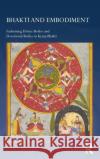
The historical shift from Vedic traditions to post-Vedic bhakti (devotional) traditions is accompanied by a shift from abstract, translocal notions of divinity to particularized, localized notions of divinity and a corresponding shift from aniconic to iconic traditions and from temporary sacrificial arenas to established temple sites. In Bhakti and Embodiment Barbara Holdrege argues that the various transformations that characterize this historical shift are a direct consequence of newly emerging discourses of the body in bhakti traditions in which constructions of...
The historical shift from Vedic traditions to post-Vedic bhakti (devotional) traditions is accompanied by a shift from abstract, translocal ...
The R m yana, an ancient epic of India, with audiences across vast stretches of time and geography, continues to influence numberless readers socially and morally through its many re-tellings. Made available in English for the first time, the 16th century version presented here is by Candr vat, a woman poet from Bengal. It is a highly individual rendition as a tale told from a woman's point of view which, instead of celebrating masculine heroism, laments the suffering of women caught in the play of male ego.
This book presents a translation and commentary on the text, with an extensive...
The R m yana, an ancient epic of India, with audiences across vast stretches of time and geography, continues to influence numberless readers socia...
Samkhya and Yoga are two of the oldest and most influential systems of classical Indian philosophy. This book provides a thorough analysis of the systems in order to fully understand Indian philosophy. Placing particular emphasis on the metaphysical schema which underlies both concepts, the author adeptly develops a new interpretation of the standard views on Samkhya and Yoga.
Drawing upon existing sources and using insights from both Eastern and Western philosophy and religious practice, this comprehensive interpretation is respectful to the underlying spiritual purpose of the...
Samkhya and Yoga are two of the oldest and most influential systems of classical Indian philosophy. This book provides a thorough analysis of the s...
Vaisesika is one of the six systems of Hindu philosophy. It represents a pluralistic realism and is usually held to be an atomistic, metaphysical theory. This book explores the basic tenets of the Vaisesika classical school of Indian philosophy from a new perspective.
Vaisesika is one of the six systems of Hindu philosophy. It represents a pluralistic realism and is usually held to be an atomistic, metaphysical theo...