Since the end of the Cold War, considerable scholarly debates have been devoted to the nature and scope of international state-building interventions in 'fragile', post-colonial states and their effectiveness in instituting democratic rule.
By examining the construction of political institutions in East Timor, this book highlights the relationship between the social and political realms during these processes. Focusing on the roles of East Timorese leaders and civil society organisations during the independence movement, it analyses the effectiveness of democracy building...
Since the end of the Cold War, considerable scholarly debates have been devoted to the nature and scope of international state-building interventio...
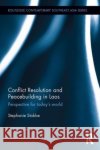
Using the case study of Laos, a small landlocked country in Southeast Asia that has seen some of the world s most brutal forms of poverty and violence, this book examines the power of traditional and indigenous conflict resolution systems as a tool for social justice. It explores how the conflict resolution mechanisms build infrastructures that support social harmony, and address larger scale conflicts within communities, nations and international arenas.
The book discusses how over centuries, foreign powers have polarised and used the ethnic groups of Laos to support their own agendas,...
Using the case study of Laos, a small landlocked country in Southeast Asia that has seen some of the world s most brutal forms of poverty and viole...
In 2002, East Timor became an independent state following a long conflict with Indonesia, and went on to adopt a semi-presidential form of government. In a semi-presidential system there is a directly elected fixed-term president, prime minister and government who are collectively responsible for the legislature. Over 50 countries in the world have adopted such a system.
This book examines the politics of semi-presidentialism in East Timor from 2002-2012 and post-2012 political developments. It analyses the impact of semi-presidentialism on the performance of East Timor s...
In 2002, East Timor became an independent state following a long conflict with Indonesia, and went on to adopt a semi-presidential form of governme...
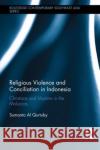
Maluku in eastern Indonesia is the home to Muslims, Protestants, and Catholics who had for the most part been living peaceably since the sixteenth century. In 1999, brutal conflicts broke out between local Christians and Muslims, and escalated into large-scale communal violence once the Laskar Jihad, a Java-based armed jihadist Islamic paramilitary group, sent several thousand fighters to Maluku. As a result of this escalated violence, the previously stable Maluku became the site of devastating interreligious wars.
This book focuses on the interreligious violence and conciliation in...
Maluku in eastern Indonesia is the home to Muslims, Protestants, and Catholics who had for the most part been living peaceably since the sixteenth ...
Democracy in Southeast Asia has been explained using a number of factors including historical legacies, social structures, developmental levels, transitional processes, and institutional designs while other elements, such as elite-level relations and social coalitions, have been overlooked.
This book offers a new explanation for democracy s collapse or persistence in Southeast Asia today. Focusing on Thailand, the Philippines and Indonesia the three countries in the region with the most democratic experience William Case shows that existing accounts based on contextual...
Democracy in Southeast Asia has been explained using a number of factors including historical legacies, social structures, developmental levels, tr...
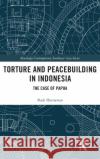
This book analyses state-sponsored torture and peacebuilding in Indonesia. It focuses on the case study of Papua, which provides a thought-provoking example of the intricacy and complexity of building peace amidst enduring conflict and violence. The author examines complex power relations that have constructed the gruesome picture of the fifty-year practice of torture in Papua as well as the ongoing Papuan peacebuilding movements that resist domineering power of the Indonesian state over Papuans. Conceptualising 'theatres of torture and peace', the book argues that torture in Papua is...
This book analyses state-sponsored torture and peacebuilding in Indonesia. It focuses on the case study of Papua, which provides a thought-provokin...
The mainstream agri-food system in Thailand has been shaped to aid capital accumulation by domestic and transnational hegemonic forces, and is currently sustained through hegemonic agri-food production-distribution, governance structures and ideational order. However, sustainable agriculture and land reform movements have to certain extents managed to offer alternatives.
This book adopts a neo-Marxist and Gramscian approach to studying the political economy of the agricultural and food system in Thailand (1990-2014). The author argues that hegemonic forces have many measures to...
The mainstream agri-food system in Thailand has been shaped to aid capital accumulation by domestic and transnational hegemonic forces, and is curr...
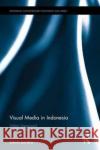
In the age of digital communication and global capitalism, people s mental, social and natural environments are interconnected in complex and often unpredictable ways.
This book focuses on the visual media, one of the key factors in shaping the contemporary ecology of colliding environments. Case-studies include video artists, community media activists, television programme makers and literary authors in the fourth most populous country in the world, Indonesia. The author demonstrates that these actors are part of an international creative and social vanguard that reflect on,...
In the age of digital communication and global capitalism, people s mental, social and natural environments are interconnected in complex and often...
Over the past decade, Laos' exposure to global capitalism has resulted in extensive economic and social transformations. Precapitalist social structures both persist and are transformed into a particular configuration of classes. This entails increasing social inequality, a widening range of habitus and new forms of ethos.
This book pursues the theoretical aim of shedding light on the old question raised by Max Weber about the relation between capitalism, ethos and society. The empirical study consists of a description of the social structures, their embodiment in the habitus and...
Over the past decade, Laos' exposure to global capitalism has resulted in extensive economic and social transformations. Precapitalist social struc...