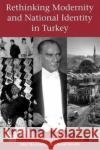
In the first two decades after W.W.II, social scientist heralded Turkey as an exemplar of a 'modernizing' nation in the Western mold. Images of unveiled women working next to clean-shaven men, healthy children in school uniforms, and downtown Ankara's modern architecture all proclaimed the country's success. Although Turkey's modernization began in the late Ottoman era, the establishment of the secular nation-state by Kemal Ataturk in 1923 marked the crystallization of an explicit, elite-driven 'project of modernity' that took its inspiration exclusively from the West. The essays in this...
In the first two decades after W.W.II, social scientist heralded Turkey as an exemplar of a 'modernizing' nation in the Western mold. Images of unv...
In the Ottoman Empire, many members of the ruling elite were legally slaves of the sultan and therefore could, technically, be ordered to surrender their labor, their property, or their lives at any moment. Nevertheless, slavery provided a means of social mobility, conferring status and political power within the military, the bureaucracy, or the domestic household and formed an essential part of patronage networks. Ehud R. Toledano's exploration of slavery from the Ottoman viewpoint is based on extensive research in British, French, and Turkish archives and offers rich, original, and...
In the Ottoman Empire, many members of the ruling elite were legally slaves of the sultan and therefore could, technically, be ordered to surrender...
Islamic popular preachers and storytellers had enormous influence in defining common religious knowledge and faith in the medieval Near East. Jonathan Berkey's book illuminates the popular culture of religious storytelling. It draws on chronicles, biographical dictionaries, sermons, and tales -- but especially on a number of medieval treatises critical of popular preachers, and also a vigorous defense of them which emerged in fourteenth-century Egyptian Sufi circles.
Popular preachers drew inspiration and legitimacy from the rise of Sufi mysticism, with its emphasis on internal...
Islamic popular preachers and storytellers had enormous influence in defining common religious knowledge and faith in the medieval Near East. Jonat...
The transformation of Islamic architecture and ornament during the eleventh and twelfth centuries signaled profound cultural changes in the Islamic world. Yasser Tabbaa explores with exemplary lucidity the geometric techniques that facilitated this transformation, and investigates the cultural processes by which meaning was produced within the new forms. Iran, Iraq, and Syria saw the development of proportional calligraphy, vegetal and geometric arabesque, muqarnas (stalactite) vaulting, and other devices that became defining features of medieval Islamic architecture. Ultimately, the forms...
The transformation of Islamic architecture and ornament during the eleventh and twelfth centuries signaled profound cultural changes in the Islamic...
The Ottoman Empire was one of the most significant forces in world history and yet little attention is paid to its rich cultural life. For the people of the Ottoman Empire, lyrical poetry was the most prized literary activity. People from all walks of life aspired to be poets. Ottoman poetry was highly complex and sophisticated and was used to express all manner of things, from feelings of love to a plea for employment.
This collection offers free verse translations of 75 lyric poems from the mid-fourteenth to the early twentieth centuries, along with the Ottoman Turkish texts and,...
The Ottoman Empire was one of the most significant forces in world history and yet little attention is paid to its rich cultural life. For the peop...