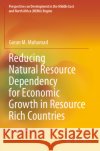
This book examines the reduction of natural resource revenue dependency in resource-rich countries. Such countries experience lower economic growth due to factors of high volatility in commodity prices, reduction in accountability, undermining of the competitiveness of other economic sectors, and weak power of institutions. The analysis is based on an identified gap in the literature regarding how private sector development and public sector development affect the degree of dependency on resource revenue in natural resource-rich countries.
This book studies the interaction between...
This book examines the reduction of natural resource revenue dependency in resource-rich countries. Such countries experience lower economic growth...
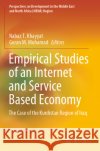
This book is a collection of eight studies covering several areas pertinent to the current technological and banking services situation in the Kurdistan region of Iraq. The economy of the Kurdistan Region of Iraq (KRI) is mainly dependent on oil revenue. The oil export revenue constitutes more than 90% of the government’s fiscal revenue. In addition to that, the public sector plays an excessive role in the economy, with public spending to GDP being over 70% while revenue from taxation constitutes less than 30% of total revenue.
As the economy is not...
This book is a collection of eight studies covering several areas pertinent to the current technological and banking services situation in the Kurd...
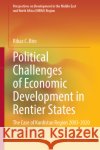
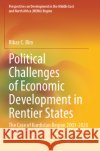
This book investigates the relationship between politics and economics in rentier states, with a particular focus on the Kurdistan Region of Iraq from 2003 to 2020. Resource-rich states face low levels of economic growth due to the various factors of corruption, weak performance of institutions, poor levels of accountability and transparency in governance, and absence of rule of law. While most previous studies of the topic focus on either the political or economic concerns, this book focuses on their interaction.
The book explores the political hurdles in resource-rich states,...
This book investigates the relationship between politics and economics in rentier states, with a particular focus on the Kurdistan Region of Iraq f...
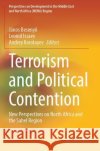
Against the backdrop of terrorist activity and the emergence of new conflicts in the MENA region, this book identifies factors of political contestation and analyzes organizational forms and dynamics of terrorism and conflict in North Africa and the Sahel. Written by an international selection of authors from different fields, the book covers topics such as the radicalization of terrorist organizations operating in the region, the financing of terrorism, the role of migration, the radicalization of women, the influence and motives of great powers and external factors such as France in...
Against the backdrop of terrorist activity and the emergence of new conflicts in the MENA region, this book identifies factors of political con...
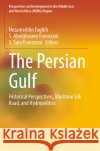
This edited volume provides a comprehensive exploration of the Persian Gulf, covering historical naming and trade relationships, political and military strategies, and the impact of tribal systems on regional security. It spans from the Sassanid period to modern times, examining the role of the Maritime Silk Road and the strategic importance of water resources. Through contributions from various experts, the book offers a multi-dimensional view of the Persian Gulf, making it an essential resource for scholars and students interested in the region's complex dynamics.
This edited volume provides a comprehensive exploration of the Persian Gulf, covering historical naming and trade relationships, politica...
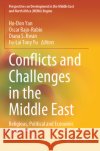
This book examines religious, political, and economic conflicts in the Middle East. Written by experts and scholars from various fields, it provides a better understanding of the interwoven impact among religious, political, and economic conflicts in the Middle East. The contributions cover the most important and controversial issues in world affairs, including confrontations between Christianity and Islam and between Sunnis and Shiites; the disputes between Israel and Palestine, the Russian-Ukrainian War, ISIS, competition for oil resources, the Muslim Brotherhood,...
This book examines religious, political, and economic conflicts in the Middle East. Written by experts and scholars from various fields, it provide...
This book investigates the intricacies of resource management performance across various sectors within the Kurdistan Region of Iraq. With 13 in-depth studies, it examines the region's evolution from an agricultural society to an emerging market since the collapse of the Saddam Hussein regime in 2003. Oil and gas revenue, comprising over 85 percent of fiscal revenues, has attracted multinational companies and international humanitarian organizations, although external factors such as the ISIS conflict and global economic downturns have hindered their performance. Additionally, conflicts...
This book investigates the intricacies of resource management performance across various sectors within the Kurdistan Region of Iraq. With 13 in-de...
This book investigates the relationship between politics and economics in rentier states, with a particular focus on the Kurdistan Region of Iraq from 2003 to 2020. Resource-rich states face low levels of economic growth due to the various factors of corruption, weak performance of institutions, poor levels of accountability and transparency in governance, and absence of rule of law. While most previous studies of the topic focus on either the political or economic concerns, this book focuses on their interaction.
The book explores the political hurdles in resource-rich states,...
This book investigates the relationship between politics and economics in rentier states, with a particular focus on the Kurdistan Region of Iraq f...