Diaspora studies have tended to privilege urban landscapes over rural ones, wanting to avoid the racial homogeneity, conservatism, and xenophobia usually associated with the latter. In Second Arrivals: Landscape and Belonging in Contemporary Writing of the Americas, Sarah Phillips Casteel examines the work of writers such as Derek Walcott, V. S. Naipaul, Jamaica Kincaid, Philip Roth, and Joy Kogawa, among others, to show how it expresses the appeal that rural and wilderness spaces can hold for the diasporic imagination.
Casteel proposes an alternative to postmodern celebrations of...
Diaspora studies have tended to privilege urban landscapes over rural ones, wanting to avoid the racial homogeneity, conservatism, and xenophobia u...
According to Martinican theorist Edouard Glissant, the twentieth century has been dominated in the Caribbean by a passion for the remembrance of colonial history. But while Glissant identifies this passion for memory in the thematizing of nature in Caribbean modernist life, scholar Guillermina De Ferrari claims it is the vulnerability of the human body that has become the trope to which Caribbean postmodernist authors largely appeal in their efforts to revise the discourse that has shaped postcolonial societies. In Vulnerable States: Bodies of Memory in Contemporary Caribbean...
According to Martinican theorist Edouard Glissant, the twentieth century has been dominated in the Caribbean by a passion for the remembrance of co...
On January 1, 1804, Jean-Jacques Dessalines declared the independence of Haiti, thus bringing to an end the only successful slave revolution in history and transforming the colony of Saint-Domingue into the second independent state in the Western Hemisphere. The historical significance of the Haitian Revolution has been addressed by numerous scholars, but the importance of the Revolution as a cultural and political phenomenon has only begun to be explored. Although the path-breaking work of Michel-Rolph Trouillot and Sibylle Fischer has illustrated the profound silences surrounding the...
On January 1, 1804, Jean-Jacques Dessalines declared the independence of Haiti, thus bringing to an end the only successful slave revolution in his...
Maryse Conde is a Guadeloupean writer and critic whose work has challenged the categories of race, language, gender, and geography that inform contemporary literary and critical debates. In Signs of Dissent, the first full-length study in English on Conde, Dawn Fulton situates this award-winning author's work in the context of current theories of cultural identity in order to foreground Conde's unique contributions to these discussions. Staging a dialogue between Conde's novels and the field of postcolonial studies, Fulton argues that Conde enacts a strategy of -critical...
Maryse Conde is a Guadeloupean writer and critic whose work has challenged the categories of race, language, gender, and geography that inform cont...
The literature of Cuba, argues Eduardo Gonzalez in this new book, takes on quite different features depending on whether one is looking at it from -the inside- or from -the outside, - a view that in turn is shaped by official political culture and the authors it sanctions or by those authors and artists who exist outside state policies and cultural politics. Gonzalez approaches this issue by way of two twentieth-century writers who are central to the canon of gay homoerotic expression and sensibility in Cuban culture: Jose Lezama Lima (1910-1976) and Reinaldo Arenas (1943-1990). Drawing on...
The literature of Cuba, argues Eduardo Gonzalez in this new book, takes on quite different features depending on whether one is looking at it from ...
The Purloined Islands offers the first book-length exploration of literary and cultural exchanges between the United States and the Caribbean during the roughly eighty-year period of their greatest interaction, from the close of the Spanish-American War to the Cuban Revolution. The interconnected histories of colonization, migration, slavery, and political struggle thrust writers from both regions into a vibrant literary conversation across national borders. Jeff Karem charts this dialogue and its patterns of influence through an analysis of key literary and cultural sources in...
The Purloined Islands offers the first book-length exploration of literary and cultural exchanges between the United States and the Caribbe...
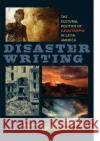
In the aftermath of disaster, literary and other cultural representations of the event can play a role in the renegotiation of political power. In Disaster Writing, Mark D. Anderson analyzes four natural disasters in Latin America that acquired national significance and symbolism through literary mediation: the 1930 cyclone in the Dominican Republic, volcanic eruptions in Central America, the 1985 earthquake in Mexico City, and recurring drought in northeastern Brazil.
Taking a comparative and interdisciplinary approach to the disaster narratives, Anderson explores concepts...
In the aftermath of disaster, literary and other cultural representations of the event can play a role in the renegotiation of political power. In ...
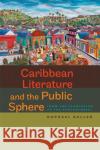
Bringing together the most exciting recent archival work in anglophone, francophone, and hispanophone Caribbean studies, Raphael Dalleo constructs a new literary history of the region that is both comprehensive and innovative. He examines how changes in political, economic, and social structures have produced different sets of possibilities for writers to imagine their relationship to the institutions of the public sphere. In the process, he provides a new context for rereading such major writers as Mary Seacole, Jose Marti, Jacques Roumain, Claude McKay, Marie Chauvet, and George Lamming,...
Bringing together the most exciting recent archival work in anglophone, francophone, and hispanophone Caribbean studies, Raphael Dalleo constructs ...
As in many literatures of the New World grappling with issues of slavery and freedom, stories of racial insurrection frequently coincided with stories of cross-racial romance in nineteenth-century U.S. print culture. Colleen O'Brien explores how authors such as Harriet Jacobs, Elizabeth Livermore, and Gertrudis Gomez de Avellaneda imagined the expansion of race and gender-based rights as a hemispheric affair, drawing together the United States with Africa, Cuba, and other parts of the Caribbean. Placing less familiar women writers in conversation with their more famous...
As in many literatures of the New World grappling with issues of slavery and freedom, stories of racial insurrection frequently coincided with stor...
The Haitian Revolution (1791-1804) reshaped the debates about slavery and freedom throughout the Atlantic world, accelerated the abolitionist movement, precipitated rebellions in neighboring territories, and intensified both repression and antislavery sentiment. The story of the birth of the world's first independent black republic has since held an iconic fascination for a diverse array of writers, artists, and intellectuals throughout the Atlantic diaspora. Examining twentieth-century responses to the Haitian Revolution, Philip Kaisary offers a profound new reading of the representation...
The Haitian Revolution (1791-1804) reshaped the debates about slavery and freedom throughout the Atlantic world, accelerated the abolitionist movem...