Western Apaches have long regarded the corner of Arizona encompassing Aravaipa Canyon as their sacred homeland. This book examines the evolving relationship between this people and this place, illustrating the enduring power of Aravaipa to shape and sustain contemporary Apache society. Big Sycamore Stands Alone: The Western Apaches, Aravaipa, and the Struggle for Place articulates Aravaipa's cultural legacy as seen through the eyes of some of its descendants, bringing Apache voices, knowledge, and perspectives to the fore. Focusing on the Camp Grant Massacre as its narrative centerpiece, Ian...
Western Apaches have long regarded the corner of Arizona encompassing Aravaipa Canyon as their sacred homeland. This book examines the evolving relati...
The history of Indian removal has often followed a single narrative arc, one that begins with President Andrew Jackson's Indian Removal Act of 1830 and follows the Cherokee Trail of Tears. In that conventional account, the Black Hawk War of 1832 encapsulates the experience of tribes in the territories north of the Ohio River. But Indian removal in the Old Northwest was much more complicated--involving many Indian peoples and more than just one policy, event, or politician. In Land Too Good for Indians, historian John P. Bowes takes a long-needed closer, more expansive look at...
The history of Indian removal has often followed a single narrative arc, one that begins with President Andrew Jackson's Indian Removal Act of ...
Well before the creation of the United States, the Cherokee people administered their own social policy a form of what today might be called social welfare based on matrilineal descent, egalitarian relations, kinship obligations, and communal landholding. The ethic of gadugi, or work coordinated for the social good, was at the heart of this system. Serving the Nation explores the role of such traditions in shaping the alternative social welfare system of the Cherokee Nation, as well as their influence on the U.S. government s social policies. Faced with removal and...
Well before the creation of the United States, the Cherokee people administered their own social policy a form of what today might be called soci...
Akwesasne territory straddles the U.S.-Canada border in upstate New York, Ontario, and Quebec. In 1979, in the midst of a major conflict regarding self-governance, traditional Mohawks there asserted their sovereign rights to self-education. Concern over the loss of language and culture and clashes with the public school system over who had the right to educate their children sparked the birth of the Akwesasne Freedom School (AFS) and its grassroots, community-based approach. In Free to Be Mohawk, Louellyn White traces the history of the AFS, a tribally controlled school operated...
Akwesasne territory straddles the U.S.-Canada border in upstate New York, Ontario, and Quebec. In 1979, in the midst of a major conflict regarding sel...
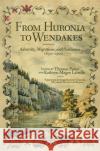
From the first contact with Europeans to the French and Indian War, the American Revolution, and the War of 1812, the Wendat peoples have been an intrinsic part of North American history. Although the story of these peoples also known as Wyandot or Wyandotte has been woven into the narratives of European-Native encounters, colonialism, and conquest, the Wendats later experiences remain largely missing from history. From Huronia to Wendakes seeks to fill this gap, countering the common impression that these peoples disappeared after 1650, when they were driven from their homeland...
From the first contact with Europeans to the French and Indian War, the American Revolution, and the War of 1812, the Wendat peoples have been an...
Many stories that non-Natives tell about Native people emphasize human suffering, the inevitability of loss, and eventual extinction, whether physical or cultural. But the stories Northern Cheyennes tell about themselves emphasize survival, connectedness, and commitment to land and community. In writing Webs of Kinship, anthropologist Christina Gish Hill has worked with government records and other historical documents, as well as the oral testimonies of today s Northern Cheyennes, to emphasize the ties of family, rather than the ambitions of individual leaders, as the central...
Many stories that non-Natives tell about Native people emphasize human suffering, the inevitability of loss, and eventual extinction, whether phy...
The history of Indian removal has often followed a single narrative arc, one that begins with President Andrew Jackson's Indian Removal Act of 1830 and follows the Cherokee Trail of Tears. In that conventional account, the Black Hawk War of 1832 encapsulates the experience of tribes in the territories north of the Ohio River. But Indian removal in the Old Northwest was much more complicated--involving many Indian peoples and more than just one policy, event, or politician. In Land Too Good for Indians, historian John P. Bowes takes a long-needed closer, more expansive look at...
The history of Indian removal has often followed a single narrative arc, one that begins with President Andrew Jackson's Indian Removal Act of ...