Since the 1960s, many historians have condemned Booker T. Washington as a problematic, even negative, influence on African American progress. This attitude dramatically contrasts with the nationwide outpouring of grief and reverence that followed Washington's death in 1915. Kenneth M. Hamilton describes how, when, where, and why Americans commemorated the life of Booker T. Washington. For months following his death, tens of thousands of Americans, especially blacks, honored his memory. Their memorials revealed that Washington enjoyed widespread national support for his vision of America and...
Since the 1960s, many historians have condemned Booker T. Washington as a problematic, even negative, influence on African American progress. This att...
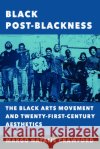
A 2008 cover of The New Yorker featured a much-discussed Black Power parody of Michelle and Barack Obama. The image put a spotlight on how easy it is to flatten the Black Power movement as we imagine new types of blackness. Margo Natalie Crawford argues that we have misread the Black Arts Movement's call for blackness. We have failed to see the movement's anticipation of the "new black" and "post-black." Black Post-Blackness compares the black avant-garde of the 1960s and 1970s Black Arts Movement with the most innovative spins of twenty-first century black aesthetics. Crawford zooms...
A 2008 cover of The New Yorker featured a much-discussed Black Power parody of Michelle and Barack Obama. The image put a spotlight on how easy it is ...
Along the Streets of Bronzeville examines the flowering of African American creativity, activism, and scholarship in the South Side Chicago district known as Bronzeville during the period between the Harlem Renaissance in the 1920s and the Black Arts Movement of the 1960s. Poverty stricken, segregated, and bursting at the seams with migrants, Bronzeville was the community that provided inspiration, training, and work for an entire generation of diversely talented African American authors and artists who came of age during the years between the two world wars. In this significant...
Along the Streets of Bronzeville examines the flowering of African American creativity, activism, and scholarship in the South Side Chicago dis...
Jazz Internationalism offers a bold reconsideration of jazz's influence in Afro-modernist literature. Ranging from the New Negro Renaissance through the social movements of the 1960s, John Lowney articulates nothing less than a new history of Afro-modernist jazz writing. Jazz added immeasurably to the vocabulary for discussing radical internationalism and black modernism in leftist African American literature. Lowney examines how Claude McKay, Ann Petry, Langston Hughes, and many other writers employed jazz as both a critical social discourse and mode of artistic expression to explore the...
Jazz Internationalism offers a bold reconsideration of jazz's influence in Afro-modernist literature. Ranging from the New Negro Renaissance through t...
From Jean Baptiste Point DuSable to Oprah Winfrey, black entrepreneurship has helped define Chicago. Robert E. Weems Jr. and Joseph P. Chambers curate a collection of essays that place the city as the center of the black business world in the United States. Ranging from titans like Anthony Overton and Jesse Binga to McDonald's operators to black organized crime, the scholars shed light on the long overlooked history of African American work and entrepreneurship since the Great Migration. Together they examine how factors like the influx of southern migrants and the city's unique segregation...
From Jean Baptiste Point DuSable to Oprah Winfrey, black entrepreneurship has helped define Chicago. Robert E. Weems Jr. and Joseph P. Chambers curate...
Jazz Internationalism offers a bold reconsideration of jazz's influence in Afro-modernist literature. Ranging from the New Negro Renaissance through the social movements of the 1960s, John Lowney articulates nothing less than a new history of Afro-modernist jazz writing. Jazz added immeasurably to the vocabulary for discussing radical internationalism and black modernism in leftist African American literature. Lowney examines how Claude McKay, Ann Petry, Langston Hughes, and many other writers employed jazz as both a critical social discourse and mode of artistic expression to explore the...
Jazz Internationalism offers a bold reconsideration of jazz's influence in Afro-modernist literature. Ranging from the New Negro Renaissance through t...
From Jean Baptiste Point DuSable to Oprah Winfrey, black entrepreneurship has helped define Chicago. Robert E. Weems Jr. and Joseph P. Chambers curate a collection of essays that place the city as the center of the black business world in the United States. Ranging from titans like Anthony Overton and Jesse Binga to McDonald's operators to black organized crime, the scholars shed light on the long overlooked history of African American work and entrepreneurship since the Great Migration. Together they examine how factors like the influx of southern migrants and the city's unique segregation...
From Jean Baptiste Point DuSable to Oprah Winfrey, black entrepreneurship has helped define Chicago. Robert E. Weems Jr. and Joseph P. Chambers curate...
In the history of black America, the image of the mortal, wounded, and dead black body has long been looked at by others from a safe distance. Courtney Baker questions the relationship between the spectator and victim and urges viewers to move beyond the safety of the "gaze" to cultivate a capacity for humane insight toward representations of human suffering. Utilizing the visual studies concept termed the "look," Baker interrogates how the notion of humanity was articulated and recognized in oft-referenced moments within the African American experience: the graphic brutality of the 1834...
In the history of black America, the image of the mortal, wounded, and dead black body has long been looked at by others from a safe distance. Courtne...