Intonations tells the story of how Angola's urban residents in the late colonial period (roughly 1945-74) used music to talk back to their colonial oppressors and, more importantly, to define what it meant to be Angolan and what they hoped to gain from independence. A compilation of Angolan music is included in CD format.
Marissa J. Moorman presents a social and cultural history of the relationship between Angolan culture and politics. She argues that it was in and through popular urban music, produced mainly in the musseques (urban shantytowns) of the capital...
Intonations tells the story of how Angola's urban residents in the late colonial period (roughly 1945-74) used music to talk back to their...
Intonations tells the story of how Angola's urban residents in the late colonial period (roughly 1945-74) used music to talk back to their colonial oppressors and, more importantly, to define what it meant to be Angolan and what they hoped to gain from independence. A compilation of Angolan music is included in CD format.
Marissa J. Moorman presents a social and cultural history of the relationship between Angolan culture and politics. She argues that it was in and through popular urban music, produced mainly in the musseques (urban shantytowns) of the capital...
Intonations tells the story of how Angola's urban residents in the late colonial period (roughly 1945-74) used music to talk back to their...
In August 2004, South Africa officially sought to legally recognize the practice of traditional healers. Largely in response to the HIV/AIDS pandemic, and limited both by the number of practitioners and by patients' access to treatment, biomedical practitioners looked toward the country's traditional healers as important agents in the development of medical education and treatment. This collaboration has not been easy. The two medical cultures embrace different ideas about the body and the origin of illness, but they do share a history of commercial and ideological competition and...
In August 2004, South Africa officially sought to legally recognize the practice of traditional healers. Largely in response to the HIV/AIDS pandem...
In August 2004, South Africa officially sought to legally recognize the practice of traditional healers. Largely in response to the HIV/AIDS pandemic, and limited both by the number of practitioners and by patients' access to treatment, biomedical practitioners looked toward the country's traditional healers as important agents in the development of medical education and treatment. This collaboration has not been easy. The two medical cultures embrace different ideas about the body and the origin of illness, but they do share a history of commercial and ideological competition and...
In August 2004, South Africa officially sought to legally recognize the practice of traditional healers. Largely in response to the HIV/AIDS pandem...
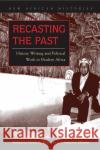
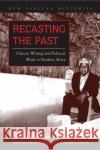
The study of intellectual history in Africa is in its infancy. We know very little about what Africa's thinkers made of their times. Recasting the Past brings one field of intellectual endeavor into view. The book takes its place alongside a small but growing literature that highlights how, in autobiographies, historical writing, fiction, and other literary genres, African writers intervened creatively in their political world.
The past has already been worked over by the African interpreters that the present volume brings into view. African brokers-pastors, journalists,...
The study of intellectual history in Africa is in its infancy. We know very little about what Africa's thinkers made of their times. Recasting ...
The study of intellectual history in Africa is in its infancy. We know very little about what Africa's thinkers made of their times. Recasting the Past brings one field of intellectual endeavor into view. The book takes its place alongside a small but growing literature that highlights how, in autobiographies, historical writing, fiction, and other literary genres, African writers intervened creatively in their political world. The past has already been worked over by the African interpreters that the present volume brings into view. African brokers-pastors, journalists,...
The study of intellectual history in Africa is in its infancy. We know very little about what Africa's thinkers made of their times. Recasting the ...
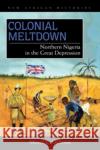
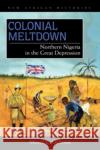
Historians of colonial Africa have largely regarded the decade of the Great Depression as a period of intense exploitation and colonial inactivity. In Colonial Meltdown, Moses E. Ochonu challenges this conventional interpretation by mapping the determined, at times violent, yet instructive responses of Northern Nigeria s chiefs, farmers, laborers, artisans, women, traders, and embryonic elites to the British colonial mismanagement of the Great Depression. Colonial Meltdown explores the unraveling of British colonial power at a moment of global economic crisis. Ochonu shows that the...
Historians of colonial Africa have largely regarded the decade of the Great Depression as a period of intense exploitation and colonial inactivity. In...
Historians of colonial Africa have largely regarded the decade of the Great Depression as a period of intense exploitation and colonial inactivity. In Colonial Meltdown, Moses E. Ochonu challenges this conventional interpretation by mapping the determined, at times violent, yet instructive responses of Northern Nigeria's chiefs, farmers, laborers, artisans, women, traders, and embryonic elites to the British colonial mismanagement of the Great Depression. Colonial Meltdown explores the unraveling of British colonial power at a moment of global economic...
Historians of colonial Africa have largely regarded the decade of the Great Depression as a period of intense exploitation and colonial inactivity....
"No nation can win a battle without faith," Steve Biko wrote, and as Daniel R. Magaziner demonstrates in The Law and the Prophets, the combination of ideological and theological exploration proved a potent force.
The 1970s are a decade virtually lost to South African historiography. This span of years bridged the banning and exile of the country's best-known antiapartheid leaders in the early 1960s and the furious protests that erupted after the Soweto uprisings of June 16, 1976. Scholars thus know that something happened-yet they have only recently begun to explore how...
"No nation can win a battle without faith," Steve Biko wrote, and as Daniel R. Magaziner demonstrates in The Law and the Prophets, the com...
"No nation can win a battle without faith," Steve Biko wrote, and as Daniel R. Magaziner demonstrates in The Law and the Prophets, the combination of ideological and theological exploration proved a potent force.
The 1970s are a decade virtually lost to South African historiography. This span of years bridged the banning and exile of the country's best-known antiapartheid leaders in the early 1960s and the furious protests that erupted after the Soweto uprisings of June 16, 1976. Scholars thus know that something happened-yet they have only recently begun to explore how...
"No nation can win a battle without faith," Steve Biko wrote, and as Daniel R. Magaziner demonstrates in The Law and the Prophets, the com...