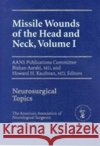
Missile Wounds of the Head and Neck, Volume I provides an up-to-date overview of the clinical and radiological prognostic criteria to determine which patients presenting with craniocerebral missile wound are salvageable. A sampling of topics covered in Missile Wounds of the Head and Neck, Volume I include: -Epidemiology: Incidence and Mortality of Craniocerebral Missile Wounds -Missile Wounds to the Head: Ballistics and Forensics -Prehospital Evaluation and Care of Craniocerebral Missile Wounds -Emergency Department Evaluation of Craniocerebral Missile Wounds -Plus much more!
Missile Wounds of the Head and Neck, Volume I provides an up-to-date overview of the clinical and radiological prognostic criteria to determine which ...
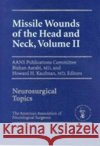
Missile Wounds of the Head and Neck, Volume II details the incidence and management of the central nervous system complications of craniocerebral missile wounds. Included in Volume II: -Cerebral Blood Flow Changes, Traumatic Subarachnoid Hemorrhage, and Vasospasm after Craniocerebral Missile Wounds -Traumatic Intracranial Aneurysms due to Craniocerebral Missile Wounds -Evaluation and treatment of Penetrating Orbital Injuries -Craniocerebral Missile Wounds: General Overview of Future Prospects -Plus much more!
Missile Wounds of the Head and Neck, Volume II details the incidence and management of the central nervous system complications of craniocerebral miss...
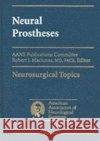
Neural prostheses have been used for centuries as structural replacements, in particular for injuries to the cranium. And today, neural prostheses are designed to restore a broad range of nervous system functions previously lost due to trauma or disease. While their complexity may vary from nerve conduits to prosthetic brain implants, neural devices have improved the lives of patients and broadened the scope of disabilities that can be treated. Neural Prostheses is the first comprehensive book to look at the history and recent, state-of-the-art developments of neural prostheses. Dr. Maciunas...
Neural prostheses have been used for centuries as structural replacements, in particular for injuries to the cranium. And today, neural prostheses are...
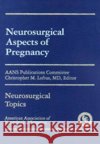
Neurosurgical Aspects of Pregnancy was written to be the single reference source where the widespread information applicable to the neurosurgical care of pregnant patients has been collected and organized. The book is divided into three sections: 1) general non-surgical patients; 2) specific neurosurgical disorders; and 3) surgical treatment of pregnant patients. Neurosurgical Aspects of Pregnancy is a comprehensive text covering: -Fetal toxicity of common neurosurgical drugs -Neuroradiological diagnosis - risks and guidelines -Fetal effects of anesthesia -Changes in cardiovascular and...
Neurosurgical Aspects of Pregnancy was written to be the single reference source where the widespread information applicable to the neurosurgical care...
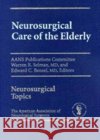
Neurosurgical Care of the Elderly is a comprehensive text which discusses the unique management of elderly patients. Although these problems occur in patients of all ages, their management in the geriatric population requires special consideration. Topics include: -The physiology of aging -Perioperative care -Cranial lesions and benign brain tumors -Pallidotomy for Parkinson's Disease -Occlusive cerebrovascular disease -Hemorrhagic vascular disease -Head injuries -Spinal lesions -Bone physiology and bone healing -Spinal decompression, fusion and instrumentation -Delirium, agitation and...
Neurosurgical Care of the Elderly is a comprehensive text which discusses the unique management of elderly patients. Although these problems occur in ...
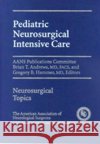
Pediatric Neurosurgical Intensive Care presents the special considerations necessary to properly manage the youngest patients in the neurosurgical intensive care unit. Descriptions of ICU management of specific neurological disorders, as well as a discussion on end-of-life decision-making, are included.
Pediatric Neurosurgical Intensive Care presents the special considerations necessary to properly manage the youngest patients in the neurosurgical int...
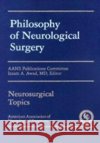
For the first time, leading scholars in the field of neurosurgery have been assembled to discuss the heritage, current philosophical foundations and future currents of thought influencing the specialty. It also includes fascinating, useful and original analysis of neurosurgery as an art, a science and a discipline of integral benefit to humanity. Included in Philosophy of Neurological Surgery: -The founding philosophy of neurosurgery -Modern neurosurgical philosophy -Patient-centered neurosurgery -Mind, consciousness and the neurosurgeon -The philosophy of dying and death -Neurological...
For the first time, leading scholars in the field of neurosurgery have been assembled to discuss the heritage, current philosophical foundations and f...
Contains information and opinions by neurosurgical experts regarding still-evolving spinal trauma management techniques, including anatomy, pathology, and biomechanics to educate and provoke further clinical research in the area. Highlights: -The Occipito-Atlanto-Axial Complex -Regional Cervical Spine Injuries -Cervical, Thoracic, and Thoracolumbar Fractures
Contains information and opinions by neurosurgical experts regarding still-evolving spinal trauma management techniques, including anatomy, pathology,...
Due to its unique epidemiological characteristics, the incidence of subarachnoid hemorrhge (SAH) has remained unchanged over time. However, during the past 20 years many advances have improved our understanding and treatment of SAH and its consequences. Subarachnoid Hemorrhage was the first book to synthesize those advances and to focus on the pathophysiology and treatment of SAH. After reading Subarachnoid Hemorrhage, the physician will understand the epidemiology, natural history and modern day outcome of SAH. In addition, the physician will understand and comprehend: -Aspects of molecular,...
Due to its unique epidemiological characteristics, the incidence of subarachnoid hemorrhge (SAH) has remained unchanged over time. However, during the...
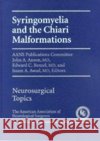
Although recognized as a spinal cord disorder as early as the 1500s, the precise diagnosis of, and optimum treatment of Syringomyelia and the Chiari malformation remain elusive. During the past decade, MRI technology, intra-operative ultrasonography, clinical series and case reports, and experimental investigations have made diagnosis easier, enabling those afflicted to receive treatment during earlier stages of the disorder. Syringomyelia and the Chiari Malformation provides readers with the most recent information on the classifications, pathology and development of Syringomyelia and Chiari...
Although recognized as a spinal cord disorder as early as the 1500s, the precise diagnosis of, and optimum treatment of Syringomyelia and the Chiari m...