Opposing a binary perspective that consolidates ethnicity, religion, and nationalism into separate spheres, this book demonstrates that neither nationalism nor religion can be studied in isolation in the Middle East.
Opposing a binary perspective that consolidates ethnicity, religion, and nationalism into separate spheres, this book demonstrates that neither nation...
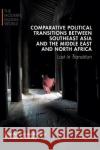
This book investigates the theme of global transitions with a cross-regional comparative study of two areas experiencing change over the past three decades: Southeast Asia and the Middle East and North Africa (MENA).
This book investigates the theme of global transitions with a cross-regional comparative study of two areas experiencing change over the past three de...
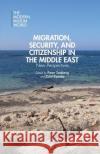
This volume addresses new tendencies related to migration from a Middle Eastern and Mediterranean perspective and with an emphasis on security and citizenship. Contributors aim not only to intervene in scholarly debates surrounding citizenship and migration but also to contribute to policy-oriented discussions related to migration.
This volume addresses new tendencies related to migration from a Middle Eastern and Mediterranean perspective and with an emphasis on security and cit...
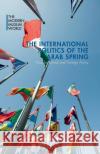
This book explores and analyzes how the Arab Spring has affected the political and economic relationships between the West, the BRICs (Brazil, Russia, India, China, and South Africa) and the MENA (Middle Eastern and North African states).
This book explores and analyzes how the Arab Spring has affected the political and economic relationships between the West, the BRICs (Brazil, Russia,...
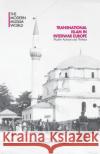
The book examines Muslim-European interactions in the interwar period and provides original insights into the emergence of geopolitical and intellectual East-West networks that transcended national, cultural, and linguistic borders.
The book examines Muslim-European interactions in the interwar period and provides original insights into the emergence of geopolitical and intellectu...
The book charts the attempts of Islam's largest missionary movement, the Tablighi Jamaat, to build Europe's largest mosque in London. Key themes include how Islamic movements engage and adapt within liberal democracies and how local contexts are key in understanding how and why movements operate in a given way.
The book charts the attempts of Islam's largest missionary movement, the Tablighi Jamaat, to build Europe's largest mosque in London. Key themes inclu...
With theoretically-rich contributions from an international group of political scientists, historians, and economists, this volume addresses the puzzle of why the Middle East has produced no single dominant and acknowledged regional power, despite contenders such as Egypt, Saudi Arabia, Iran, Israel, and Turkey. Rich, theoretically-engaged case study chapters address a gap in the vibrant international academic discussion on the role of (new) regional powers in global politics. Furtig offers powerful insights into both the unique nature of the Middle East region, with its dispersed power...
With theoretically-rich contributions from an international group of political scientists, historians, and economists, this volume addresses the puzzl...
This book examines modernization by synthesizing social theory with specific historical examples from the Muslim world. By illustrating this theoretical framework, the author argues against the equation of this change with Westernization. In contrast to the assumptions of homogeneity and linearity conceived by classical theories, this work views modernization as a multifaceted, contingent process. In this way, the author seeks to present Islamic history, traditionally overshadowed by Eurocentric narratives, as an inherent part of global transformation.
This book examines modernization by synthesizing social theory with specific historical examples from the Muslim world. By illustrating this theoretic...
Through the textual universe of Georg Simmel, and in particular his analysis of modern life as the feeling of dualism, the project reflects about how seemingly crucial challenges to the national - the forces of globalization and the wish to be unique - are drawn together with the formation of nationhood in everyday life.
Through the textual universe of Georg Simmel, and in particular his analysis of modern life as the feeling of dualism, the project reflects about how ...