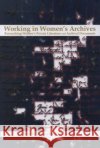
What comes to mind when we hear that a friend or colleague is studying unpublished documents in a celebrated author's archive? We might assume that they are reading factual documents or, at the very least, straightforward accounts of the truth about someone or some event. But are they?
Working in Women's Archives is a collection of essays that poses this question and offers a variety of answers. Any assumption readers may have about the archive as a neutral library space or about the archival document as a simple and pure text is challenged.
In essays discussing...
What comes to mind when we hear that a friend or colleague is studying unpublished documents in a celebrated author's archive? We might assume tha...
How did women in the early twentieth century, newly arrived in North-West Canada, cope with their strange new lives -- so very different from the lives they used to lead? How did they see themselves and their role in frontier life?
In the early twentieth century, drawn west by the promise of free land, economic success or religious and political freedom, women moved from eastern Canada and overseas to farms and ranches in North-West Canada. They discovered that it was not the utopia touted by government propaganda or land agents. They also discovered that there was a select but...
How did women in the early twentieth century, newly arrived in North-West Canada, cope with their strange new lives -- so very different from the ...
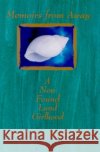
"It is Easter Sunday, April 1945, early in the morning, maybe just dawn. We stand still, like frozen grey statues. Us. Seven hundred and thirty women, wrapped in wet, grey, threadbare blankets, standing in the rain. Our blankets hang over our heads, drape down to the soil. We hold them closed with our hands from the inside, leaving only a small opening to peer out, so that we save the precious warmth of our breath." (from Chapter 5)
So begins the author's sojourn, her search for freedom that begins with the chaotic barrenness in which she found herself after her liberation...
"It is Easter Sunday, April 1945, early in the morning, maybe just dawn. We stand still, like frozen grey statues. Us. Seven hundred and thirty wo...
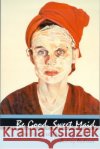
January 21, 1995: Dorothy Joudrie is arrested for attempting to murder her estranged husband. Soon after, Audrey Andrews begins to write her book. Audrey and Dorothy had known each other as children, but the identification of Andrews with Joudrie goes beyond merely the accident of a childhood acquaintance. It has to do with being subjected to the same societal constraints placed on girls and women during the years immediately following World War II, the years in which they had prepared for their adult lives. Expectations, placidly accepted then, are now seen as unrealistic and...
January 21, 1995: Dorothy Joudrie is arrested for attempting to murder her estranged husband. Soon after, Audrey Andrews begins to write her book....
How does the imagination entwine the shreds of memory of family, place and culture to root a self in the fluid experience of the present?
Daughter, wife, mother, teacher, writer and feminist academic, Helen M. Buss / Margaret Clarke has lived in many parts of Canada and writes from a life of multiple perspectives full of contradictory loyalties and obligations, of opposing histories and identities. For this woman, whose sense of a unified identity is so tenuous that she even writes under two names, writing memoirs becomes the way to bring together the diverse strands of...
How does the imagination entwine the shreds of memory of family, place and culture to root a self in the fluid experience of the present?