Here, Professor Blanchard examines why slavery managed to survive for more than three decades after Peru declared its independence despite anti-slavery legislation passed by the liberators at that time. The book focuses on the economics of Peruvian slavery, slave life and the abolition movement.
Here, Professor Blanchard examines why slavery managed to survive for more than three decades after Peru declared its independence despite anti-slaver...
This reissue of Prof. Vanderwood's groundbreaking study-available again for the first time in a decade-examines bandits, police, and Mexican politics as a whole, showing how different groups used the agents of order and disorder to serve their interests. Originally published in 1981, Disorder and Progress was subsequently revised and updated in 1992. Added to the enlarged 1992 edition and included here in this reissue are the entirely new introduction, material on the period of the independence wars and on Pancho Villa, and an updated bibliography. This book also incorporates additional data...
This reissue of Prof. Vanderwood's groundbreaking study-available again for the first time in a decade-examines bandits, police, and Mexican politics ...
The Mothers began in the 1970s as a group of housewives visiting prisons and barracks in search of their missing children. This book traces the history of the Mothers, their current agenda and their continuing struggle to bring the murderers of their children to justice.
The Mothers began in the 1970s as a group of housewives visiting prisons and barracks in search of their missing children. This book traces the histor...
The United Fruit Company (UFCO) developed an unprecedented relationship with Guatemala. By 1944, UFCO owned 566,000 acres, employed 20,000 people, and operated 96 per cent of Guatemala's 719 miles of railroad.
The United Fruit Company (UFCO) developed an unprecedented relationship with Guatemala. By 1944, UFCO owned 566,000 acres, employed 20,000 people, and...
Latin America is moving toward democracy. The region's countries hold elections, choose leaders, and form new governments. But is the civilian government firmly in power? Or is the military still influencing policy and holding the elected politicians in check under the guise of guarding against corruption, instability, economic uncertainty, and other excesses of democracy? The editors of this work, Brian Loveman and Thomas M. Davies, Jr., argue that with or without direct military rule, antipolitics persists as a foundation of Latin American politics. This study examines the origins of...
Latin America is moving toward democracy. The region's countries hold elections, choose leaders, and form new governments. But is the civilian governm...
SR Books' two popular Human Tradition in Latin America titles covering nineteenth- and twentieth-century history have been combined into one exciting new volume. The most compelling chapters from these books are now presented in The Human Tradition in Modern Latin America. This collection offers powerful, fascinating biographies of ordinary people caught in the sometimes devastating historical changes that have occurred in Latin America. From the turbulent struggles for independence in the 1800s to the profound and often overwhelming transformations that have accompanied modernization in this...
SR Books' two popular Human Tradition in Latin America titles covering nineteenth- and twentieth-century history have been combined into one exciting ...
The nineteenth century was a period of peak popularity for travel to Latin America, where political independence was accompanied by loosened travel restrictions. Such expeditions resulted in numerous travel accounts, most by men.
The nineteenth century was a period of peak popularity for travel to Latin America, where political independence was accompanied by loosened travel re...
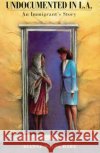
Her story is similar to those of the thousands of illegal immigrants who cross the border into America every day in search of political or economic refuge. In 1988, a woman in her late thirties named Yamileth obtains a passport, leaves her home, and makes a daring, dangerous trip from war-torn Nicaragua through Central America to the United States to join her family. In Los Angeles, Yamileth must find a place to live and a job to support her family, yet keep secret the fact that she entered the country as an illegal alien. She must adapt to new customs and the flood of Latino and Asian...
Her story is similar to those of the thousands of illegal immigrants who cross the border into America every day in search of political or economic re...